
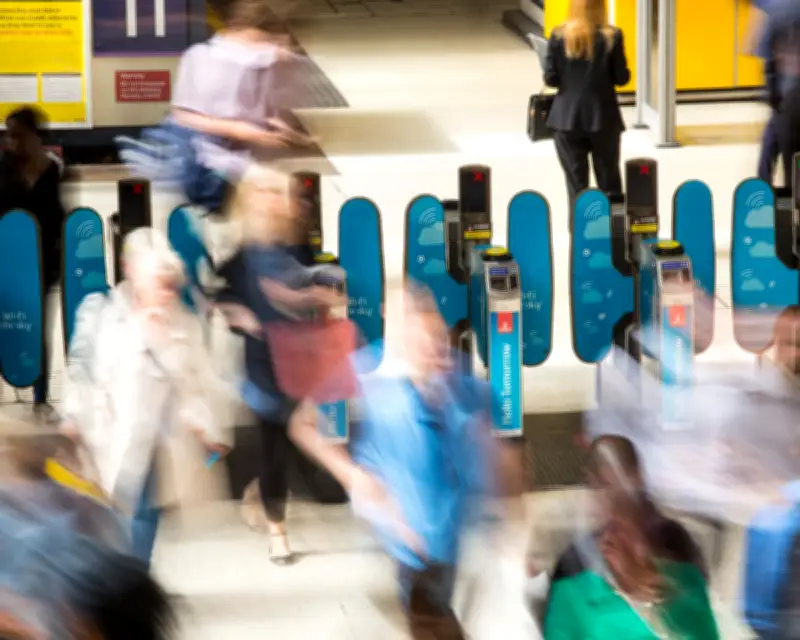
Train operators are cracking down on digital ticket cheats, with South Western Railway (SWR) and GTR – which runs Thameslink, Southern and other services – introducing measures this week to combat “short-faring” and other fraudulent practices.
Short-faring is a trick by which passengers buy a last-minute digital ticket only for the final part of their journey, even if they boarded at a station without barriers much further away. The practice has become a significant problem as the industry moves away from paper tickets.
New measures to stop fraud
For certain routes, including Vauxhall to Waterloo and Norwood Junction to London Bridge, passengers will now need to collect a physical ticket from a machine. This follows operators finding that up to 95% of tickets on some short routes were being used fraudulently.
The crackdown comes as the Department for Transport reports that up to £400m is lost to fraud each year on the rail network. Other scams include “quick scanning” – buying a ticket on your phone seconds before being approached by an inspector – “tailgating” – squeezing behind a paying customer through a ticket gate – and “donutting”, where a passenger buys a cheap ticket for the first part of their journey and another for the last, avoiding the higher cost of a full trip.
A growing problem
Railway commentator Christian Wolmar said: “It’s quite a big problem, because we’re coming to terms with a completely different form of ticketing. No longer do you go to the ticket office and buy little red and yellow cards. You now buy online, and that affords these new opportunities. The system is clearly open to abuse.”
Wolmar noted that while a push to reduce staff numbers has been a factor, tackling the issue is difficult because “you can’t have guards at every stop. It’s through digital analysis that they are going to find a solution to this.”
Government response
The government has widened the introduction of an app that calculates ticket fares by tracking the user’s phone. Currently trialled on routes in the East Midlands and Yorkshire, the technology could eventually be brought in across Great British Railways, the public body set to take over the renationalised network next year.
Transport secretary Heidi Alexander said: “Fare evasion is illegal and selfish – it actively makes journeys worse for all rail passengers by diverting money that could otherwise be used to improve services. We are committed to tackling ticket cheats, and that’s one of the expected benefits of expanding our digital ticketing app to more people across the trial areas.”
The Department for Transport has also given £33m for new or enhanced ticket gates at “fare dodger hotspots” across England and closed a loophole that allowed some passengers to dishonestly claim refunds.
Public reaction
SWR said its new anti-fraud measures came after an intervention at Brighton station found that half of those travelling on the wrong ticket were using the short-faring scam. Passengers at Brighton on Friday welcomed the clampdown.
Deanna Smith, who had travelled on Thameslink with her partner, said: “Obviously fares go up anyway because of inflation, but they are probably pushing up our fares as well, so we all suffer. It’s just like tax dodging – we all fall victim to their behaviour.”
Nicola Garrett, on a day trip from Leigh-on-Sea, said: “I’m someone who has always paid for everything, so I get a bit pissed off [by fare dodging]. Nobody seems to think that they have to pay for anything these days. It’s just like, if you can get away with doing it, why wouldn’t you?”




