
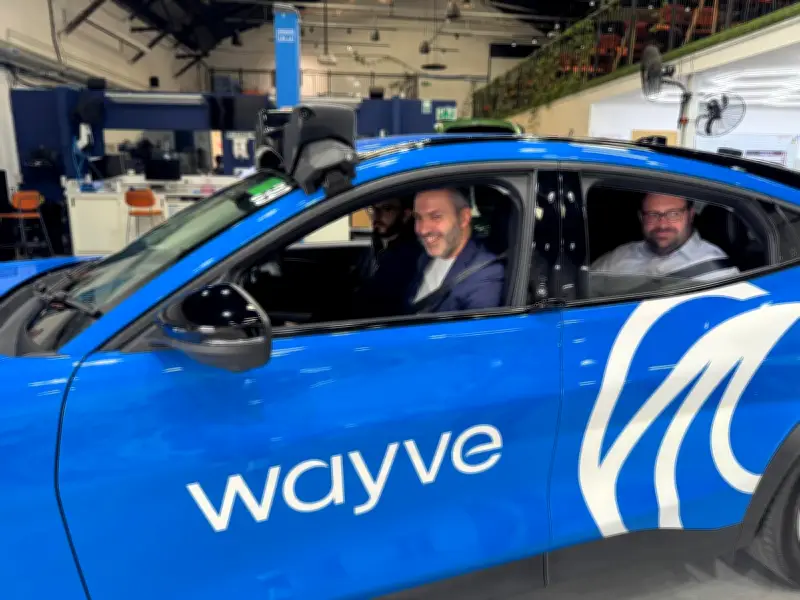
Transport for London (TfL) must be given full authority over driverless taxi trials in the capital, a senior London Assembly member has said, as companies like Uber, Wayve and Waymo push to launch services as soon as this year.
Government role questioned
Caroline Russell, chair of the London Assembly Transport Committee, said the government appears to have “stepped in on London’s devolved powers” by controlling the regulation of autonomous vehicles. “The regulation of all of this is being controlled by the government when TfL should have a licensing role in this,” she told the Local Democracy Reporting Service. She added that TfL should have a say in how regulation works, what data companies hold, and the rules governing vehicle operation.
Last year, the Department for Transport (DfT) said it would fast-track testing of small-scale taxi and bus-like services without a safety driver in 2026, with a wider potential rollout in 2027. Several firms are already seeking approval to transport passengers in automated vehicles in London this year, and Uber has invited users to express interest in so-called robotaxis.
Devolution risk
TfL Commissioner Andy Lord has also flagged the risk of the DfT “cutting across London’s devolution powers”. He told the London Assembly Transport Committee in March that “there is a risk here, depending how the government introduces this, that actually the Department for Transport would have greater regulation on autonomous vehicles than TfL currently has.” He said TfL wants to engage with the DfT to understand what commercial trials might look like, noting there is currently no trial involving TfL.
Currently, the DfT authorises driverless vehicles on public roads, but any paid passenger service would fall under TfL’s jurisdiction. Permits for Automated Passenger Services in London cannot be issued without TfL consent. The question is whether the DfT should hand over total control of driverless vehicles in London to TfL.
Applications and safeguards
In 2024, the Automated Vehicles Act was passed, ensuring legal responsibility for accidents lies with approved operators. The act will be fully implemented in the second half of next year. In May 2026, the DfT opened applications for operators to run self-driving taxis commercially across Britain. Roads and Buses Minister Simon Lightwood described the technology as “a transformative opportunity”. Officials said local transport authorities like TfL will need to provide local consent.
TfL sources say they are in talks with potential operators and will set out guidance shortly. Mr Lord confirmed TfL can prevent firms from getting a licence for commercial taxi services, but companies could apply for other purposes, such as delivery, without TfL approval.
Official statements
A TfL spokesperson said they are “actively engaging with government to help shape any future services” and that safety is the top priority. “Any new passenger carrying service would need the appropriate regulatory approvals,” they added, noting that TfL is responsible for taxi and private hire vehicle licensing in London.
A DfT spokesperson said: “Permits for Automated Passenger Services to operate in London cannot be issued without TfL’s consent. This requirement was set out in the Automated Vehicles Act 2024, which was fully scrutinised by Parliament before becoming law. We continue to work closely with TfL ahead of any future pilots.”




