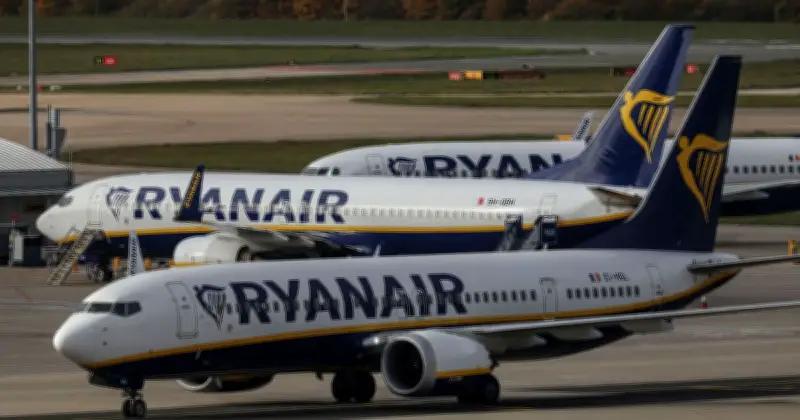
Ryanair has confirmed a new 60-minute luggage rule, urging travellers to note the upcoming change. From November 10, the carrier will require passengers to drop off checked bags at least 60 minutes before departure, replacing the current 40-minute deadline.
Reason for the change
The airline first revealed the revised policy in April, saying the change is intended to give the roughly one in five passengers who travel with checked baggage extra time to pass through security and passport control before boarding starts. The budget carrier, known for enforcing strict baggage rules, said the change is designed to cut the number of travellers who miss their flights because of long waits at security or passport control.
The revised policy will only affect passengers checking luggage into the hold. The other 80 per cent of Ryanair customers who travel with cabin bags only will see no change to their airport routine. Those flyers will still be expected to complete check-in online before arriving at the airport, allowing them to head straight through security and on to their departure gate.
Airport bag drop closure
The low-cost airline will close its airport bag drop services 60 minutes before scheduled departure. Ryanair's Dara Brady said: "From Tuesday, 10 November, bag drop services at all Ryanair airports will close 60 minutes before scheduled departure, instead of the current 40 minutes.
"This small change will give the 20 per cent of Ryanair passengers who check in a bag, more time to clear airport security and passport control queues and get to their departure gate before boarding begins, particularly during busy travel periods when airport queues can be longer."
Network-wide application
The change will apply across Ryanair's network, including flights departing from Edinburgh, Glasgow, Aberdeen and Glasgow Prestwick airports.
Last month, Michael O'Leary, chief executive of Ryanair, warned that air passengers across Europe could face what he described as the steepest rise in ticket prices on record in 2027. Speaking at a press conference in Brussels, O'Leary said airlines are continuing to come under pressure from higher fuel costs, which are expected to feed into fare increases.
He also predicted that airline failures and industry consolidation would reduce seat capacity over the coming months. Combined with carriers' exposure to fuel price fluctuations, he said these factors could push airfares up by as much as 20 per cent.