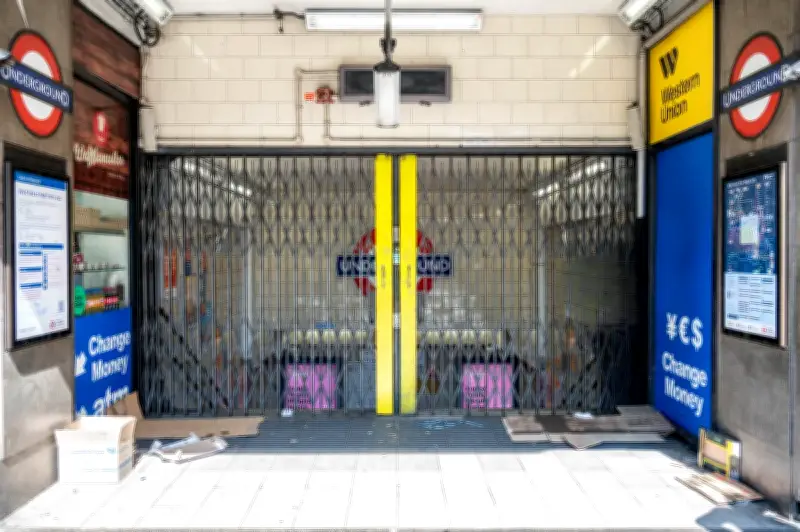
The RMT is facing growing questions over its decision to hit London with eight Tube strikes after a rival union branded the move “strange”. The ASLEF train drivers’ union also said it was “surprised” by the industrial action.
ASLEF is firmly backing a move to a voluntary four-day week for Tube drivers, which it has hailed as offering the best working conditions on the whole of the rail network. But the National Union of Rail, Maritime and Transport Workers (RMT) is pressing ahead with the industrial action, with the first strike set to cause major disruption on London Underground (LU) on Thursday.
ASLEF's Surprise at RMT's Decision
Finn Brennan, ASLEF’s full-time organiser on London Underground, said: “We are surprised that the RMT has, once again, decided to take strike action to try to prevent Underground drivers moving to a four-day week on a voluntary basis.”
He added: “The voluntary four-day week gives Tube train drivers an extra 35 days off every year with rosters based on a 34-hour week in return for some changes to working conditions and moving to electronic, rather than paper-based, systems for booking on for duty.”
Brennan continued: “Management have agreed that anyone who wants to keep working a five-day week will be able to do so without suffering any detriment, and we will be holding them to that. A strike designed to stop people having the choice of a shorter working week and more time off is a strange choice to make.”
Political Criticism and Strike Dates
The Conservatives and Reform UK were far more critical, slamming the RMT for being “militant” and for “holding London to ransom” respectively.
The RMT has announced 24-hour walkouts on: Thursday, November 26, 2026; Thursday, December 17, 2026; Saturday, December 19, 2026; Monday, January 4, 2027; Wednesday, January 6, 2027; Wednesday, February 17, 2027; Tuesday, February 23, 2027; and Thursday, February 25, 2027.
Last-ditch talks are due to be held between the RMT and LU on Tuesday under the ACAS conciliatory service.
TfL's Offer and the Dispute's Core
Transport for London (TfL) sought to resolve the dispute by offering train drivers a third option over working arrangements, but it was rejected by the RMT. Under the reforms, drivers were initially told they could opt for a voluntary four-day week, working 34 hours, with new terms and conditions.
They would be paid for 35 hours per week, so they would not have any pay cut, with many drivers earning more than £70,000 a year. For a few extra days a year, though, they would do other non-driving work such as safety training. Alternatively, they could stay on the current terms and conditions, working 38.5 hours a week, with days off in lieu for weekly hours worked beyond 35.
But due to rostering, running a four-day and five-day week at the same depot was challenging. So, some drivers who wanted to stay on a five-day week faced having to move depot. To try to avert the strikes, TfL proposed the third option of drivers working 36 hours over five days, with new terms and conditions, keeping the same leave allowance, and staying at their depot. But the latest offer failed to end the dispute.
RMT General Secretary Eddie Dempsey said: “London Underground is attempting to dress up a wholesale attack on drivers' working conditions as a voluntary four-day week.” But Nick Dent, LU’s director of customer operations, stressed: “Drivers can now choose to remain on a five-day week with a guarantee of remaining at the same depot.”