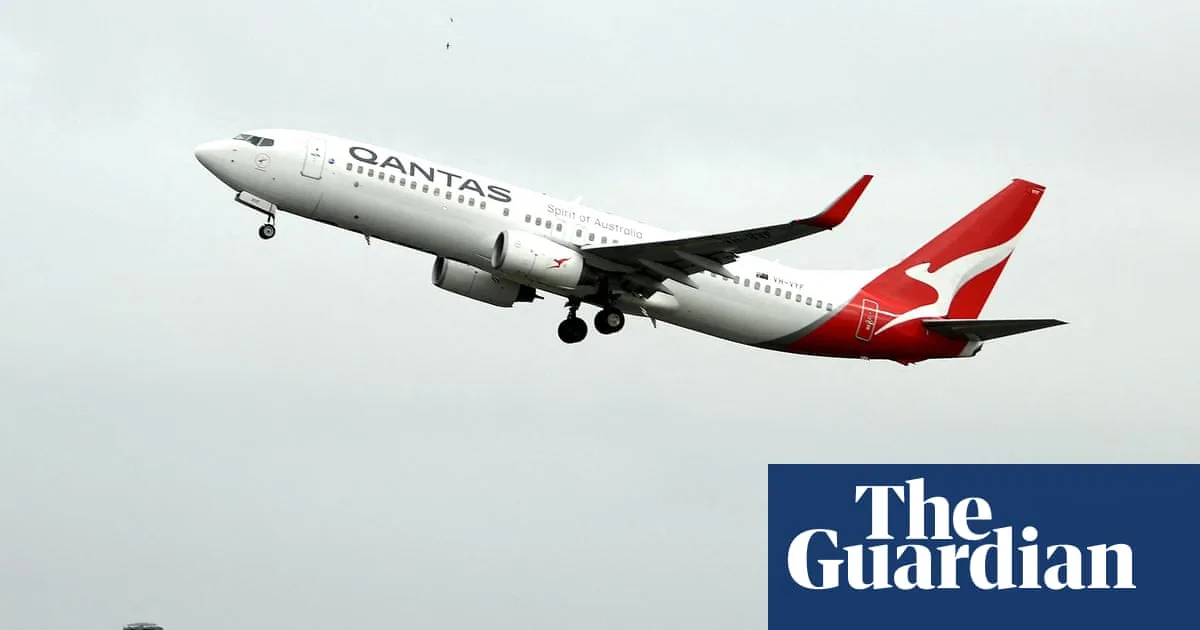
Qantas Expands Paris-Sydney Flights as Gulf Conflict Disrupts Australia Travel
Qantas Boosts Paris-Sydney Flights Amid Gulf Airspace Shutdown

Paris Emerges as Key Hub for British Travellers Heading to Australia

British travellers could soon find themselves journeying to Australia via Paris, as Qantas announces a significant expansion of flights from the French capital to Sydney. The airline will increase its service from three to five flights per week, capitalising on the severe disruption to traditional Middle Eastern aviation routes.

Middle East Conflict Triggers Aviation Crisis

The catalyst for this strategic shift is the ongoing conflict in the Gulf region, which has dramatically reduced airspace availability. Following attacks between Israel, the US, and Iran in late February, Tehran retaliated with missile and drone strikes targeting infrastructure in Gulf states, including critical airports and hotels.

This escalation initially grounded all flights from major Middle Eastern hubs: Dubai, Abu Dhabi, and Doha. While Emirates and Etihad are gradually rebuilding their networks, Qatar Airways is operating only a fraction of its pre-conflict schedule. Compounding the issue, both the UAE and Qatar currently feature on the Foreign Office no-go list, even for transit passengers.

Wide Pickt banner — collaborative shopping lists app for Telegram, phone mockup with grocery list

Analytic Flying, a respected aviation blog, reports that the "ME3" carriers – Emirates, Etihad, and Qatar Airways – typically account for over half of the Europe-Australia market. With these airlines running skeleton operations and passengers showing significant risk aversion to Gulf hubs, a severe capacity crunch has emerged.

Soaring Fares and Strategic Route Changes

The capacity reduction has created unprecedented pricing dynamics. On many dates in early April, Qantas's daily nonstop London-Perth flight is selling for £1,996 one-way in economy class – a remarkable figure reflecting the current market pressures.

Qantas's response involves a clever fleet reshuffle to maximise capacity on alternative routes. The enhanced Paris-Sydney service will now stop in Singapore rather than Perth, reducing the distance by over 2,000 miles. This change eliminates previous "payload restrictions" that prevented Qantas from selling every seat on the Perth-Paris leg, allowing an additional 60 passengers per flight.

Simultaneously, the Perth-Rome connection will increase from four to seven flights weekly. In total, these adjustments will provide an extra 400 seats daily on Qantas routes between Europe and Australia – equivalent to a full Jumbo jet's worth of additional capacity.

New Travel Options and Considerations for UK Passengers

British travellers heading to Australia will now have transfer options in both Paris and Rome. Airlines and travel agents are expected to market connecting flights from numerous UK departure points, particularly leveraging Air France's extensive network.

An interesting financial incentive exists for those willing to book separate flights to Paris or Rome using budget airlines: they can avoid the £106 air passenger duty (APD). However, this approach carries the risk of missed connections, especially as Ryanair doesn't serve Paris Charles de Gaulle airport, and most of its UK-Rome flights use Ciampino rather than Fiumicino where Qantas operates.

Fleet Reconfiguration and Industry Response

To facilitate this expansion, Qantas is deploying Boeing 787 "Dreamliners" previously used on trans-Pacific routes. These will be replaced on domestic Australian services by Airbus A330 aircraft, which in turn will be substituted by Boeing 737s on intra-Australia links – a configuration that helps reduce overall fuel consumption.

The existing London-Perth service continues operating normally, though inbound flights must now stop in Singapore for refuelling.

Other carriers are also adjusting their strategies. Singapore Airlines will add a second daily Gatwick departure from July, while British Airways plans to resume Heathrow-Melbourne flights via Kuala Lumpur in January 2027.

Aviation analyst Sean Moulton observes: "Qantas and British Airways are expanding flights in the market – demonstrating more and more options to avoid the Middle East. There's been strong demand for European carriers to launch flights to Australia. Turkish Airlines recently launched Melbourne and Sydney services, while Finnair will begin Melbourne flights via Bangkok in October 2026 with daily frequency."

Pickt after-article banner — collaborative shopping lists app with family illustration

This comprehensive realignment of Australia-Europe aviation routes represents a significant response to geopolitical instability, offering British travellers new pathways to the southern hemisphere while fundamentally reshaping traditional travel patterns.




