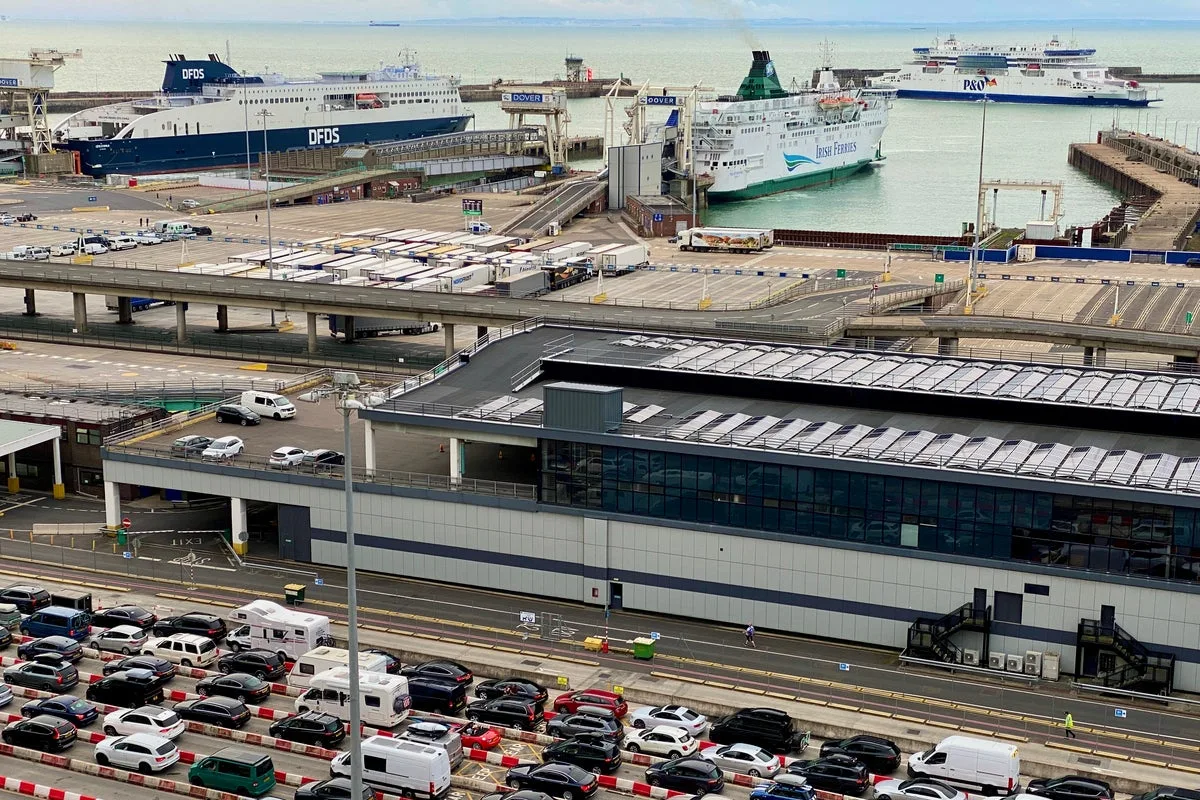
The Port of Dover is preparing for its busiest May half-term in years, driven partly by travellers switching from air to ferry travel amid geopolitical tensions, the port's chief executive has said.
Record Easter and growing bookings
Doug Bannister, chief executive of the UK's primary departure point for France, told The Independent: "We had a cracking Easter. It was our busiest since Covid and everybody flowed through very, very well." He noted that bookings for May half-term have been increasing, particularly since the war in Iran started. "I think people are just getting a bit more nervous about it," he added.
Bannister highlighted the reliability of ferry travel: "People know that they're always going to get away on a ferry when they come down to Dover. They're always sailing and actually if I'm travelling in my car, I've got all my stuff with me. I've got entertainment for the kids so I don't have to worry about disruption and delay."
Peak travel times and advice
For the May half-term, the port expects around 8,000 cars on Saturday 23 May, making it the busiest day of the three-day period. The peak time for cars is forecast to be from 5am to 1pm. Bannister urged motorists: "If you're arriving for a sailing during that period of time we ask people to not turn up more than two hours before you're sailing so that we can keep everybody flowing through."
EU entry-exit system challenges
A key challenge for the port is the European Union's entry-exit system (EES). Since 10 April, the EU has been theoretically applying EES in full, collecting biometrics from every British passport holder crossing a Schengen area frontier. The Port of Dover, along with the Eurotunnel terminal at Folkestone and London St Pancras International, has "juxtaposed" border controls, meaning French Police aux Frontieres process departing passengers while still on British soil.
A new £40 million EES registration area has been created on reclaimed land at Western Docks. For months, coach passengers have been processed there, with their vehicles sealed and driven to the Eastern Docks to board the ferry. However, while the facility is ready for motorists and families in private cars, French IT issues have prevented its deployment.
"We've installed 84 kiosks out there to be able to handle all of the registration process," Mr Bannister said. "So far those are not activated yet, so right now if there is any EES work to be done it is getting done at the booths in the ferry terminal." Currently, French officials are creating entry-exit system profiles for British motorists and passengers at border control in Eastern Docks, recording passport details onto a central database without collecting biometrics. This profile creation adds time, typically extending the processing for each vehicle from one minute to 90 seconds.
"In very busy times that adds up very quickly," the port CEO said. "We would like the whole process operational, having invested £40m and literally pulling out all the stops and getting everything ready to go. But shy of that, then clearly we need to make certain that we are not creating a situation that is going to have a lot of congestion."
Potential solutions and government efforts
Bannister expressed hope for a regime agreed by all parties: "What I'm hopeful is that we will be able to come up with a regime agreed by everybody. Our government are working on it very hard, the Police aux Frontieres and [French] Ministry of Interior are working on it very hard to come up with a situation that will allow us to handle all the thousands of passengers that want to use this in the best possible way." He added: "We would really like for all the registration kiosks to get activated. We'd also like to have an app come in so that people can register the details ahead of travel. All those things would make the entire process work much more smoothly. But shy of that, then what we also need is to recognise that in these very busy times that we have that we, we might be seeking a relaxation of some of the process requirements. So that we can make certain that everybody can get through the port and the border just as quickly as possible."
Advice for motorists
Mr Bannister also urged motorists not to try to divert through the centre of the Kent town to avoid traffic. "Please also stick to the main routes when you're coming to the ferry terminal because it allows us to keep the town of Dover clear so people can go out about their business – but equally it means that we can process everybody through much more quickly than having to unpick congestion." He reassured travellers: "It's a very flexible operation down here and if you do have an unfortunate event where you've missed your sailing, then of course the ferry operators will put you on the very next available one."






