
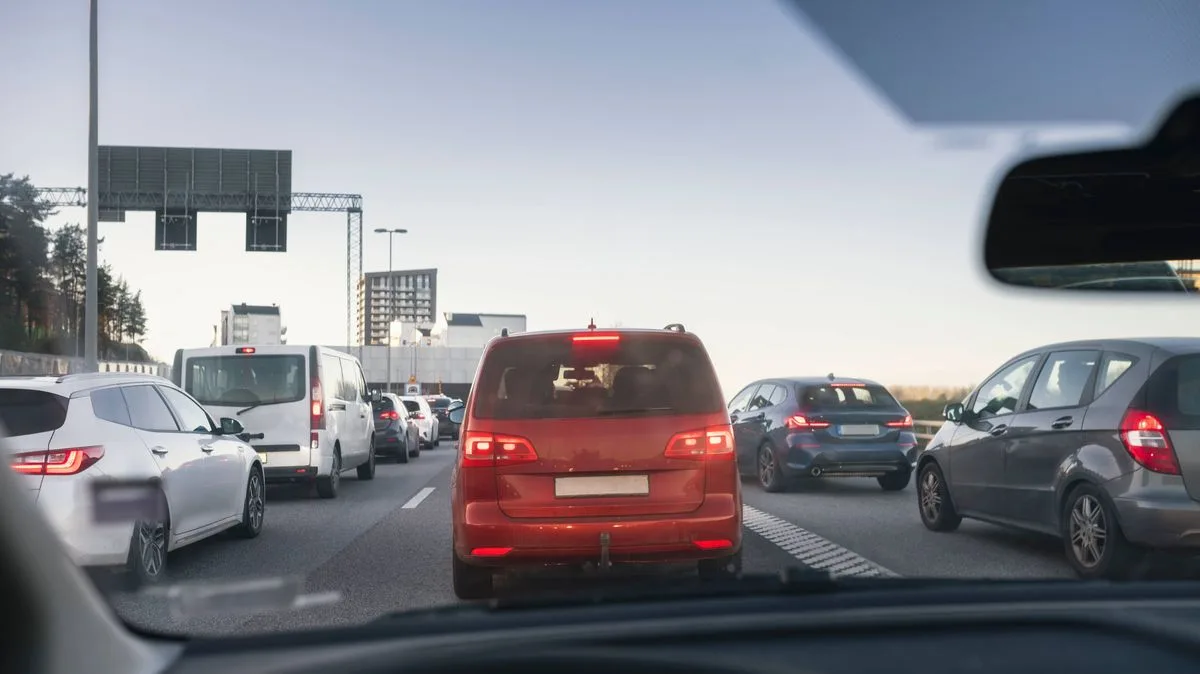
If you have ever been stuck in a traffic jam with no apparent cause, the explanation may lie in mathematics. These so-called 'phantom jams' occur when minor changes in driving behaviour cause a chain reaction of braking that amplifies as it travels backwards through traffic.
Professor Hannah Fry, a mathematician, explained in a YouTube video that phantom jams are not caused by accidents or road closures. Instead, they result from small actions such as a driver changing lanes or tapping their brakes. This forces the driver behind to brake, and the effect intensifies with each subsequent driver until, after about 20 cars, a complete stop is required.
Fry noted that phantom jams behave like a wave moving backwards through traffic. They only dissipate when they reach a section of road where vehicles are spaced far enough apart that braking is unnecessary. The key to preventing these jams, she said, is to avoid tailgating—driving too close to the car ahead—which is both dangerous and illegal, carrying a £100 fine and penalty points.
While driverless cars with faster reaction times could theoretically eliminate phantom jams, Fry concluded that for now, drivers caught in such a jam should simply accept it and wait for the 'mathematical ghost' to pass.




