
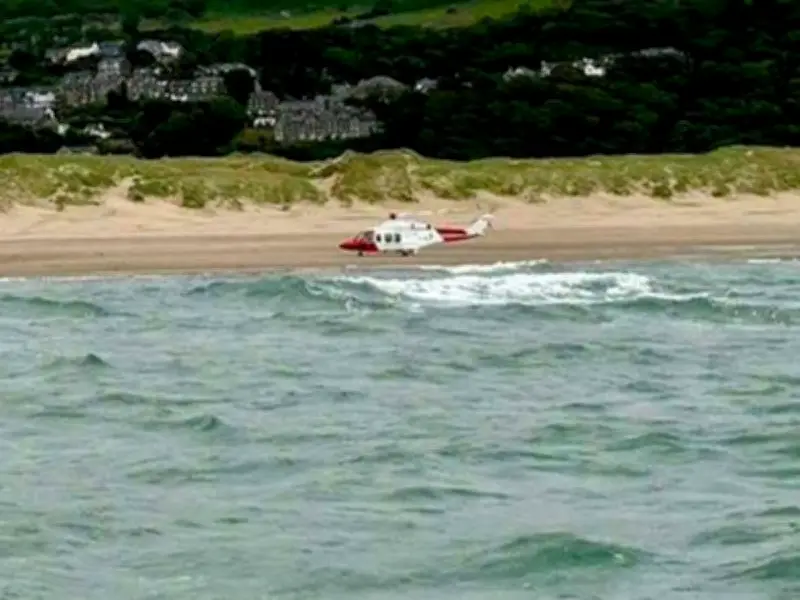
A person survived for more than four hours by clinging to a cool box after their rigid inflatable boat (RIB) capsized off the North Wales coast, sparking a major multi-agency rescue operation. The incident occurred on Thursday afternoon near Porthmadog, Gwynedd, when the overturned vessel was discovered on a sandbank, raising immediate concerns for the missing occupant.
Search and Rescue Response
Both lifeboats from RNLI Criccieth were launched at 3pm on July 2 following reports of an overdue RIB that had departed from Porthmadog. An off-duty RNLI crew member working for Gwynedd Council's maritime department first located the capsized boat on a sandbank, significantly altering the nature of the incident. The inshore rescue boat Margaret a Nantw began an extensive search of the Porthmadog Estuary, while the Atlantic 85 lifeboat Frank Townley scoured the nearby coastline and inshore waters.
The search involved a coordinated response from HM Coastguard, including the Coastguard Search and Rescue Helicopter, coastguard rescue teams from Criccieth and Barmouth, and volunteer crews from RNLI Criccieth. Barmouth Lifeboat's all-weather lifeboat was also deployed, and another local vessel joined the effort.
Casualty Located on Harlech Beach
After an extensive search, the casualty was found on Harlech Beach. It is believed they had been in the water for over four hours after the ebbing tide carried them from the estuary. They managed to stay afloat by clinging to a cool box. The casualty was suffering severe effects of cold-water immersion and was airlifted by the Coastguard helicopter to hospital for further treatment.
Safety Warnings Issued
Chris Fisher, lifeboat operations manager at Criccieth RNLI, praised the teamwork: "This was a challenging and constantly evolving incident that required a significant multi-agency response. The teamwork between our volunteer lifeboat crews, HM Coastguard Rescue Teams, the Coastguard Search and Rescue Helicopter and everyone involved was outstanding throughout."
He added: "The outcome also serves as a powerful reminder of just how unforgiving the sea can be. We would urge everyone going afloat to wear a suitable lifejacket, always use the engine kill cord where fitted, carry a reliable means of communication such as a VHF radio or fully charged mobile phone in a waterproof pouch, and let someone ashore know your plans before setting off. Those simple precautions can make all the difference in an emergency."




