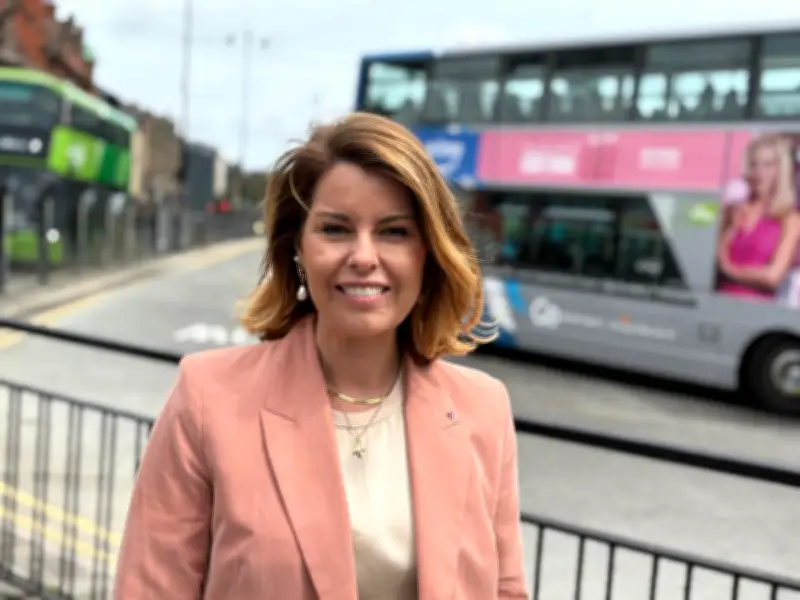
Bringing the North East’s buses back under public control would result in cheaper fares and millions of extra journeys every year compared to if they are left in the hands of private companies, according to a review of mayor Kim McGuinness’ plans. Returning the region’s bus network to public ownership for the first time since the 1980s is estimated to lead to 15.7 million extra journeys annually by 2059 than under the current system.
Public Investment Needed
An assessment of Ms McGuinness’ vision of an ‘Angel Network’ of buses, under which her authority would take power over bus routes, fares, and timetables, warns that more than £334 million of “substantial” public investment will be needed over the next 30 years to deliver her franchise system. But the Franchising Scheme Assessment (FSA) concludes that it would deliver greater value for money than today’s deregulated system, which is largely run by companies like Go North East, Stagecoach, and Arriva.
Public Consultation Launched
The report was published as the mayor’s office launched a major consultation in which the public will be invited to have their say on the future of the North East’s buses. Ms McGuinness said on Tuesday that the region’s bus network had been “cut and cut and cut”, leaving people unable to rely on services to get them to work or hospital.
Insisting her model is financially viable, the Labour mayor told a scrutiny committee: “We can’t do nothing. The state of our buses is just not viable, it is not acceptable, it is not what people in this region deserve. It has to change.” She added: “The bus companies take more public subsidy than they have ever had before. That goes to private shareholders. Some of them are making 10%, 15% profit off the back of public money and what they are delivering is a service that does not deliver to the people of the region. So we have to do something different.”
Timeline and Benefits
A final decision on whether to go ahead with the franchising reforms is expected to be made in early 2027. Should the mayor’s plan proceed as planned, a first set of Angel Network buses would start operating in September 2029 and more would follow 12 and 24 months later.
The North East’s bus network shrank by 52 million passengers and 24 million miles covered between 2009 and 2025, while the region’s bus operators took an estimated £123 million of public funding in 2024/25 – equivalent to 51% of their income. The FSA argues that that level of public has not been met with a proportionate level of control and that failing to intervene further would result in a spiral of decline, ultimately leading to a “skeleton network” of profitable urban routes with rural services “extremely limited or lost entirely”.
Fare Caps and Service Guarantees
Ms McGuinness’ model, which follows on from Andy Burnham’s Bee Network bus system in Greater Manchester, includes plans to cap fare increases at inflation levels and introduce simpler ticketing, improve public safety, and a pledge not to cut the size of the bus network for at least 10 years. Bus companies would have to bid to run buses to specified contracts, rather than as private commercial operators as they do now.
The assessment forecasts that the decline in bus patronage would be “temporarily reversed” in the first years of the public franchising model, before going back on a downward trend from 2032 due to long-term trends such as growing car ownership and increased congestion levels. However, despite predicting that journeys will still fall 45% from current levels by 2058/59, the model suggests that the number of annual journeys by that time would be 15.7 million higher than if private operators were left in control.
Fare Reductions and Future Decisions
It also estimates that bus fares would be 22% lower at the end of the franchise’s first decade than they otherwise would be, at which points the region’s future political leadership would need to make decisions about what further measures to take.
The mayoral authority’s public consultation on buses will run until September 28. More than 30 consultation events are planned across the region and submissions can be made online at northeast-ca.gov.uk/haveyoursay or by calling 0191 277 4223.
Alistair Ford, co-chair of the North East Public Transport Users Group, said: “Many people have experienced or heard about London’s red buses and the similar yellow Bee Buses in Manchester, both of which are part of an integrated, franchised bus system. Similar systems are planned systems across much of the north of England, with simple tap-on, tap-off fares for the whole journey, whether you use bus, Metro, ferry, or train. This makes it easier, cheaper, and more accountable for public transport users.”