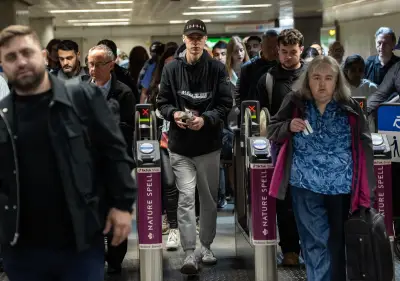
Budget long-haul carrier Norse Atlantic has suspended all flights due to a 'critical' financial situation. The airline, which operates routes from the UK to destinations including Orlando, Cape Town and Bangkok, halted operations on Thursday, November 26.
Surging jet fuel costs linked to the Iran war have pushed the carrier to suspend all flights until the issues can be resolved. Norse said on Thursday that if a short-term financing solution is not secured urgently, it is the Board's intention to file for bankruptcy.
Shares plunge and consumer advice
Shares in Norse plunged more than 70% in 24 hours on Wednesday and plummeted an additional 18% by Thursday. Consumer group Which? said passengers will likely feel 'apprehensive' about their travel plans, but warned those with bookings to exercise caution.
Rory Boland, editor of Which? Travel, said: 'It's important you don't cancel your flight, as the airline has not yet collapsed, and doing so removes your right to a refund.'
'If Norse does go bust, whether you get a refund depends on how you booked and paid.' Boland explained that the process for getting money back will vary depending on the booking method.
Refund guidance for passengers
Boland advised: 'If you booked direct with Norse, you may be able to claim a refund via your credit card provider, or possibly your debit card.'
'For those stuck abroad, contact your insurer to see if your policy can help with alternative arrangements; otherwise, some carriers may offer reduced-price rescue fares.'
'If you have booked a package holiday that includes Norse Atlantic flights, your tour operator is responsible for rerouting you or issuing a refund.'
Why is Norse Atlantic in trouble?
Like several smaller European carriers, such as airBaltic (which filed for US Chapter 11 bankruptcy protection in September), Norse Atlantic entered 2026 without fuel hedging, meaning it had not locked in fuel prices in advance.
When the US-Israeli conflict with Iran broke out in late February, European jet fuel prices more than doubled in March, remaining high since. This left unhedged carriers struggling to cover basic operating costs. Fuel typically makes up around 20% to 30% of an airline's expenses.
Norse Atlantic, founded in 2021, says it remains in talks with investors over a possible takeover, as well as short-term financing, though it warned there is 'no assurance that a viable solution will be found.' The carrier launched a formal sale or merger process in July and has been in talks to lease out some Boeing 787s to cope with surging jet fuel costs.
Wider travel disruption
Aviation analysts say the global airline industry is enduring its worst crisis since the COVID-19 pandemic, with smaller carriers hit hardest. Even financially healthier airlines are cutting capacity for next year, including British and Irish carriers easyJet and Ryanair.
EasyJet cut 700,000 seats for winter in October, reaching a total of 1.4 million seats cut between October 2026 and March 2027. The airline reported £244 million in additional fuel expenses this year, resulting in an 89% drop in pre-tax profits. Ryanair announced in September that it will cut two million seats due to rising jet fuel costs, and announced this month that they were freezing pay, cutting hiring, and considering reducing crew numbers on flights to save costs.
This means holidaymakers face fewer routes and potentially higher ticket prices ahead. In April, it was reported that air fares were costing 24% more on average compared to last year.
Other airline collapses this year
In April, Ascend Airways, a British ACMI (Aircraft, Crew, Maintenance, and Insurance) and charter airline, ceased all operations. That same month, Air Antilles, a French regional airline, went into liquidation, closely followed by Lufthansa Cityline, a subsidiary of Lufthansa, which cited 'significantly increased kerosene prices' from the Iran war.
In May, US budget airline Spirit Airlines shut down after failing to secure a $500m (£368m) bailout from the Trump administration. Low-cost Mexican carrier Magnicharters collapsed in May, and UK charter airline Zenith Aviation Limited went into administration, causing 41 job losses. EcoJet Airlines, the Edinburgh-based startup that aimed to become the world's first electric airline, formally entered liquidation in May without ever carrying a passenger.
Dutch electric aircraft developer Maeve Aerospace was declared bankrupt on May 28 by a court in The Hague after failing to secure a €20m funding round. Finnish airline Jetflite is preparing to shut down its operations on June 8, citing 'unprofitable performance.' Latvia's airBaltic filed for Chapter 11 bankruptcy on Monday, September 14, which was then approved on September 16. On November 4, Global Airlines, a start-up which never launched regular scheduled services and only operated four showcase charter flights, was placed into compulsory liquidation over unpaid debts.