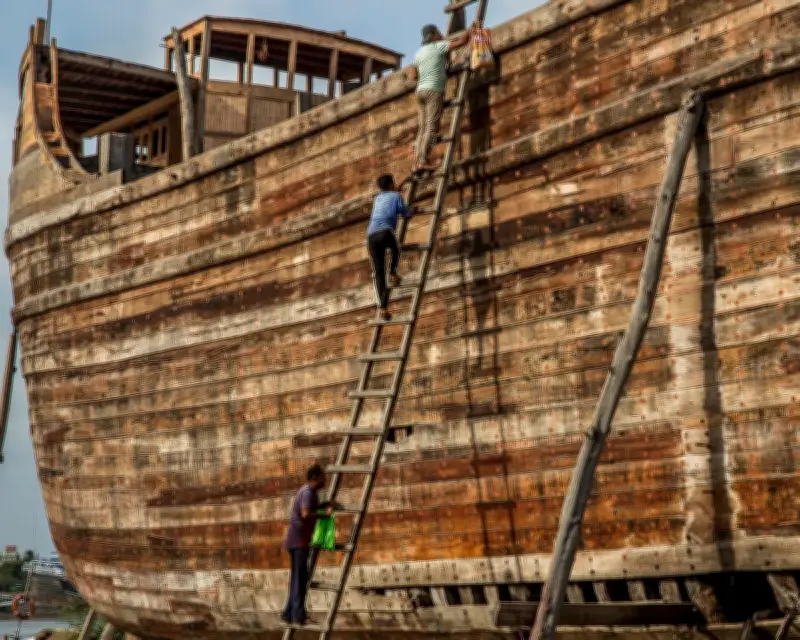
In the 16th-century port of Mandvi on India's west coast, shipbuilders take about three years to complete a handcrafted teak dhow, a trade that remains as cultural as it is technical. The city, founded by the rulers of the kingdom of Kutch, became one of the most dynamic ports in the western Indian Ocean, thanks to its position along the Rukmavati River estuary and mastery of monsoon wind navigation.
A Legacy of Maritime Trade
Mandvi prospered through trade, exporting cotton textiles, indigo, cereals and handicrafts, while importing dates, pearls, Arabian horses and luxury goods. Its shipyards specialised in building huge teak dhows suited to long voyages across the Indian Ocean, a craft that employed many families of carpenters and other workers.
Today, each dhow takes several years to build by hand and employs about 25 craftsmen. Apprenticeships begin in adolescence, in a world where teams are related and the trade is as much cultural as it is technical. Workers from different religious communities build the boats, with a large proportion being Muslim, though shipbuilding is also part of a very ancient Hindu tradition.
Decline and Modern Challenges
From the 19th century onwards, Mandvi began to fall into economic decline. The advent of steamships, the need for deep, modern port infrastructure and British colonial rule, which restructured maritime trade, led to a shift to better-equipped ports such as Mumbai. After independence in 1947, the creation of the nearby port of Kandla definitively marginalised Mandvi commercially.
Mandvi was also affected by the 2001 earthquake in Kutch, which damaged some of the old buildings and accelerated its urban transformation. The city still clings to its few traditional shipyards, where workers also maintain and repair modern vessels.
Cultural Heritage and Tourism
Away from shipbuilding, the city today is known for its neglected architectural heritage and its beaches, which attract Indian tourists and middle-class locals. The local beach remains a popular entertainment spot, even as the ancient craft of dhow building continues against the odds.