

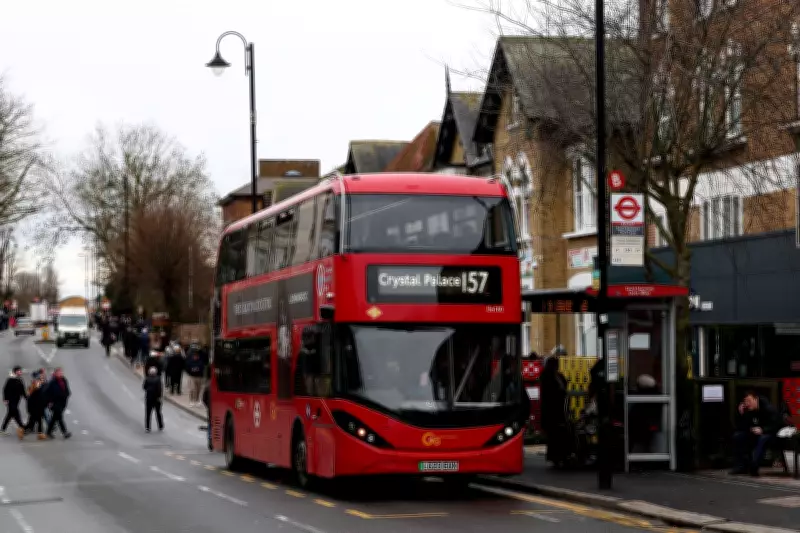
London is bracing for significant travel disruption in the coming months, with the alarming possibility that bus workers and Tube drivers could stage strikes on the very same day. This dual threat emerged on Thursday, casting a shadow over the capital's transport network and raising concerns for commuters, businesses, and visitors alike.
Coordinated Industrial Action Looms
The Rail, Maritime and Transport union (RMT) has confirmed plans for two-day strikes in April, May, and June. These actions are part of an ongoing and contentious dispute over working hours that has plagued negotiations. While two strikes scheduled for the upcoming week were recently called off following constructive talks with London Underground, the broader conflict remains unresolved, leaving the door open for future disruptions.
Bus Workers Ballot for Strike Action
In a separate but potentially converging development, Unite the union announced that its members, who serve as bus station and network traffic controllers for Transport for London (TfL), are currently being balloted for industrial action. The primary grievance centers on proposed rota changes that workers argue will severely disrupt their work-life balance. The ballot is set to close on 13 April, and Unite has explicitly warned that any resulting strike action could be timed to coincide with the RMT's planned walkout dates, amplifying the impact.

Sharon Graham, Unite's general secretary, strongly condemned the situation. "Our hardworking members at TfL perform a crucial role in ensuring bus passenger safety and maintaining smooth service operations," she stated. "Yet, they are being confronted with rota alterations that will drastically affect their personal lives and could even expose them to disciplinary action for circumstances beyond their control. This is utterly unacceptable. TfL must reconsider its position or prepare for a highly disruptive strike. Our members have the union's complete and unwavering support throughout this dispute."
Recent Progress and Ongoing Tensions
On a slightly positive note, the RMT union confirmed the suspension of two 24-hour strikes by London Underground drivers that were planned for next week. This decision followed tangible progress in discussions aimed at resolving the working hours disagreement. Sir Sadiq Khan, the Labour Mayor of London, welcomed this development, describing it as "positive news for Londoners, businesses, and visitors." He added, "I am encouraged that talks have been constructive and that both parties continue to work diligently towards a lasting resolution."
Background of the Dispute
The specifics of the breakthrough remain unclear. However, prior to the suspension, Transport for London had clarified that its proposal for a four-day working week was intended solely for train drivers on the Bakerloo line. TfL emphasized that these changes to working patterns would be entirely voluntary and had urged the union to cancel the proposed strikes in light of this offer.
Nick Dent, Director of Customer Operations for London Underground, expressed relief at the temporary reprieve: "We are pleased that the RMT has decided to suspend its planned industrial action scheduled between Tuesday 24 March and Friday 27 March. This allows for continued dialogue." A TfL spokesperson also commented on the bus worker situation, noting, "We remain engaged in discussions with Unite regarding the proposed rota modifications and are hopeful of reaching a mutually agreeable solution that works for all parties involved."
Despite these efforts, the underlying tensions persist. The potential alignment of bus and Tube strikes represents a severe threat to London's transport infrastructure. Such coordinated action could paralyze large sections of the network, leading to unprecedented congestion, economic losses, and widespread inconvenience for millions. All eyes are now on the ongoing negotiations and the outcome of Unite's ballot, as the capital anxiously awaits news that could determine its mobility for months to come.






