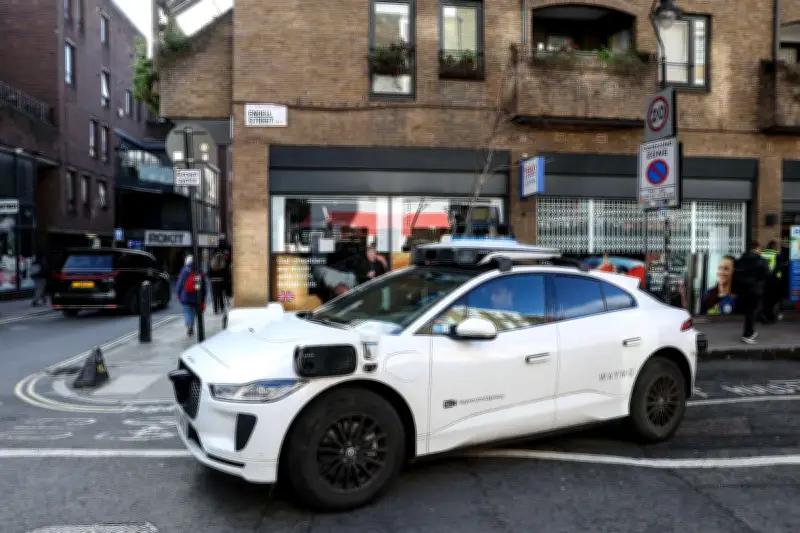
Plans to roll out robotaxis in London have been delayed due to regulatory and technical hurdles. The self-driving taxis were previously expected to arrive in the capital by the end of the year, with companies such as Uber-backed Wayve confirming in June that its fleet was “ready to go.”
Both Wayve and Waymo were granted the first minicab licenses in London to offer self-driving robotaxi rides. As many as 100,000 people signed up to express interest in the service, which would have initially operated with a human driver at the wheel while the technology is confirmed as safe.
Guidance still unpublished
Despite initial breakthroughs—such as transport secretary Heidi Alexander accelerating the proposed timeline for trials by a year—the rollout has been stunted by delays in guidance. Transport for London (TfL) has still not published the guidance that companies wanting to offer services must follow to win its approval.

Christina Calderato, TfL’s director of strategy, said last month at the London Assembly’s transport committee meeting that it would not be in a position to accept applications “for some time.” “I do not think we are in a rush to get [the guidelines] out. There is a huge amount of work going on behind the scenes,” she said.
Competition and safety approval
Google-owned Waymo is leading the race to launch in London and is already testing about 100 vehicles in the city. Uber-backed Wayve and Chinese-owned Baidu are not far behind. To fully launch robotaxi services, the Driver and Vehicle Standards Agency (DVSA) must approve a new process known as the automated passenger services permit. As it stands, not one vehicle has been approved by the DVSA.
Robotaxi services have already been launched in more than 20 cities across the US, China, and the Middle East. Zagreb, the capital of Croatia, became the first European city to offer self-driving rides to the public through Uber—though a human driver is still present for monitoring.
Company responses
Ben Loewenstein, Waymo’s head of policy and government affairs for the UK and Europe, told the Financial Times that the company was currently “working through the safety approval process” with the transport department and was waiting on TfL’s guidance to gain consent. He added that Waymo was working towards launching a fully autonomous service “by the end of this year” but would not say whether the company would be able to offer paid rides to the general public in that timeframe.
TfL has given 15 private vehicle hire licenses to Wayve’s Ford Mustang Mach-E vehicles, which are fitted with AI-powered driving software. Following trials, Wayve plans to switch to a Nissan Leaf vehicle, which is due to be released later this year. Alex Kendall, Wayve’s chief executive, said the company never claimed it would have a fully driverless operation this year. “I don’t want to put a timeline on it because we want to make sure we pass through [the regulatory process],” he told the FT. “This work is continuing at pace. London is a significant step up in complexity compared to Phoenix or San Francisco.”
The Standard has approached TfL for comment.