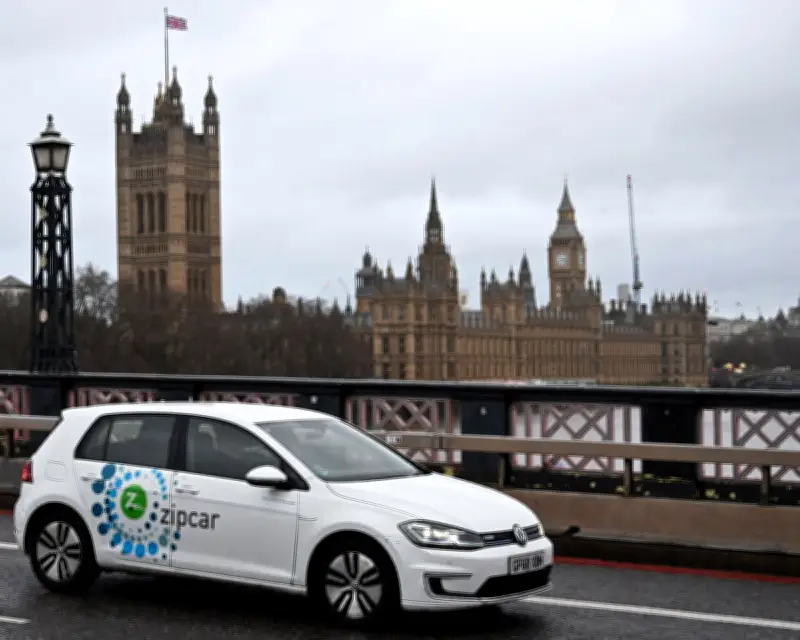
London has lost a "catastrophic" 89% of its car club vehicles since Zipcar ended its service in late 2025, data reveals. Only 330 car club vehicles are now available for rent, down from 2,800 before the US company's withdrawal, according to Collaborative Mobility (CoMoUK), a charity. Former users are being pushed to consider buying or leasing vehicles to fill the gap.
Impact of Zipcar's Withdrawal
Car clubs allow drivers to use vehicles parked around a city, using apps to book and unlock them. Zipcar dominated London's car club market before its shock decision to pull out in December 2025, leaving a gap that has yet to be filled for Londoners without a car. Six months after the withdrawal, only about 100 of the 330 remaining cars have been added since the end of the year.
A survey by CoMoUK of 216 former Zipcar users found that 9% had already bought or leased a vehicle to replace the car club, while 55% said they were considering it. This highlights the gap left in London's car-sharing market.
Market Response and Challenges
Free2move, owned by Stellantis, Enterprise Car Club, and British company Co Wheels have said they are considering expansion in London, but none have yet announced a decision to meaningfully increase numbers. Peer-to-peer companies Hiyacar and Turo have experienced increased interest but rely on private owners listing their cars.
Car clubs reduce the overall need for vehicles, cutting carbon emissions and saving ownership costs. However, clubs in some places have struggled to make money. London should be one of Europe's most attractive markets for car-sharing, with extensive public transport and 42% of the population without a car. But it has been held back by the lack of centralised rules and processes, according to Richard Dilks, CoMoUK chief executive.
"We're massively down overall," Dilks said. "That's a catastrophic result for a sector that is doing well across Europe." He added that some London boroughs had cut fees and made licensing easier for car clubs, but the situation is still very inconsistent across London's 32 boroughs, making it onerous to set up across the capital. Other forms of shared transport, including dockless electric bicycles from Lime and Forest, are managed centrally by Transport for London.
"If there's viability, then there should be a queue of people knocking on the door," Dilks said. "But there's not, and there's not one door."
Historical Context
A decade ago, TfL said it wanted a million car club users by 2025, but the number of vehicles is now less than a fifth of what it was then. Zipcar was founded in 2000 in the US before merging with UK equivalent Streetcar in 2010. Its current owner, Avis Budget, decided to pull the plug on the loss-making operation in London, leaving only its American operations.