

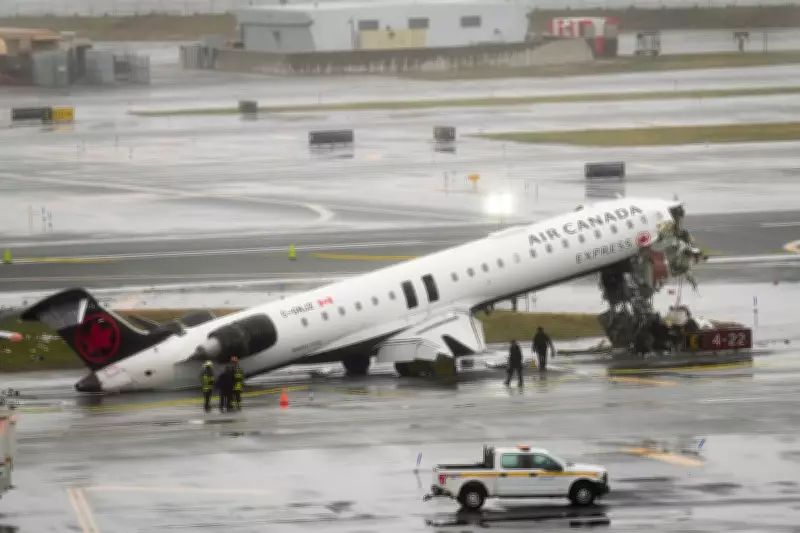
LaGuardia Tragedy Spotlights Dire Overstretch in US Air Traffic Control
The fatal collision at New York's LaGuardia airport has thrust the chronic overstretch and understaffing of US air traffic control into the spotlight. An Air Canada Express jet from Montreal collided with a fire truck on the runway, killing both pilots and raising urgent questions about systemic failures in aviation safety.
President Trump's Controversial Remarks
In response to the tragedy, former President Donald Trump stated, "They made a mistake; it's a dangerous business." This comment, which did not specify whether it referred to the pilots or the controller, has shocked aviation professionals globally. The core mission of air traffic control, as outlined by the US Federal Aviation Administration (FAA), is to ensure the safest aerospace system possible, making such remarks particularly jarring.
Sequence of Events at LaGuardia
As flight AC8646 approached for landing, a United Airlines flight declared an emergency due to an unidentified odour, requiring immediate gate access. With no gates available, the air traffic controller was managing this incident while the Montreal flight was on short finals. The controller cleared a fire truck to cross the runway just as the aircraft touched down, realizing the conflict too late. Despite eight commands to stop, the collision occurred, resulting in the deaths of the captain and first officer.

Overwhelmed Control Tower Conditions
It is believed a single controller was handling both approach and ground movements at LaGuardia, a dual role that significantly increases workload. After the crash, a recording captured the controller admitting, "We were dealing with an emergency earlier. I messed up," with a pilot responding in support. This incident echoes broader concerns, as highlighted in the AvTalk podcast, where hosts described New York controllers' workloads as "near impossible" and worthy of sainthood.
Systemic Understaffing and Resource Issues
Nick Daniels, president of the National Air Traffic Controllers Association (Natca), has repeatedly warned of chronic understaffing. Controllers often work six days a week, ten hours a day, using outdated equipment in facilities over 60 years old. This follows a 2025 collision in Washington D.C. that killed 67 people, where two controllers were handling four roles, leading to reduced situational awareness.
Dorothy Robyn of the Brookings Institution notes that from 2013 to 2023, the FAA hired only about two-thirds of the controllers needed by its staffing model. Early in 2025, Elon Musk's Department of Government Efficiency faced accusations of job cuts at the FAA, though the White House denied any terminations of safety-critical staff.
FAA's Response and Future Plans
While the FAA claims to have over 14,000 controllers, Transportation Secretary Sean Duffy admitted in May 2025 that the US is 3,000 short. The administration plans to hire and train several thousand more by 2028, aiming to grow the workforce by over 2,000. Five days before the LaGuardia tragedy, Duffy emphasized enhanced safety protocols across all airports, pledging decisive action to protect travelers.
This tragedy underscores the urgent need for investment in staffing and modernization to prevent future disasters in the US aviation system.






