

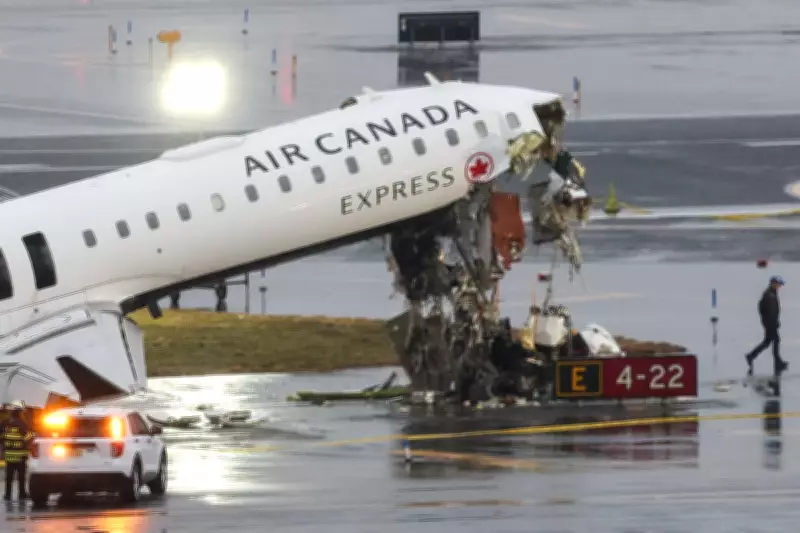
Harrowing audio recordings from the air traffic control tower at New York's LaGuardia Airport have revealed the desperate attempts by controllers to prevent a fatal collision that claimed two lives and forced the closure of one of America's busiest aviation hubs. The Air Canada Express flight from Montreal, carrying 76 passengers, crashed into a Port Authority fire truck on the runway late Sunday evening, resulting in the deaths of both the pilot and co-pilot.
Panicked Moments Captured in Audio Transmission
The air traffic control audio captures a voice urgently commanding a vehicle to "Stop, stop, stop!" moments before the catastrophic impact. The recordings provide a chilling insight into the final moments before the disaster, with one controller heard saying "That wasn't good to watch" over the radio, followed by another voice admitting "I messed up."
Timeline of the Deadly Incident
The sequence of events began on Sunday, March 22, when Air Canada Flight 8646 departed Montreal-Pierre Elliott Trudeau Airport approximately two hours behind schedule. The Jazz Aviation-operated flight landed at LaGuardia Airport at 11:37 p.m., setting the stage for the tragic events that would unfold just minutes later.

At approximately 11:40 p.m., the aircraft collided with the Port Authority fire truck on runway 4 while traveling at speeds between 93 and 105 miles per hour, according to data from flight tracking service FlightRadar24. The fire truck had been on the runway responding to a separate emergency situation when the collision occurred.
Controller's Frantic Warnings
The audio recordings reveal a controller initially granting clearance to the vehicle to cross part of the tarmac, then desperately attempting to stop it as the situation escalated. The transmission captures the escalating tension as the controller repeatedly shouts "Stop, Truck 1, stop" in a futile attempt to prevent the impending disaster.
Following the collision, another voice on the radio informed the Air Canada crew: "Jazz 646, Jazz 646 I see you collide with a vehicle. Just hold position. I know you can't move. The vehicles are responding to you now."
Aftermath and Investigation
In the immediate aftermath of the crash, all passengers were evacuated from the aircraft, with 41 individuals transported to local hospitals, some sustaining serious injuries. LaGuardia Airport announced its complete closure to facilitate emergency response operations and allow for a thorough investigation into the incident.
Transportation Secretary Sean Duffy confirmed he was en route to LaGuardia Airport and announced that his office would be examining whether air traffic control staffing levels contributed to the fatal incident. This investigation comes amid concerns about declining air traffic controller numbers, which have decreased by approximately 6 percent over the past decade.
Broader Context of Aviation Challenges
The deadly crash occurred against a backdrop of existing chaos at U.S. airports due to a partial government shutdown that has caused significant delays at security checkpoints nationwide. While air traffic controllers are not directly affected by the current funding lapse for the Department of Homeland Security, historical patterns show that many have stopped reporting for work during previous shutdowns when faced with extended periods without pay.
This incident marks the first major commercial aircraft disaster in America for 2026 and has raised serious questions about airport safety protocols, emergency response coordination, and the impact of staffing challenges on aviation safety systems.






