

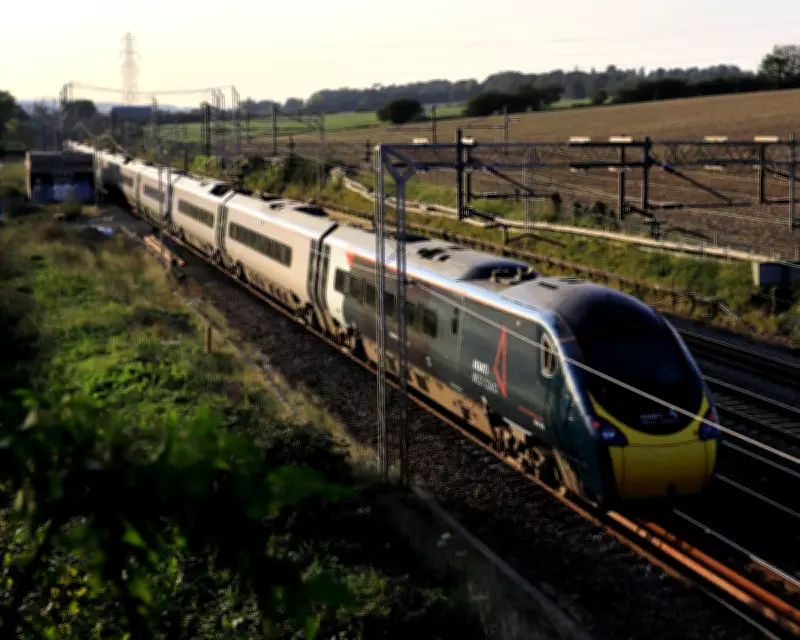
HS2 Train Design Shift Risks Northern Capacity and Speed, Expert Warns
Plans to modify the size of HS2 trains in a bid to maximise capacity are poised to inflate costs while resulting in fewer seats and slower services north of Birmingham, according to a senior government and rail industry figure. The warning comes as a review of the original train order aims to prevent service issues but may inadvertently exacerbate them.
Contract Review and Capacity Concerns
The £2 billion order for 54 high-speed trains, to be constructed in Britain by a joint venture of Alstom and Hitachi, is currently under scrutiny as HS2 Ltd seeks to reduce expenses and renegotiate contracts. This order was placed by the government in 2021, prior to Prime Minister Rishi Sunak's cancellation of the northern leg of HS2 in 2023. Initially, the 200-meter-long eight-carriage units were designed to combine into 16-carriage trains, comparable in size to a Eurostar. However, this configuration will now only be feasible on the new line between London and Birmingham, as existing stations like Manchester Piccadilly cannot accommodate 400-meter-long trains.
Confined to eight carriages, HS2 services are expected to diminish capacity on the conventional railway line north of Birmingham. Currently, Pendolino trains operating in this region are both faster and longer, a scenario that the Department for Transport (DfT) and HS2 Ltd officials are striving to avoid, potentially by ordering longer trains. One option under consideration involves procuring approximately 43 longer trains, each 250 meters in length, which could operate at most stations.

Expert Warning and Tilt Limitations
Chris Gibb, a non-executive director of DfT Operator (DFTO), the state-owned rail operating company, has publicly cautioned against altering the train order. He argues that such changes could incur additional costs while still leaving HS2 unable to match the performance of west coast main line fleets. Notably, the Hitachi-Alstom trains would lack the tilting capability of Pendolinos used by Avanti West Coast, restricting their speed on curved conventional tracks.
In a statement to politicians and industry representatives at the all-party parliamentary rail group in Westminster, Gibb emphasized his role as a "keen advocate of HS2" for 18 years but clarified he was speaking in a personal capacity. He expressed a duty to "offer leadership by example and to act in the public interest." Gibb asserted that if HS2 commenced operations by replacing 11-coach Pendolinos with eight-coach trains, these would be overwhelmed with passengers from day one, leaving many behind.
Potential Downsides and Alternative Proposal
Gibb highlighted that modifying the contract would consume both time and financial resources, with each potential variation carrying drawbacks, such as rendering prior work on HS2 stations and depots obsolete. Instead, he recommended retaining the original train order with Alstom and Hitachi to avoid contractual penalties and delays. Concurrently, he proposed planning to replace the current Pendolino fleet with longer, faster, modern versions, ready for when HS2 services extend to the north around 2040.
This approach, Gibb argued, would "give a significant increase in capacity, revenue and a reduction in journey times on all routes, with no further railway construction needed for now." Lord McLoughlin, former transport secretary during HS2's legislative approval, lamented the current situation as "a tragedy" but questioned whether Gibb's plan might also entail substantial costs. Gibb countered that he would "anticipate it's a cost saving" due to requiring fewer Pendolinos overall.
Industry Support and Ongoing Speculation
Lord Berkeley, a long-term HS2 sceptic, endorsed Gibb's idea, suggesting, "It could be 2040 or 2050 [when services began]. Let's have one consistent type of rolling stock so you can keep using them in any circumstances." Gibb admitted uncertainty regarding whether the order would be varied, but widespread speculation suggests the contract could be amended during the anticipated "reset" of HS2's schedule and budget by chief executive Mark Wild, currently under discussion with ministers.

A spokesperson for HS2 Ltd stated, "The Hitachi-Alstom joint venture is contracted to deliver a fleet of 54 new trains for HS2. No changes have been made to the original order." HS2 confirmed ongoing collaboration with the manufacturer and the DfT to finalize train designs ahead of production, with construction set to occur in Derby and Newton Aycliffe. The DfT was approached for comment but has not yet responded.





