

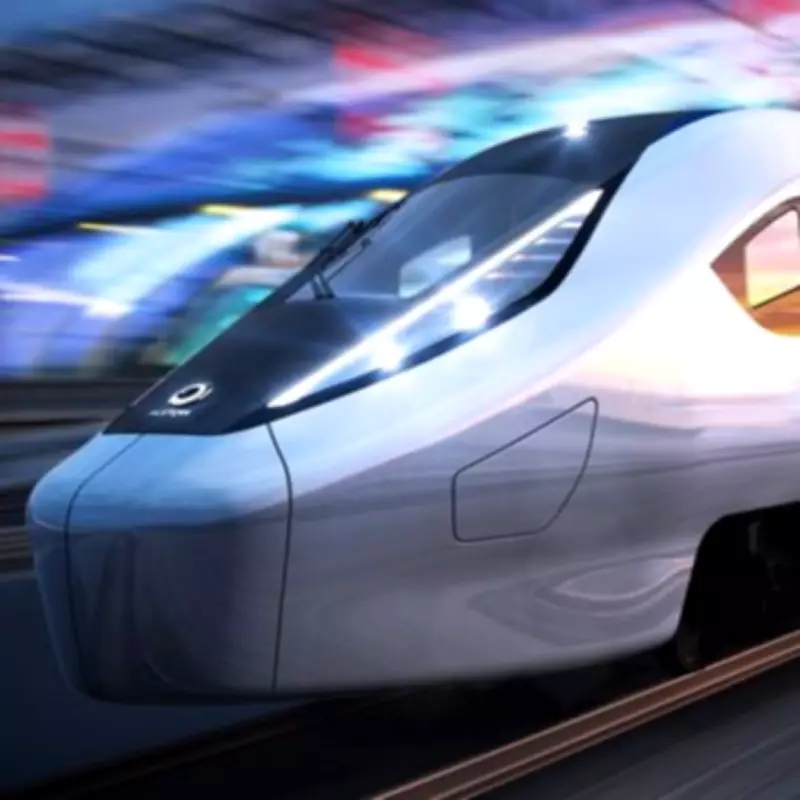
HS2 Train Speeds Slashed in Major Cost-Cutting Overhaul
The High Speed 2 rail project, commonly known as HS2, is undergoing a significant revision with train speeds set to be reduced from the originally planned 360 kilometres per hour to a range of 300-320km/h. This strategic move is designed to curb the escalating costs of the ambitious infrastructure initiative, which has faced mounting financial pressures and delays.
Original Vision Scaled Back to Align with Global Standards
Initially commissioned to operate at 360km/h, HS2 was poised to become the world's fastest conventional high-speed railway, surpassing existing networks. However, government analysis has concluded that the additional time and expenditure required to engineer unique tracks for such extreme speeds would yield negligible benefits for passenger journey times. Consequently, the revised speed will bring HS2 into alignment with other major high-speed systems, including the UK's HS1, Japan's bullet trains, and France's TGV network, while still exceeding the 200km/h limit typical of most British high-speed trains.
Financial Imperatives Drive the Decision
With estimates placing the total cost of HS2 between £50 billion and £100 billion, the Department for Transport has emphasised that this adjustment could save taxpayers billions of pounds and reduce construction timelines. Transport Secretary Heidi Alexander has been tasked with exploring further high-speed alternatives, with HS2 Ltd chief executive Mark Wild leading the review. Wild is expected to report back to the government in the summer, focusing on enhancing efficiency without compromising core objectives.

"This Government is determined to deliver HS2 as effectively and efficiently as possible," Alexander stated. "I will look at every opportunity to claw back construction time, save taxpayers money and ensure the project delivers for the country." She also criticised previous Conservative administrations for a "litany of failure" that saw costs for Phase 1, linking London and Birmingham, soar by £37 billion, potentially making it one of the world's most expensive railways.
Broader Economic and Political Context
The HS2 project currently employs approximately 30,000 workers and involves thousands of UK businesses, underscoring its economic significance. Despite the speed reduction, officials project that HS2 will contribute £20 billion to the economies of West London and the West Midlands over the next decade, while facilitating the development of 63,000 new homes. Mark Wild reiterated that speed was never the primary goal, highlighting instead the railway's role in improving journey experiences, increasing network capacity, and fostering economic growth.
In parallel, the government has addressed delays to Northern Powerhouse Rail, a separate initiative that will introduce new lines between Liverpool and Manchester, and later between Birmingham and Manchester, effectively replacing the cancelled phase of HS2. This development follows earlier pledges by Labour to resolve what they termed an "appalling mess" left by the Conservatives, reflecting ongoing political tensions over infrastructure management.
As the UK navigates these complex transport challenges, the revised HS2 plan represents a pragmatic shift towards cost containment and timely delivery, balancing ambition with fiscal responsibility in a bid to secure the nation's future connectivity and prosperity.






