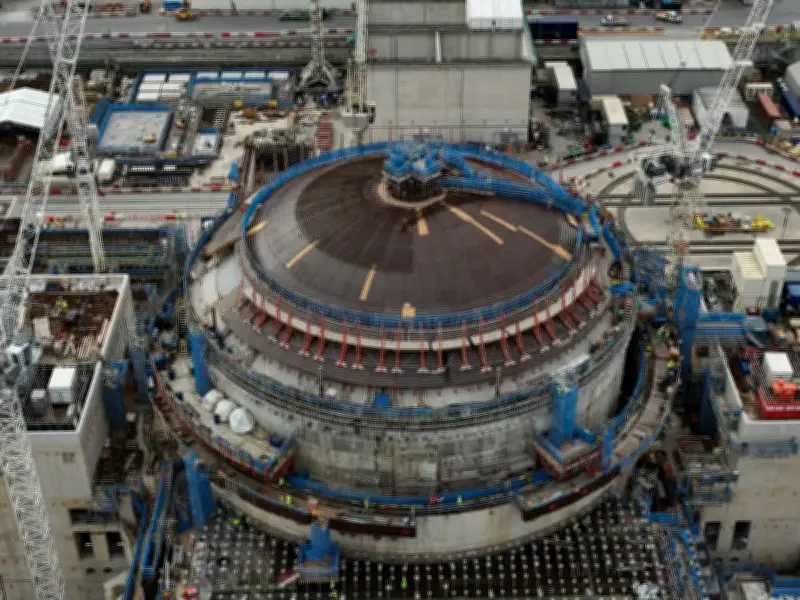
Hinkley Point C nuclear station in Somerset has completed work on a major marine tunnel under the Bristol Channel and issued a progress update on the project.
The 620m tunnel will be used for the power plant's fish return system and is one of three marine wildlife protection systems being deployed by energy giant EDF on the project.
Tunnel boring machine retrieved
The boring machine, dubbed Sarah Guppy by local school children after the pioneering 19th-century engineer from Bristol, took five months to dig the tunnel. The huge piece of machinery has now been retrieved by a floating crane, so that it can be taken away to be cleaned and used on another site, EDF bosses said.
The seabed breakthrough completes 8km of marine tunnels on the Bridgwater project, which will also use a 'fish disco' system to deter marine life being sucked into pipes. The network of speakers will play sounds under water to deter fish in the Severn Estuary from swimming close to cooling pipes.
Progress on fit-out phase
The Somerset nuclear plant said earlier this year it was already able to slow the speed of water entering the cooling tunnels, allowing fish to escape from as close as two metres in a 20-kilometre-wide channel, with a return system transferring fish back to the sea.
The news comes as bosses at Hinkley Point confirmed the power plant is progressing to its fit-out phase, with both nuclear reactors now in place and work under way to install the world's largest turbine. Over 95 per cent of the main civils work is now complete on the first reactor unit.
Completion expected by 2030
Hinkley Point C is Britain's newest nuclear power station and is expected to provide six million UK homes with zero-carbon electricity when it is finally finished.
The plant was first approved by the government in 2016, but over the last decade has been blighted by cost overruns and delays. The plant is currently expected to be finished in 2030 with a price tag of £35bn in 2015 prices - almost double the estimate of £18bn when it was given the go ahead.