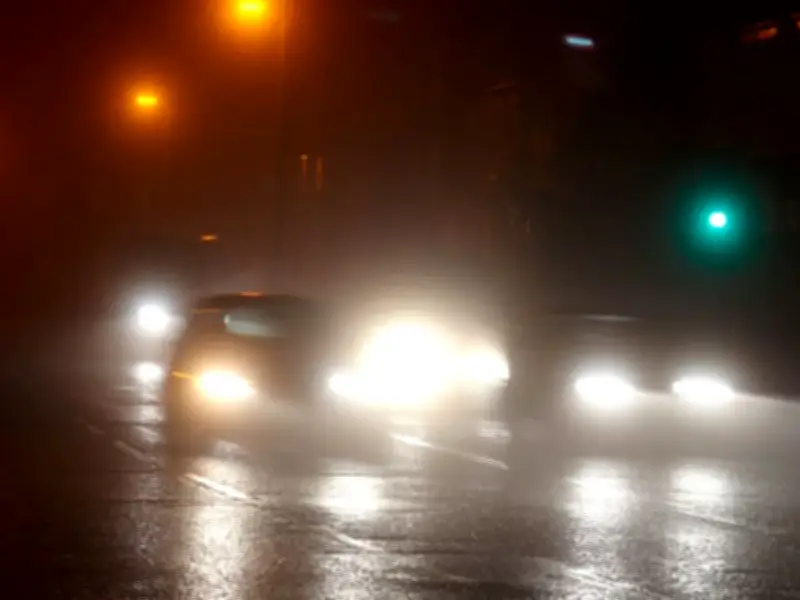
Motoring experts are warning drivers that five common headlight errors could endanger road users and potentially result in fines of up to £5,000. The warning comes as dense fog continues to shroud parts of the UK, with the Met Office issuing multiple yellow weather warnings.
With fog dramatically cutting visibility across affected regions, motorists are confronting dangerous driving conditions, especially during morning journeys. Reduced visibility can make it more difficult to identify other vehicles, pedestrians, and potential hazards, underscoring the critical importance of proper headlight use.
Flashing Headlights Could Lead to Fines
Experts at automotive and motorcycle dealership Dick Lovett are calling on drivers to exercise extra care when travelling in fog. They caution that failing to use dipped headlights when visibility drops below 100 metres, or incorrectly using full beams, could create further dangers on the road.
Alex Lee, a motoring expert at Dick Lovett, has identified five common headlight and vehicle lighting errors that drivers should steer clear of, particularly as foggy conditions persist across parts of the country. According to the UK Highway Code, flashing your headlights to thank other drivers is illegal and can lead to a £100 fine and three penalty points on your licence.
Rule 110 explicitly states that headlights should be used solely to alert other road users to your presence, not to convey personal messages, greet others, or invite them to proceed. Misusing your lights in this manner can cause dangerous confusion on the road, misinform pedestrians, or even make you a target for "flash-for-cash" scams.
Other Common Headlight Mistakes
With more than 205,000 drivers found guilty of speeding offences in 2024, Alex says it comes as little surprise that some motorists warn others about speed cameras and mobile police speed-check vans on the road. Flashing headlights remains one of the most common methods of doing so. Alex cautions that drivers caught doing this could face fines of up to £1,000, as it would legally be classified as 'obstructing police duties' under section 89 of the Police Act 1997.
Alex added: "And while it might feel nice to help and look out for a fellow driver, it could lead to more reckless drivers on the road if they're not caught by police and fined accordingly. Remember, speed limits are there to keep everyone, including you, safe."
Regarding hazard lights, the Highway Code states: "Never use them as an excuse for dangerous or illegal parking". Incorrect use of hazard lights could leave you facing a charge of 'driving without due care and attention', which constitutes an offence under section 3 of the Road Traffic Act 1998 and could result in a £100 fine and three points on your licence, though the most serious cases may be referred to court, where penalties can reach as high as £5,000, plus nine points or a driving ban.
Full Beam, Dipped Headlights, and Clouded Lenses
There are no specific laws in the UK prohibiting the use of full beam headlights, Alex explains. Nevertheless, the Highway Code stipulates that "you MUST NOT use any lights in a way which would dazzle or cause discomfort to other road users". Should you be found to be causing difficulties for other motorists by driving with full beam headlights activated, you could face a charge of inconsiderate driving or 'driving without due care and attention' - carrying a fixed-rate fine of £100 and three points, though drivers could face fines of up to £5,000 and nine points or a ban if the matter is taken to court.
According to the Highway Code, dipped headlights should be used whenever visibility is reduced, or when you are unable to see more than 100 metres (328 feet) ahead of your vehicle. "Basically, any time you're driving at night or during bad weather", Alex said. Failing to switch on your headlights when visibility is this poor could result in a £100 fine if stopped by police, and if the same offence is detected again, this penalty can increase to £1,000. In more serious circumstances, a police officer could also charge you with dangerous driving, which carries a minimum 12-month driving ban.
Throughout the winter months, headlights can develop a foggy or clouded appearance, mainly due to a build-up of road grime and salt. Driving with clouded headlights is against the law, and if stopped, you could face a charge of 'driving without due care and attention' - carrying a fixed penalty of £100 and three points - though motorists could be hit with fines reaching £5,000 and nine points or even a driving ban if the matter goes to court. Alex highlights that the Highway Code stipulates: "Lights, indicators, reflectors and number plates MUST be kept clean and clear". He said: "Having cloudy headlights could also cause you to fail your MOT."