
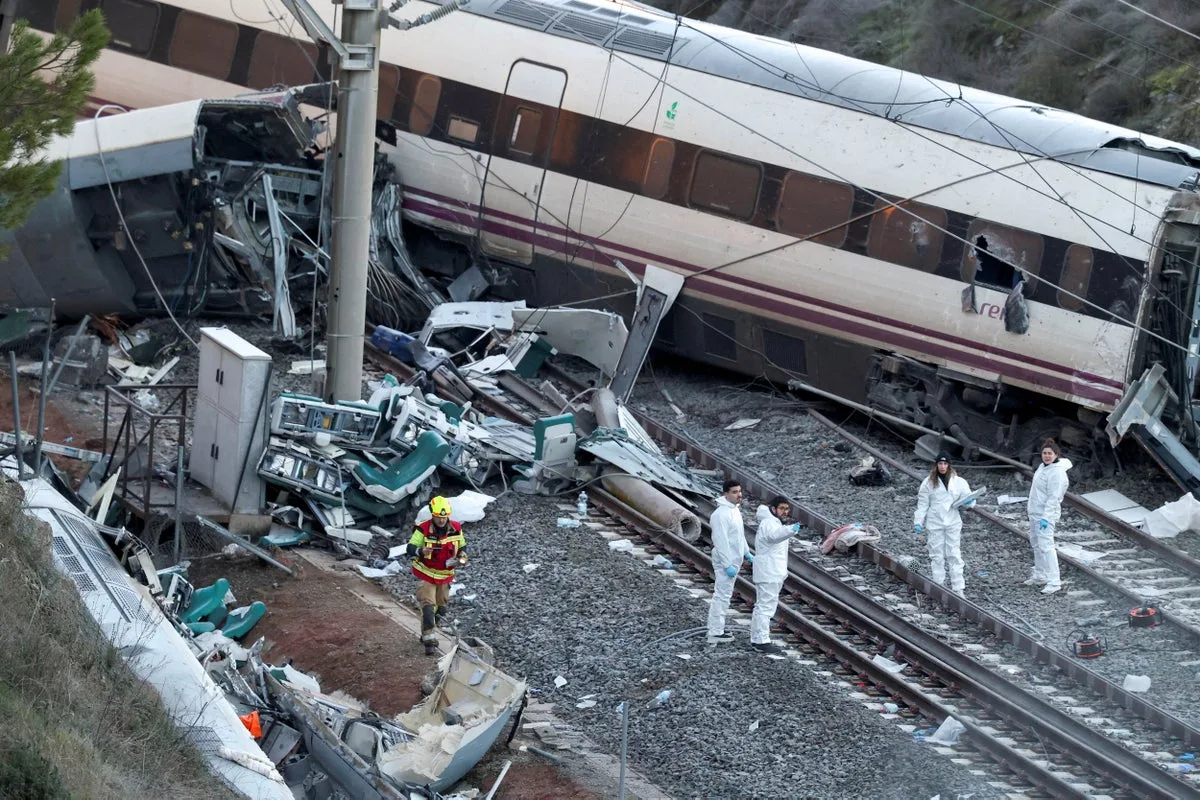
A tragic collision on Spain's high-speed line between Andalusia and Madrid has raised urgent questions about the safety of the country's ageing railway infrastructure. The accident occurred on Sunday 18 January at 19:45 near Adamuz station in Córdoba province, when an Iryo high-speed train derailed and struck a Renfe service travelling in the opposite direction.
The Iryo train, service 6189 from Málaga to Madrid, was changing tracks at a switch when its last three carriages jumped the diverted point and collided with the Renfe Alvia 2384 from Madrid to Huelva. The combined speed of the two trains remains unknown, but the impact was severe.
Investigators are focusing on the switch mechanism. The high-speed line, inaugurated in 1992, still relies on the German LZB signalling system, which is outdated compared with the European Rail Traffic Management System (ERTMS) now installed on newer routes. A preliminary hypothesis suggests the switch may have moved prematurely after initially functioning correctly, causing the Iryo train's wheel to ride over the track.
The Spanish rail market was liberalised in May 2021, but the Andalusia-Madrid corridor only opened to competitors in early 2023 because safety systems had not been upgraded. Both Iryo and OUIGO had pushed for access, increasing service frequency but also exposing older infrastructure to higher traffic.
Officials have not ruled out other causes, though both trains are modern and had recently passed inspections. The infrastructure at the accident site is also new. The investigation continues as Spain faces pressure to modernise its rail network to meet EU standards by 2030.




