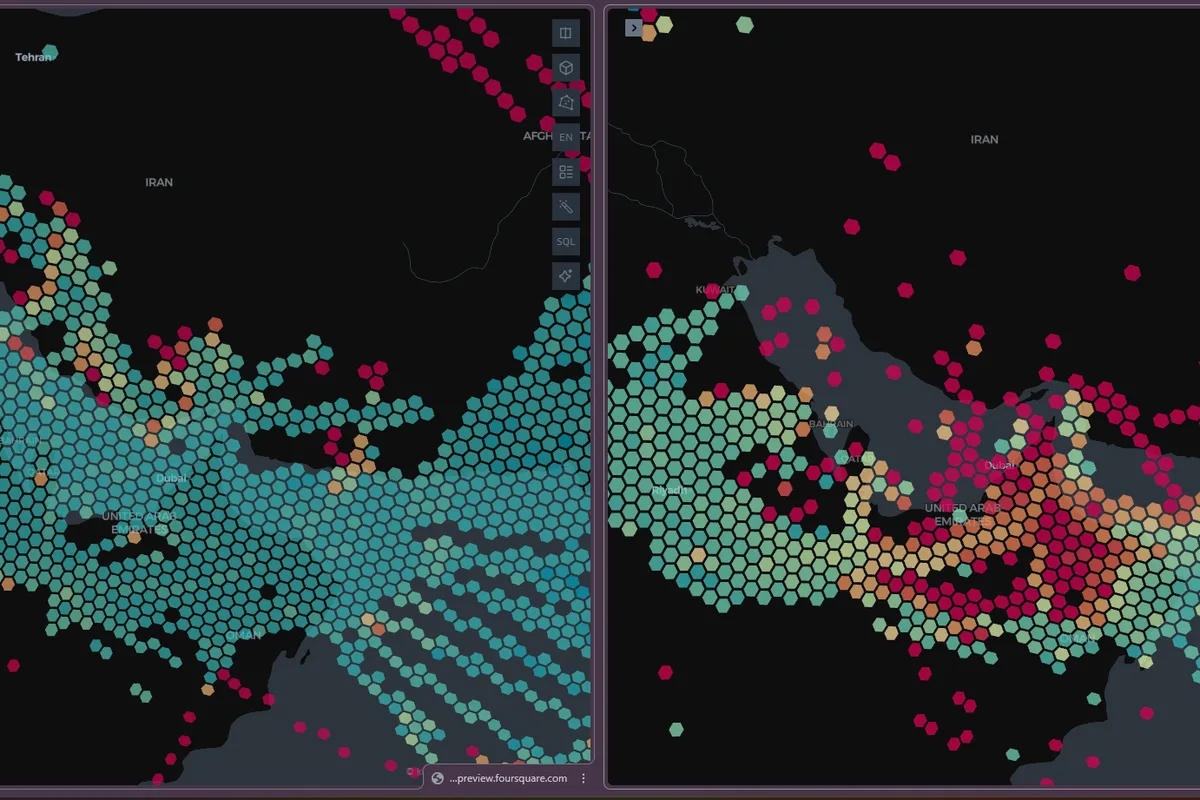
Iran's tightening control over the Strait of Hormuz has sparked an invisible electronic warfare arms race across the Middle East, with GPS interference spiking dramatically since US and Israeli strikes on Tehran began on 28 February. Analysts report that jamming and spoofing of satellite navigation signals are now widespread, affecting military operations and commercial shipping alike.
Commercial traffic through the vital waterway has plummeted by up to 95% in just three weeks, driving up energy prices and intensifying pressure on the US and Israel. While the primary targets of electronic attacks are military, disruption is also hitting commercial vessels off the coasts of the UAE, Qatar, Oman and Iran, reinforcing Tehran's chokehold on the Strait.
GPS jamming works by overwhelming satellite signals with electromagnetic noise, causing receivers to freeze or jump. Spoofing is a more sophisticated technique, transmitting fake signals that trick receivers into reporting false locations. In May last year, the container ship MSC Antonia ran aground in the Red Sea after being spoofed, causing millions of dollars in damage and requiring a five-week salvage operation.
Former British Army colonel Philip Ingram described jamming as an integral part of modern warfare planning, noting that Iran is “prolific” in spoofing. He said Tehran uses interference to confuse allied intelligence gathering and protect itself. Alex Lungu, co-founder of aviation intelligence firm Wingbits, added that all parties in the conflict benefit from using the technology to deny navigation to adversaries.
Intelligence experts believe Iran has strengthened its capabilities since last June's 12 Day War, possibly procuring China's BeiDou satellite navigation system for more accurate targeting. The electronic warfare arms race is further fueled by Russia supplying Iran with anti-jamming technology for Shahed drones, one of which recently hit a UK Sovereign base area in Cyprus.