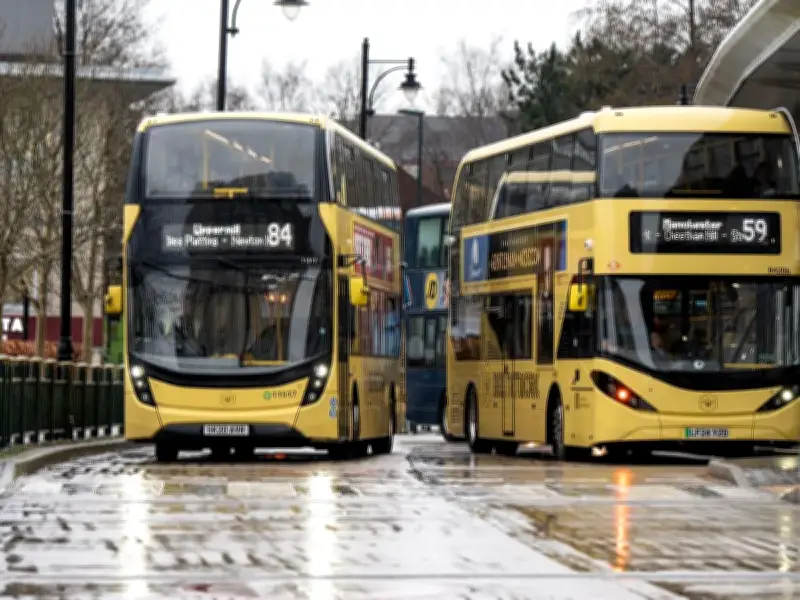
Bus passengers across Greater Manchester are being invited to share their views on how Bee Network services can be made more accessible, as a consultation on the city-region's first Bus Network Accessibility Plan is set to begin next week.
The draft plan identifies several barriers to accessibility that remain on the network, including access to bus stops, availability of passenger information, ease of boarding, availability of assistance and the consistency of facilities at Greater Manchester's interchanges.
Recent Accessibility Improvements
Recent changes to improve accessibility have included audio-visual announcements and next-stop screens on buses, hearing loops, high-contrast handrails and anti-slip flooring. Newer buses also include two dedicated wheelchair spaces and room for an assistance dog close to its owner.
The plan looks at accessibility across the whole bus journey, from planning a trip to getting on board and changing services.
Transport for Greater Manchester (TfGM) said the plan had been developed with disabled people and organisations from across Greater Manchester, who shared their experiences of using buses, what works well, any challenges they may face, and the changes that could make the biggest difference. TfGM said it now wished to hear from more people before the plan is finalised.
Planned Improvements and User Feedback
An example given in the plan of improvements was the installation of push-button audio features at bus stops to assist blind and partially sighted passengers. User research found that the push-button audio feature was easier for visually impaired passengers to use than QR codes or app-based alternatives. Deaf and hard-of-hearing passengers also benefit from visual real-time information and disruption messaging.
TfGM said that by summer 2027 there will be 488 bus-stop electronic passenger information displays and 36 at interchanges. The plan said satisfaction with reaching bus stops is 85 per cent among disabled users compared with 95 per cent among non-disabled users.
Research, complaints and feedback identified uneven pavements, pavement parking, narrow footpaths, clutter, poor crossings, limited seating, lighting and information as barriers to easy bus travel. Participants also highlighted difficulties reading printed timetable information, insufficient real-time information, limited digital displays, inaccessible bus stop layouts for wheelchair users, the need for clearer visual and tactile wayfinding and the importance of step-free access.
Official Response and Consultation Details
Coun Tom Ross, GMCA lead for transport and Bee Network Committee chair, said: "Our Bee Network belongs to the people of Greater Manchester, and we want it to work for everyone.
"Now that we control the bus network we've been able to introduce a range of features to make bus travel more accessible, including working with disabled people to help shape the design of our new electric buses. But we know there is more to do to make sure everyone has a consistently good experience when travelling by bus."
Helen Clark, senior disability engagement and policy lead at Breakthrough UK, a disabled people's organisation, speaking on behalf of TfGM's Disability Design Reference Group (DDRG), said: "Being able to get around by bus can make a huge difference to older and disabled people, helping people stay connected with friends and family and get out to work, education, healthcare and the things they enjoy.
"We know from people's experiences that even when most of a journey is accessible, one barrier along the way can make the whole journey difficult. This consultation is an important opportunity for people to say what works well, what needs improving, and what changes would make the biggest difference."
The consultation will run from December 1 until January 8, 2027. People can find out more and respond through an online survey at www.gmconsult.org. Hard-copy surveys and written and telephone response options will also be available.
Accessible information will include Easy Read and British Sign Language formats, and drop-by events will take place at transport interchanges during the consultation. Feedback will help shape the final plan before it is published in 2027.