
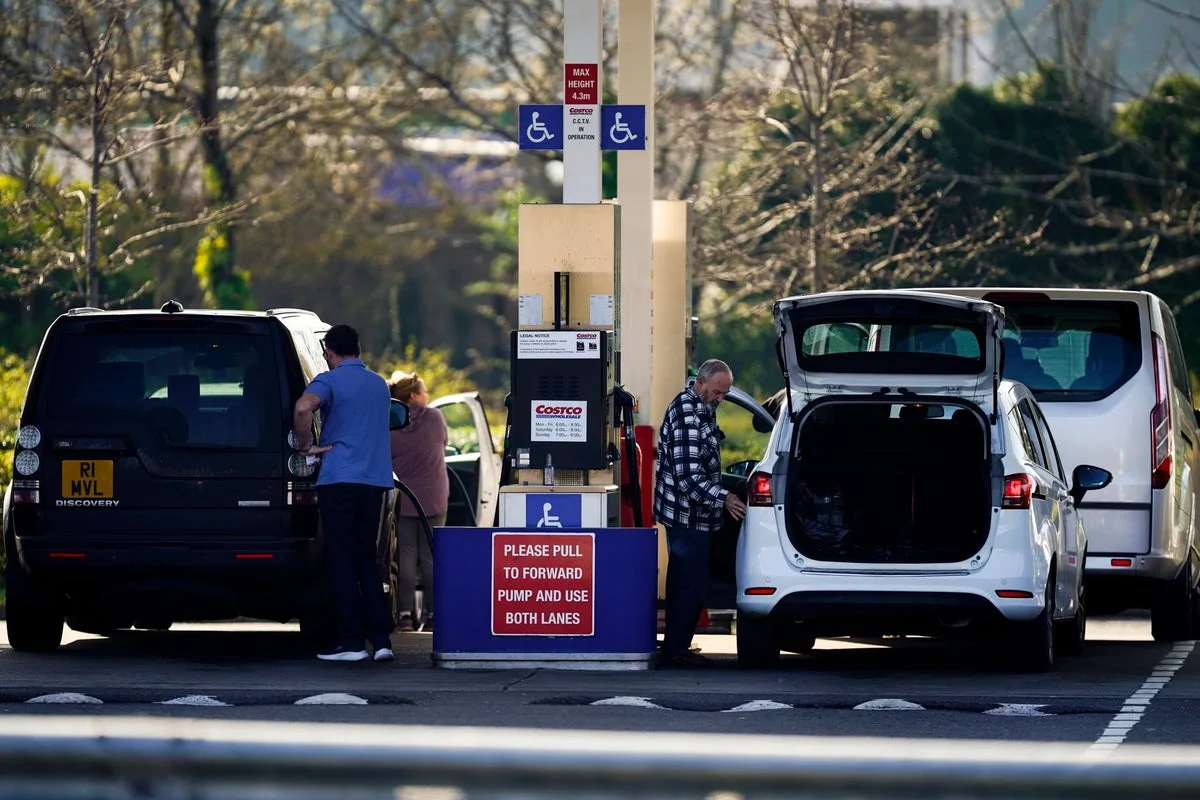
British motorists are being advised to consider cutting out “non-essential journeys” as fuel prices are expected to climb further, driven by a significant surge in global oil costs. The advice comes from AA president Edmund King, who also suggested that drivers adopt more fuel-efficient habits behind the wheel to mitigate the impact.
Oil prices have soared above 100 dollars a barrel for the first time since 2022 in response to the Middle East conflict. Analysis by the Energy and Climate Intelligence Unit shows oil trading at 100 dollars a barrel typically results in petrol prices of about 150p per litre, while oil hitting 120 dollars a barrel means petrol prices of about 170p per litre.
Since the war began on February 28, the average price of a litre of petrol at UK forecourts has increased by 5p to 137.5p, while diesel is up 9p to 151.0p. Mr King said: “The longer this conflict goes on, the more effect it will have on the cost of oil.” He added that while there will be gradual increases in pump prices, drivers should not change refuelling habits but can consider cutting non-essential journeys and altering driving style to conserve fuel.
RAC head of policy Simon Williams said: “Average petrol and diesel prices have rocketed in the last week and are unfortunately likely to keep on rising, so the situation for UK drivers is looking increasingly bleak.” He predicted unleaded will almost certainly reach an average of 140p in the next week, while diesel looks likely to climb to at least 160p a litre, and encouraged drivers to shop around for the best prices.




