

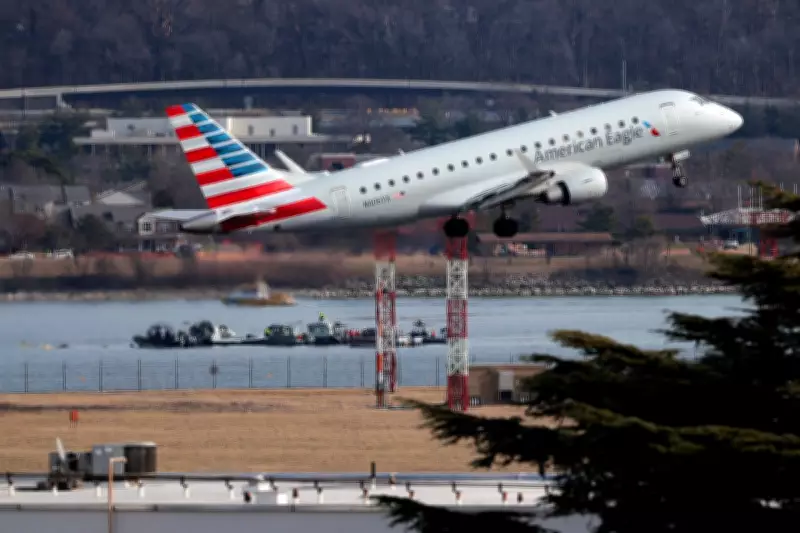
The Federal Aviation Administration has implemented stringent new regulations mandating that air traffic controllers utilise radar technology to maintain safe distances between helicopters and airplanes at the nation's busiest airports. This decisive action comes in direct response to a tragic midair collision near Washington, D.C., in January 2025, and a series of alarming near-misses that exposed critical flaws in previous safety protocols.
Proactive Measures to Enhance Aviation Safety
Under the newly unveiled guidelines, which were formally announced on Wednesday, controllers are now required to employ radar systems to ensure specific lateral or vertical separation standards are met between helicopters and commercial aircraft. This mandate extends to more than 150 of the United States' most congested aviation hubs, significantly broadening a restriction previously established solely at Ronald Reagan Washington National Airport.
FAA Administrator Bryan Bedford emphasised the proactive nature of the policy shift in an official statement. "Today, we are proactively mitigating risks before they affect the traveling public," Bedford declared. "Following the mid-air collision near Ronald Reagan Washington National Airport, we conducted a comprehensive review of similar operations across the national airspace. Our analysis identified an overreliance on pilot 'see and avoid' procedures, which have demonstrably contributed to safety incidents involving helicopters and airplanes."

Catalysts for Regulatory Change
The regulatory overhaul was precipitated by the catastrophic collision between an American Airlines jet and an Army Black Hawk helicopter in January 2025, which resulted in the deaths of 67 individuals. This incident stands as the deadliest aviation disaster on U.S. soil since the September 11 attacks. Investigators concluded that air traffic controllers in the Reagan tower had excessively depended on visual separation techniques, instructing pilots to spot and avoid other aircraft visually.
On the night of the accident, the controller authorised the Black Hawk's request to maintain visual separation on two separate occasions. However, subsequent investigations suggest the helicopter pilots likely never visually acquired the American Airlines aircraft as it executed a landing approach on a secondary runway that sees limited use.
Among the victims were numerous young figure skaters, alongside their parents and coaches, who had just participated in a development camp in Wichita, Kansas, following the U.S. Figure Skating Championships.
Recent Near-Misses Highlight Systemic Risk
The FAA also cited specific, recent close calls that underscored the persistent danger. On February 27, a police helicopter was forced to execute an evasive manoeuvre to avoid an incoming American Airlines flight at San Antonio International Airport in Texas. Merely days later, on March 2, a similar incident occurred at California's Hollywood Burbank Airport, where a helicopter had to turn away from a small aircraft that had been cleared for arrival.
These events collectively demonstrated that guidelines relying primarily on pilots' visual acuity were insufficient to guarantee safety in complex, high-traffic airspace environments. The new rules decisively move away from this model, instituting a technology-based, controller-managed separation standard as the primary safety mechanism.
The implementation of these enhanced procedures represents a significant step in modernising air traffic management and prioritising technological safeguards over human visual confirmation in critical scenarios. The FAA's action aims to restore public confidence and prevent future tragedies by addressing a identified systemic vulnerability in the national aviation system.






