
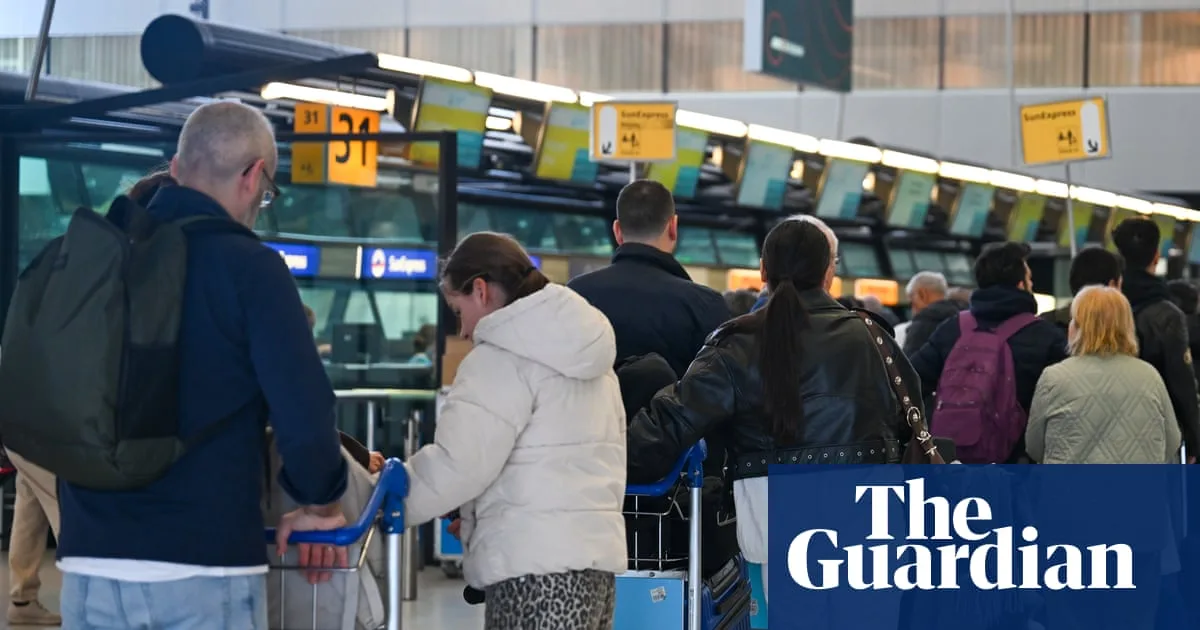
The new EU entry/exit system (EES), which has caused lengthy delays at major airports, may not 'stabilise' for up to two years, according to a senior EU border official. Uku Särekanno, a director of Frontex, the EU border agency, told a travel industry event that some member states are struggling to implement the system, which requires non-EU travellers, including Britons, to provide fingerprints and facial images at the border.
Speaking at an event hosted by the UK travel association Abta, Särekanno said: 'We expect that the situation will stabilise in one or two years. The most challenging part is the first enrolment... If a person is visiting the EU again, they don’t have to go through the same process, so they can have a more fast track of entry.' The EES was first introduced last October and fully rolled out on 10 April, with EU rules allowing temporary suspension of checks to avoid queues, though this flexibility is expected to end in September.
Fears are mounting that the checks could lead to summer travel chaos in Europe, with consumers nervous about delays and bookings. Särekanno noted that some member states are managing well, while others 'are still struggling'. In May, French police temporarily suspended extra checks at the Port of Dover, and Greece has announced it will suspend biometric checks for British travellers until September to prevent disruption.
Mark Tanzer, chief executive of Abta, warned that problems with EES could dampen demand for holidays to EU destinations. 'The rollout of the EU entry/exit system... is creating an unhelpful, and potentially damaging, backdrop for summer travel,' he said. He urged destinations to use contingency measures to suspend biometric registration where queues are unacceptably long. Tanzer also noted that early summer bookings have been affected by the conflict in the Middle East and the rising cost of living.
Shaun Morton, chief executive of holiday operator On the Beach, said consumers are booking later, creating uncertainty. 'We have a price-sensitive and uncertain consumer who was already booking on a later booking curve, who is now also concerned about coming out of this war – more inflation, fuel shortages and fuel surcharges,' he said. However, he expects the summer travel market to grow overall, with delayed bookings likely to materialise next year.




