

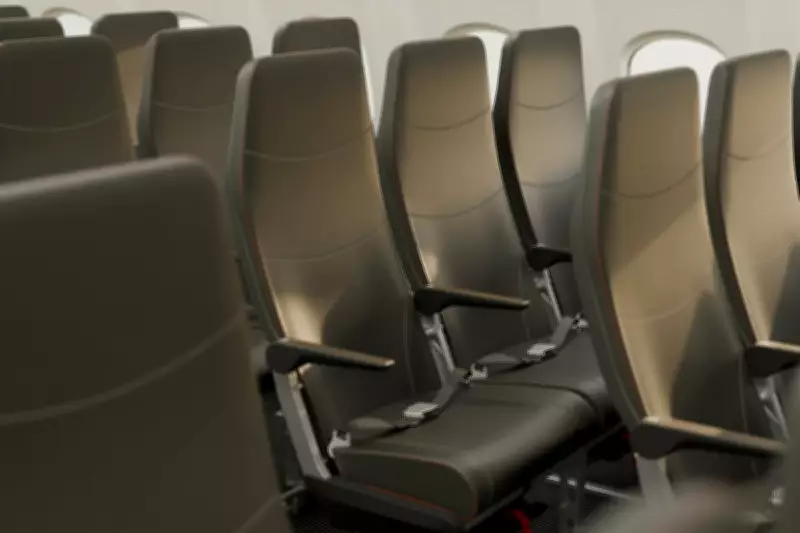
EasyJet Announces Revolutionary Seats Offering Additional Legroom
EasyJet passengers are poised to experience a significant improvement in comfort with the airline's latest announcement regarding new seat installations. The carrier has confirmed that travellers will benefit from up to two inches of additional legroom, thanks to an innovative design from British manufacturer Mirus. However, this enhancement comes with specific design features that differentiate it from traditional seating arrangements.
The Kestrel Seat Design and Implementation
EasyJet has placed a substantial order with Mirus for its Kestrel seats, which will be installed across 237 new aircraft beginning in 2028. Interestingly, the distance between seat rows, known as the pitch, will remain unchanged. Instead, the extra space is achieved through the seat's unique shape and reduced thickness. Mirus engineers have designed the seats to position the occupant's hips and spine further back, effectively creating more legroom without altering the overall cabin layout.
The seats feature a fixed recline of 22 degrees, meaning passengers cannot manually adjust the recline position. This fixed angle is part of the design strategy to optimize space. Furthermore, the use of carbon fibre instead of traditional plastic contributes to a slimmer profile, providing additional room for the passenger seated behind.

Sustainability and Operational Benefits
Beyond passenger comfort, the new Kestrel seats offer substantial environmental and operational advantages. EasyJet reports that the seats will be more than 20 per cent lighter than their current models, resulting in a weight saving of up to 500kg per aircraft. This reduction translates to an estimated fleet-wide annual fuel saving of more than 12,936 tonnes, significantly cutting CO2 emissions.
David Morgan, EasyJet's chief operating officer, expressed enthusiasm about the introduction: "We are delighted to be introducing the Mirus Kestrel seat across our future fleet. This investment supports our continued focus on making our operations as efficient as possible, capitalising on small incremental gains that result in meaningful reductions in fuel burn and CO2 emissions."
Morgan added, "On top of the sustainability benefits, the additional legroom and enhanced comfort these seats will provide will also deliver an improved onboard experience for our customers, which we know they'll love."
Industry Context and Future Plans
The Kestrel economy seats will be featured across deliveries of EasyJet's future Airbus A320neo and A321neo fleet from 2028. Ben McGuire, chief executive of Mirus, highlighted the significance of the order, describing it as "one of the largest single-model aircraft seat awards ever." He emphasized the manufacturer's commitment to "enhancing passenger experience and comfort, while delivering sustainability and significant operational cost savings."
This announcement comes shortly after consumer group Which? published research revealing that the majority of EasyJet's existing aircraft have a seat pitch of 29 inches. The study identified several shorthaul carriers with smaller seat pitches, including:
- Jet2
- KLM
- Lufthansa
- Ryanair
- SAS
- TAP Portugal
- Vueling
- Wizz Air
These airlines all have at least some cabins with a 28-inch seat pitch, according to Which?. EasyJet's new seats, while maintaining the same pitch, aim to provide a more comfortable experience through clever engineering, setting a new standard in the competitive budget airline market.






