
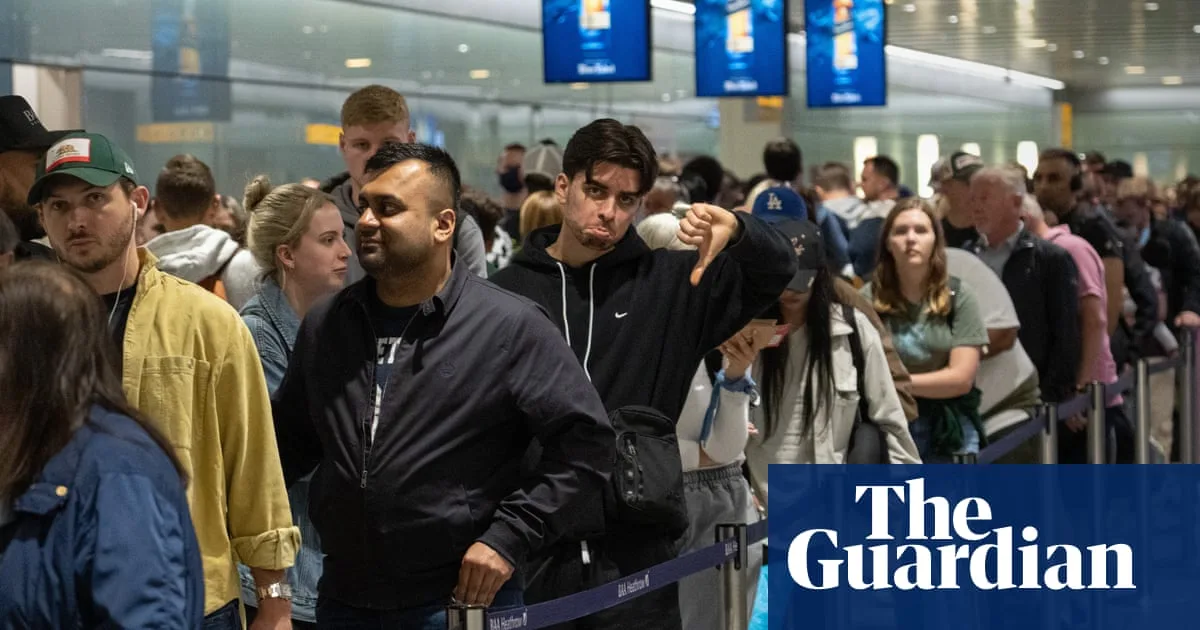
Holidaymakers face renewed travel chaos this Easter and summer 2026, with risks of flight cancellations due to fuel shortages and long airport queues from the EU's new entry-exit system (EES). The legacy of Brexit means longer border checks for Britons and most non-EU nationals entering much of Europe, while the US-Israel war on Iran has raised fears of jet fuel shortages.
The EU's EES, which requires biometric data from all applicable visitors, missed its 10 April full implementation deadline, causing confusion. Meanwhile, the Strait of Hormuz, through which a fifth of global oil and gas flows, remains partially closed, prompting warnings from the International Energy Agency (IEA) that Europe has only six weeks' jet fuel supply left. IEA executive director Fatih Birol warned of imminent flight cancellations if Middle East oil supplies are not restarted.
Airlines are divided on the impact. Ryanair's Michael O'Leary warned of cancelling up to 10% of late summer flights if shipping does not normalise, while easyJet's Kenton Jarvis dismissed this as speculation, stating normal fuel supply and operations. However, transport analysts like Andrew Lobbenberg of Barclays expect fewer flights due to forced cuts in May to July from fuel shortages, followed by voluntary cuts later in response to high fuel prices.
Europe's jet fuel supply is heavily reliant on the Gulf, with the UK dependent on Kuwait. Isabelle Gilks of Wood Mackenzie noted that Europe can still source from the US, but prolonged disruption could lead to higher fares and route cuts, especially on short-haul low-cost carrier routes. Airlines are lobbying the UK government for contingency measures, including relaxing airport slot rules.
Passengers are advised to prepare for potential disruptions, including cancellations and delays, as the situation remains fluid. The fragile ceasefire in Lebanon offers hope, but all depends on its duration and the reopening of the Strait of Hormuz.




