

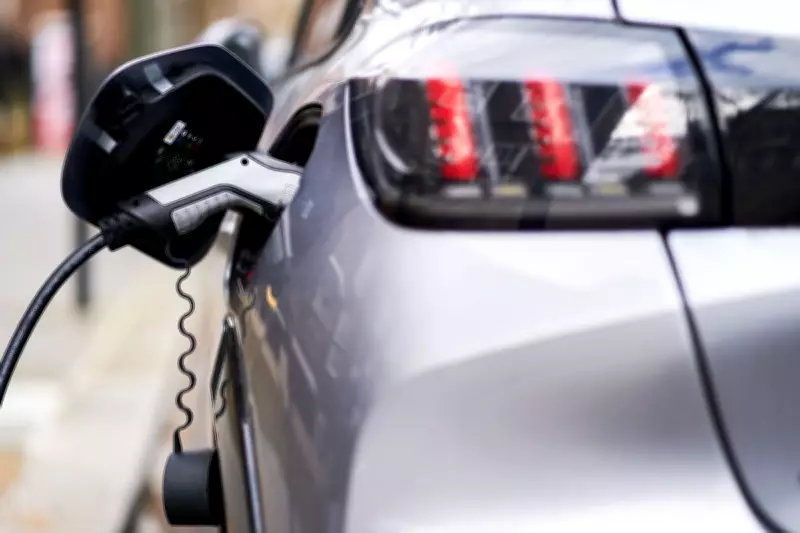
Council Red Tape Hinders Electric Vehicle Adoption for Driveway-Less Drivers
Drivers without access to a driveway are being significantly impeded from transitioning to electric cars due to council bureaucracy and restrictive planning regulations, according to recent research. A comprehensive survey of both current EV drivers and prospective buyers who depend on on-street parking indicates that the ability to charge at home remains a pivotal consideration in the decision to go electric.
Home Charging: A Critical Factor for EV Adoption
The survey findings are stark: more than four in ten respondents, precisely 43.7 percent, stated they would only contemplate purchasing an electric vehicle if they could charge it at their residence. An additional 33 percent confirmed that access to home charging would substantially increase their likelihood of making the switch. This underscores the fundamental role domestic charging infrastructure plays in accelerating EV uptake across the United Kingdom.
However, planning restrictions emerge as a formidable obstacle. A overwhelming 84 percent of survey participants reported that the requirement to apply for planning permission for a home charger would deter them from buying an electric car. Alarmingly, 42.8 percent asserted it would completely prevent them from doing so. These statistics highlight a systemic barrier disproportionately affecting households without off-street parking, who often rely on less convenient and more expensive public charging networks.

Frustration with Public Infrastructure and Innovative Solutions
The research also points to widespread frustration regarding the cost and availability of public chargers. Many respondents emphasised the practical challenges and safety concerns associated with running charging cables across public footpaths. In response to these issues, cross-pavement charging channels have been proposed as a viable solution.
These innovative systems, which sit flush with the pavement surface and can be covered when not in use, allow cables to run safely between a home and a parked vehicle. Users have described this technology as a "game-changer" for enabling electric vehicle ownership without the need for a private driveway.
Industry and Celebrity Backing for Change
Dragon's Den star Deborah Meaden, an investor in the company Kerbo Charge following its appearance on the popular television programme, commented on the issue. "There is a real problem to solve here: how to make EV charging fair and equitable for everyone, not just those with driveways," Meaden stated. "This research shows the scale of that challenge, and I'm delighted the government has recently announced £25 million of funding for cross-pavement charging, as well as a consultation on changing permitted development rights for home chargers."
Michael Goulden, CEO of Kerbo Charge, reinforced the economic argument, noting, "Charging from home is five to ten times cheaper than public charging and much more convenient. We therefore need to make it easy for all residents to charge from home if we're going to achieve mass adoption of EVs in the UK."
Campaigns and Government Consultation
Campaigners are advocating for streamlined council processes for installing pavement charging channels and the removal of planning permission requirements for certain home charging solutions. They argue such measures could unlock electric vehicle ownership for a much broader demographic of drivers.
The government has recently concluded a consultation on proposals to relax planning rules. These include potentially allowing residents with on-street parking to install a charger without needing additional permission, provided a cross-pavement channel has already received approval. This move signals recognition of the regulatory hurdles currently stifling progress.
The survey data ultimately suggests that while interest in electric cars remains robust, practical barriers surrounding charging infrastructure continue to heavily influence purchasing decisions. For many drivers, particularly those in urban areas without driveways, the ability to charge conveniently and affordably at home could be the decisive factor in embracing the electric revolution.






