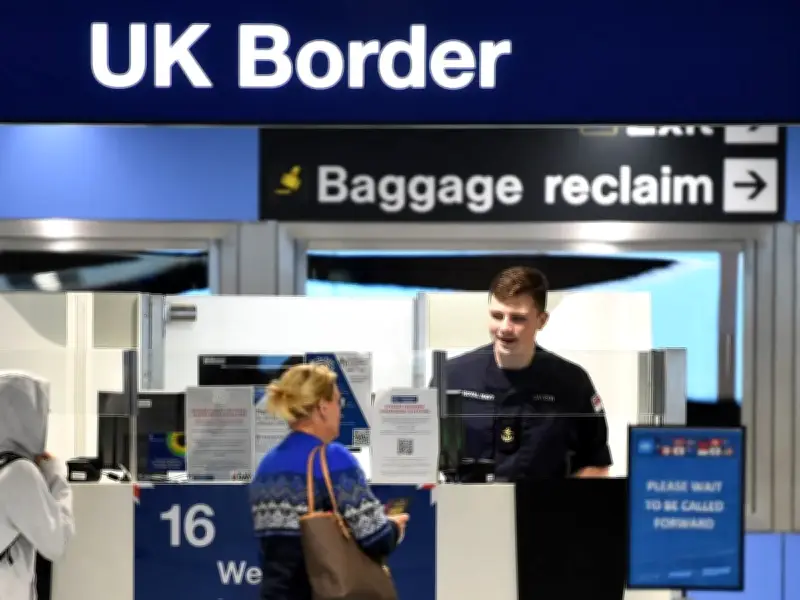
Passengers arriving back into the UK will no longer need to show their passports at e-gates, as a new contactless border system is rolled out at airports across the country. The technology, which uses upgraded facial recognition, was successfully trialled for three weeks at Manchester Airport in October last year, according to The Times.
First airports to introduce the system
Birmingham and East Midlands airports are expected to introduce the contactless borders in the coming weeks, making them the first in the UK to roll out the technology. All e-gates across the country, which are in operation at 13 airports including Birmingham, Bristol, Cardiff, East Midlands, Edinburgh, Gatwick, Glasgow, Heathrow, London City, Luton, Manchester, Newcastle and Stansted, will have the upgraded system by early next year.
Phil Douglass, the director general of Border Force, said: “It will mean we have a more secure border and a much faster transit through the airport. It’s quicker, it’s more modern, it’s more secure.”
How the new system works
Passengers using the e-gates will have their face captured on camera and will not need to scan their passport. However, travellers must still carry their passport for check-in and boarding. The system will initially be available only to British passport holders, with plans to extend it to other nationalities who are currently allowed to use e-gates, including passports from Europe, Australia, Canada, Japan, New Zealand, Singapore, South Korea and the US.
According to Douglass, the contactless gates could speed up border control by up to 25 per cent. The current process typically takes around 20-25 seconds, though it can take longer if there are issues such as incorrect passport placement or an unreadable passport chip.
Security and future plans
The new system works by each airline sending a gallery of passport photos of British passengers arriving that day to border control at each airport. These photos are then collated for the e-gates to refer to. Douglass told The Times: “Because we know who’s coming and can load up that gallery of who is arriving, it’s not a one in 60 million check, it’s a one in tens of thousands check [because the system only needs to check against the passports of passengers travelling on that particular day].”
Passengers whose faces are not recognised by the e-gate will be asked to scan their passport. If that fails, they will be directed to a Border Force officer at a manned desk. E-gates were first introduced in the UK in 2008, and since July the age for children using them was lowered from ten to eight years old, although they must be at least 120cm tall.
Contactless border technology is already used by up to 50 nationalities in Dubai and is also used in Australia. Douglass said the new technology means staff can spend more time tracking crime, safeguarding and drugs, and allows them to be “more mobile”. He added: “There’s something quite important still about what I call the theatre of the border, that there is a border and that you’re being checked. It gives a public reassurance that our borders are secure.”