
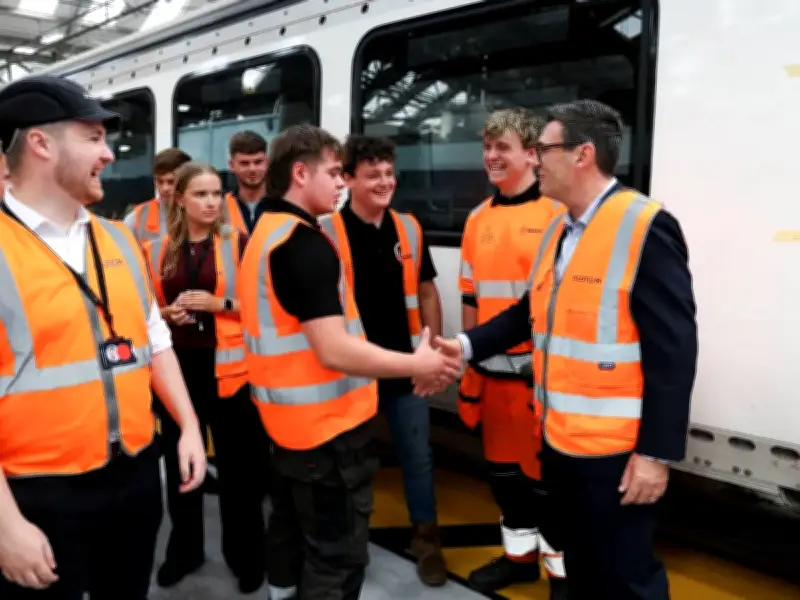
Andy Burnham is considering plans to broaden railcard eligibility after unveiling proposals to extend the 16-17 Saver Railcard, saving thousands of students 50 per cent off rail tickets. The Prime Minister has indicated that bringing down rail costs is firmly in his "sights", describing some current prices as "outrageously" high.
The change, which takes effect on August 17, allows young people to benefit until the day before their 19th birthday, rather than losing access when they turn 18. Government insiders confirmed that conversations are ongoing regarding the extension of other railcards, though talks remain at a "very early stage". Officials are examining a variety of options to address the steep cost of fares that go beyond the rail freeze implemented earlier this year, according to The Mirror.
Universal railcard push
Two prominent left-wing think tanks are now calling on Mr Burnham to transform the network south east railcard into a nationwide scheme. The railcard, priced at £35 annually, entitles holders to a third off most rail fares for travel within London and the south east, and is available to anyone aged 16 and over. Elsewhere across the country, railcards are restricted to specific demographics, such as adults aged up to 30, those over 60, disabled people, or veterans, leaving no universal discount option available. This means adults aged between 31 and 59 are unable to access any such discount outside the south east.
Zoë Billingham, director of IPPR North, who informally advised Mr Burnham on an unpaid sabbatical this summer, said it is not "coherent" that the universal railcard only exists in one part of the country. She told The Mirror: "I do think there would be a sensible question at this stage that says, well, given the kind of unfairness from the passengers' perspective, from the public's perspective of just having a network railcard that covers the south east, why shouldn't that be something that's offered more broadly? So I would be very supportive of the government looking at that for the country as a whole. Fundamentally, transport is about jobs, it's about connecting people socially. But it also helps the government with its climate goals, getting people off cars and onto more green modes of transport. So it ticks a lot of boxes and so I'd be really supportive of the government moving in that direction."
Quick implementation possible
Ms Billingham further noted that given the network railcard is already a well-established scheme, any expansion could be "mobilised quickly" - a stark contrast to the lengthier structural fare overhauls anticipated as part of rail nationalisation under Great British Railways. Hannah Peaker, deputy chief executive at the New Economics Foundation (NEF), agreed that broadening the southeast railcard represents an "obvious opportunity" to create a fairer, more consistent system nationwide. She explained to The Mirror: "If you take an off-peak, non-advanced journey from London to Milton Keynes, it costs around £23/24, and that's similar to the cost of a trip from Manchester to Leeds. But for no real reason, the Milton Keynes trip is eligible for the one third discount, and the Manchester/Leeds one isn't. Which, if you take that in the context of Burnham being very specific that he really wants to ensure equivalent living standards in all parts of the UK, it just feels like an obvious opportunity to equalise it."
NEF, which published research examining bus and rail fares last month, calculates the measure would deliver £425million in savings for consumers. Its projections indicate it would carry a net expense of £270m during the initial year, dropping to £120m in the long-term, though it stated that fresh ticket purchases and card sales would substantially counterbalance the scheme's costs. Ms Peaker continued: "I suppose the other really exciting thing about the policy is it effectively pays for itself...So it feels like a no-brainer. It's a chance to take an existing benefit that, for no real reason, only applies to the south east."
Cost of living priority
Earlier this month, Mr Burnham stated the cost of living sits at the summit of his priorities. "I think rail fares are too high, outrageously so in some instances," he added. "So that's something that's in my sights." Mr Burnham utilised his initial days in Downing Street to unveil a swift succession of cost of living measures. VAT will be cut from electricity bills from October, bus fares will be limited to £2 and pubs, social clubs and live music venues will receive a 20% reduction to business rates from April.
At last year's Budget, former Chancellor Rachel Reeves announced a freeze on rail fares for the first time in three decades, although ticket prices still remain elevated. Announcing the 16-17 Saver Railcard extension last week, Rail Minister Lord Peter Hendy said: "This kind of common-sense change is exactly what passengers should expect from the railway."




