

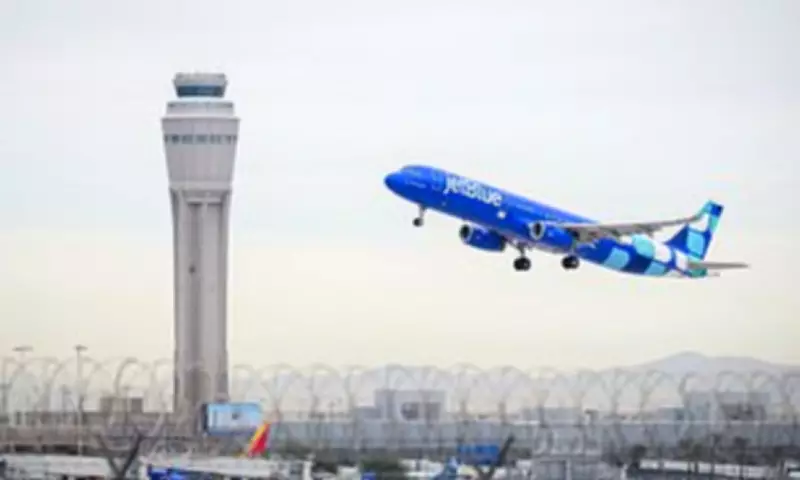
Middle East Conflict Triggers Aviation Industry Turmoil
The ongoing conflict in the Middle East is sending shockwaves through the global aviation sector, with impacts extending far beyond rising flight ticket prices. A significant development has emerged as budget US airline JetBlue has implemented substantial increases to its checked baggage fees, directly attributing the change to escalating operational costs influenced by regional instability.
JetBlue Baggage Fee Increases
JetBlue has raised its minimum charge for a passenger's first piece of checked luggage from $35 (£26.50) to $39 (£29.50) for off-peak flights, representing an increase of approximately £6.80. During peak travel periods, the price now starts at $49 (£37.10), up from the previous $40 (£30.30). The airline's website indicates these new rates include potential savings of $10 (£7.60) for off-peak travel.
A JetBlue spokesperson explained the rationale behind these adjustments, stating: 'As we experience rising operating costs, we regularly evaluate how to manage those costs while keeping base fares competitive and continuing to invest in the experience our customers value.' This statement underscores how broader geopolitical tensions are translating into direct financial impacts for travellers.

Impending UK Jet Fuel Shortage
Simultaneously, the United Kingdom faces a potential jet fuel supply crisis with profound implications for air travel. The last known shipment of jet fuel from the Middle East to Britain is scheduled to arrive within the next forty-eight hours aboard the Libyan-flagged Maetiga vessel, originating from Saudi Arabia.
Data providers Kpler and Vortexa have confirmed that no additional cargoes destined for the UK are currently observable on maritime routes, primarily due to the blockade of the strategically vital Strait of Hormuz. This critical waterway, which facilitates approximately forty percent of Europe's jet fuel supply, is now nearly completely closed to traffic.
The UK currently sources at least half of its jet fuel requirements from the Middle East, a dependency that has intensified following reductions in domestic refining capacity and the cessation of Russian imports since the 2022 invasion of Ukraine. Additional supplies traditionally arrive indirectly via Belgium and the Netherlands, but these channels are also under strain.
Fuel Price Surges and Industry Warnings
Financial data reveals the severity of the price inflation affecting aviation fuel. According to the Airlines for America group, jet fuel reached $4.24 (£3.21) per gallon last Thursday, a dramatic increase from $2.50 (£1.89) just prior to the initial US-Israeli strikes on Iran.
Aviation analyst Alex Macheras highlighted the alarming rate of this increase, noting that the US Jet Fuel Index has surged by seventy-two percent in the single month since the conflict began. He emphasised that this rise is 'massively outpacing even Brent crude's rise', indicating specific pressures within the aviation fuel market.
Industry experts, including those cited by the Financial Times, now express serious concerns that supply issues could significantly disrupt airline operations from the end of next month if the Middle East conflict persists. Despite these warnings, the British Government maintains that the public should proceed with booking summer holidays as normal and not be unduly concerned about supply disruptions.
Cruise Industry Implements Surcharges
The ripple effects of the crisis are extending beyond airlines to the maritime tourism sector. Two Asia-based cruise lines, StarCruises and Dream Cruises, both operating under the Resorts World Cruises brand, have introduced new fuel surcharges in response to mounting financial pressures.
These companies stated: 'Due to recent geopolitical developments in the Middle East, oil prices have increased significantly, leading to higher fuel and related costs.' The surcharges will apply to new bookings made on or after 20 March 2026, with the exact cost varying depending on the specific vessel and departure itinerary.
The cruise lines have committed to reviewing the surcharge in line with fuel price movements, potentially adjusting it downward if prices ease or revising it for new bookings should prices continue their upward trajectory.

Airline Capacity Reductions Begin
Scandinavian Airlines System (SAS), the flag carrier for Sweden, Denmark, and Norway based in Stockholm, has become the first major European airline to announce flight reductions directly linked to the Middle East situation. The airline cited the 'sharp and sudden increase' in global jet fuel prices as the primary reason for cancelling certain routes.
A SAS spokesperson detailed the company's response: 'Given the ongoing situation in the Middle East, including the sharp and sudden increase in global fuel prices, we, just like many other airlines, have taken measures to strengthen our resilience.' These measures include limited short-term adjustments to their traffic programme during March and April.
The cancellations primarily affect shorter routes within Scandinavia where viable same-day alternative travel options exist. Affected customers are being notified and offered rebooking to other departures. The airline emphasised that the exact number of cancellations remains fluid, dependent on the evolving situation, but assured that adjustments are being kept as limited as possible.
The spokesperson concluded: 'The decision to make these short-term adjustments is about acting early in response to a global cost shock that is affecting the entire industry. Aviation plays a central role in connecting people and enabling global trade. In such a volatile environment, it is responsible to act early, adjust capacity to the circumstances, and at the same time safeguard reliable connections for our passengers.'
This comprehensive series of developments illustrates how geopolitical instability in one region can rapidly transform into a multi-faceted crisis affecting baggage fees, fuel supplies, cruise pricing, and flight availability across the global travel industry.





