It was the midnight train to Georgia. I was 20 years old, a student travelling after a working holiday. Now I was leaving New Orleans, on board the sleeper bound for Savannah. This was the Sunset Limited, 'the only true transcontinental passenger train in American history,' Wikipedia now tells me. At the time, it was just another train I was free to ride with my Amtrak pass, as I zigzagged the US in the last weeks before second year at university. It was the middle of the night. I got as comfy as I could in my upright seat and settled in for a long journey.
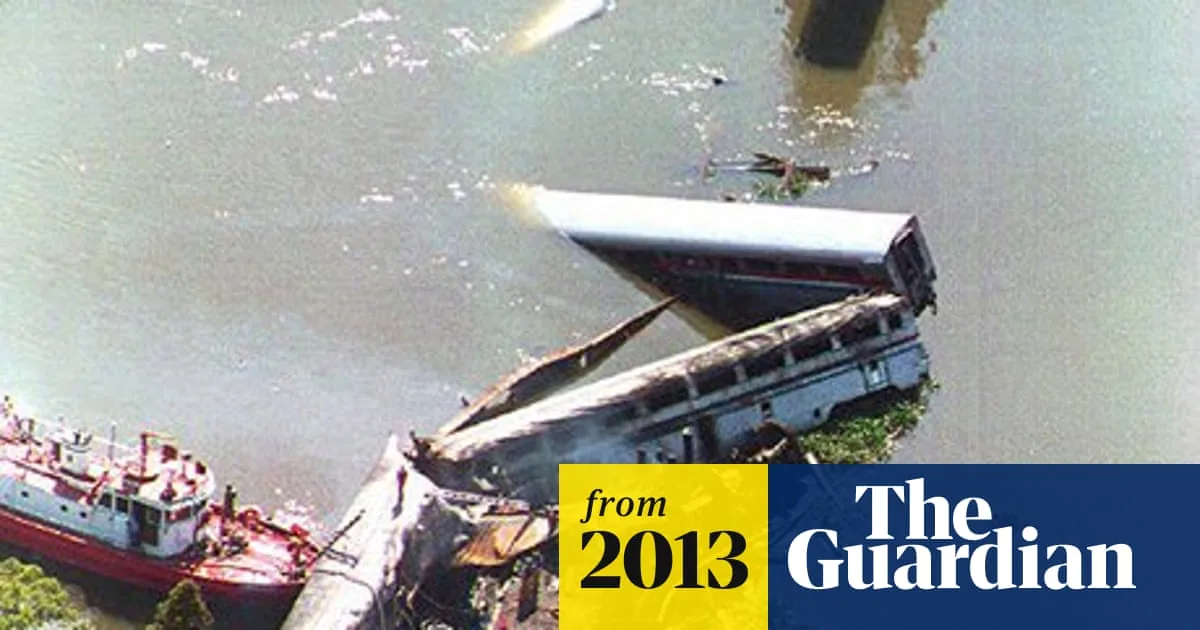
I never got to Savannah, Georgia; I've never been yet. At 2.45 that morning, a towboat got lost in thick fog in a bayou in Alabama. The barges it was pushing struck a rail bridge that crossed the bayou, and dislodged the track. At 3am, my train hit that twisted track at 70mph, and derailed, destroying the bridge. The lead locomotive crashed into the mudbank and exploded. Several other carriages plunged into the water, causing a fuel spill and a fire. Forty-seven people were killed, some by drowning, some by fire. It was, and remains, the deadliest train crash in Amtrak's history.
That was 20 years ago. I haven't thought of the crash much recently, although I enjoy telling the story on the rare occasions I find someone I haven't told it to already. It's my party piece. It's also my pension, after a fashion. When I got home from the States, I was contacted by a Californian legal firm. They wanted to sue on my behalf. I had qualms, but my mum and dad overrode them. I filled in a form recounting my experience, and a few months later was awarded thousands of dollars in compensation. It paid me through university, then allowed me to earn next to nothing for a year or two while I found myself a career.
I've always felt uneasy about that: profiting from something that killed 47 people. And about converting the experience into a ripping yarn, replete with details of my satellite link-up to Lorraine Kelly in the GMTV studio, and how the Scottish press dubbed me 'Crocodile Dundee' – because the bayou was reportedly full of alligators, and I come from near Dundee. I feel that I ought to have paid for that profit and those stories with more pain or discomfort. But I'm not sure I ever felt any such thing.
To jog memories, I just read a news report from the time, in which I called the experience 'harrowing'. But I can't remember being 'harrowed'. I think I was just saying what the journalist wanted to hear. Here's what happened to me. I was woken, and half-thrown from my seat, by the sensation of the train pitching forwards, then violently to one side. It was dark when I opened my eyes, and the next thing I remember, the passengers on my carriage were filing up the aisle and out of the train. I retain a groggy impression of something we were moving away from. But I don't remember panic. I thought the train had derailed, that's all. An inconvenience, not a catastrophe.
We exited the train, and sat on an embankment by the track, waiting to be told what to do. What happened next, I recall only in fragments: an awareness that we were next to water, that something was happening in the water. A group of people – myself included – gesticulating to people in the water and guiding them ashore. This was later represented in the Sun with the headline 'Scot is hero of US rail crash' but – on a night when real acts of heroism did take place – I was no hero. Just an uncertain young man, following other people's lead, on a foggy night, now further fogged by passing time.