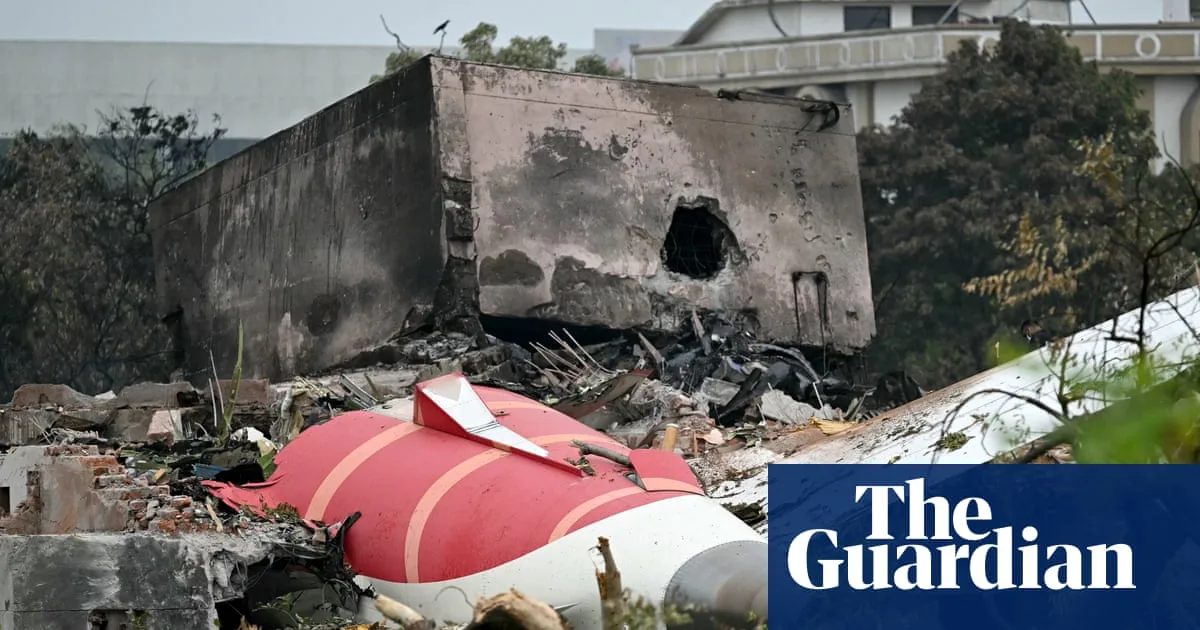
The official investigation into the crash of Air India flight AI171 is concentrating on the Boeing 787's engine thrust, wing flaps and landing gear, with the airline's maintenance regime also under scrutiny. One black box has been retrieved from the wreckage, and India's Aircraft Accident Investigation Bureau is examining whether the engine thrust and wing flaps failed, and why the landing gear remained open.
According to a source with direct knowledge, investigators will also look at whether Air India was at fault, including on maintenance issues. The flight issued a mayday call moments after takeoff from Ahmedabad on Thursday, barely leaving the runway before descending and crashing into a building, killing all but one of the 242 people onboard.
The cockpit voice recorder has not yet been found. A bird strike causing double engine failure is not among the key areas of focus, as CCTV footage shows clouds of dust but no birds. Anti-terror experts are part of the investigation, with US and UK officials joining the India-led inquiry.
Aviation analysts have proposed various theories. Dr Sonya Brown of the University of New South Wales said footage suggests the plane stalled due to a significant loss of thrust. Some analysts note the wing flaps were not extended during takeoff, but Brown said a stall could still be avoided with increased thrust. Pilot error is a potential avenue, but both pilots were highly experienced.
Questions about the Boeing 787 are less immediate than after the 737 Max crashes, as the model has been flown for over a decade with few problems. Air India has been ordered to carry out safety inspections on its remaining 787 fleet and additional maintenance actions. Former pilot Neil Hansford suggested investigators should examine potential sabotage and contaminated fuel as possible causes.