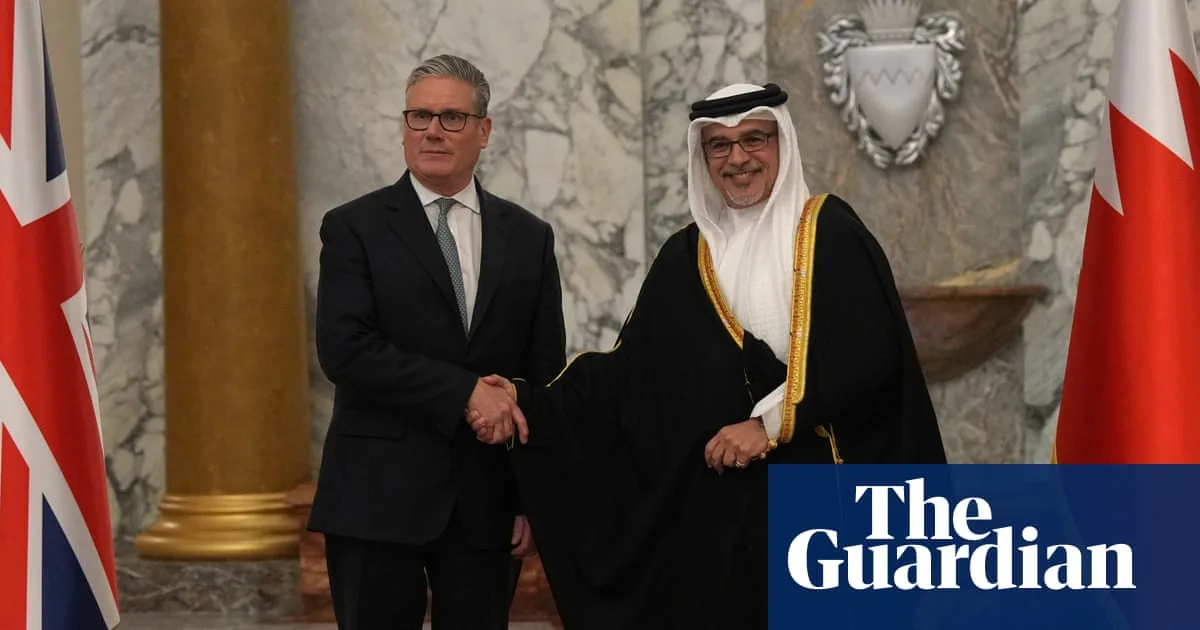
Keir Starmer has struck a trade deal with six Gulf states, describing it as a huge win for British business after four years of negotiations led by four different prime ministers. The agreement, worth £3.7 billion in export opportunities—double original estimates—covers sectors including food, luxury cars, defence, aerospace, hospitality, and other services.
Deal Details and Benefits
The deal removes tariffs on 93% of British goods sold in the Gulf Cooperation Council (GCC) countries: Saudi Arabia, Kuwait, Oman, Qatar, the United Arab Emirates, and Bahrain. Zero tariffs apply to food, medical equipment, defence, aerospace, and advanced manufacturing. Previously, exporters faced a blanket 5% tariff, with higher rates on products like cheddar cheese (6%), chocolate (15%), and biscuits (10%). Cars were taxed at 5%.
For the first time, Gulf states have allowed UK firms to store data outside the region. UK services, which account for 80% of the economy, will gain guaranteed access to business in the six states. The government says the deal provides a much-needed political boost for Starmer, demonstrating continued capability to conclude deals despite recent local election turmoil and potential leadership challenges.
Criticism Over Human Rights
Starmer faces immediate criticism for excluding a human rights chapter from the deal. Tom Wills, director of the Trade Justice Movement, called the omission “especially alarming given the severe human rights abuses across the Gulf region, including torture, forced labour, discrimination and the silencing of dissent.” The government did not seek a human rights chapter, viewing political channels as the best venue for such issues.
Paul Nowak, general secretary of the Trade Unions Congress, expressed disappointment that a deal was signed “despite their appalling record of human rights and workers’ rights.” The Bahrain Institute for Rights and Democracy condemned the deal, saying it legitimises repression. Liberal Democrat peer Paul Scriven stated, “We are witnessing a complete collapse of moral leadership from this Labour government.”
Industry Reactions
The National Farmers’ Union (NFU) of England and Wales hailed it as the best agricultural deal since Brexit, after successfully resisting demands to lower poultry standards. NFU president Tom Bradshaw said, “We think this is probably the best negotiation we had for agriculture. We are really happy.”
William Bain, head of trade policy at the British Chambers of Commerce (BCC), said the deal offers great potential to expand trade in the region and will be “vital for tens of thousands of UK firms.” The BCC highlighted benefits for financial services, energy, construction, professional services, education, hospitality, and technology.
Political and Economic Significance
Business secretary Peter Kyle said he was proud that the UK is the first G7 country “to secure a modern and ambitious trade deal with the GCC.” The agreement is seen as a political affirmation for Gulf states and is expected to boost investment in both directions, including in assets like Heathrow Airport (part-owned by Qatar) and Newcastle Football Club (part-owned by Saudi Arabia).
However, concerns remain over investor protection chapters, which could allow lawsuits if UK government policy changes—for example, on a third runway at Heathrow. This is the third trade deal concluded by Starmer, following pacts with India and South Korea.
Starmer stated: “Today’s agreement is a huge win for British business, and for working people, who will feel the benefits in the years ahead through higher wages and more opportunities.”






