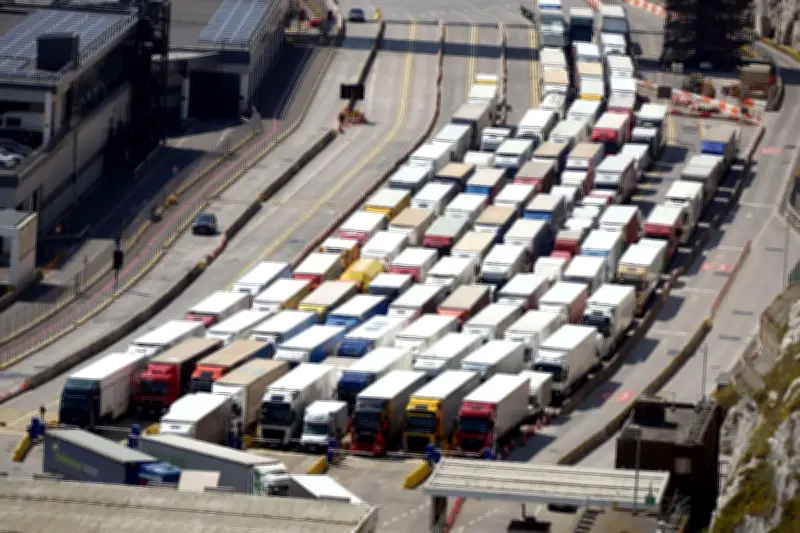
UK food and drink exports plunged by more than a tenth over the first half of the year because of increased costs and the conflict in the Middle East, according to new figures.
Data from the Food and Drink Federation (FDF) trade organisation also revealed that high levels of food imports resulted in a widening trade deficit for the industry compared with other nations.
Exports at third lowest level on record
The organisation’s latest trade snapshot report showed that food and drink exports from the UK declined by 11.7% in the first half of 2026 compared with the first half of last year, dropping to the third lowest level on record.
Exports of roughly four billion kg were only “marginally above” levels at the height of the Covid-19 pandemic and in the aftermath of the 2001 foot-and-mouth disease outbreak, the FDF said.
Exports to the EU continued a recent downward trend, with declines of 4.9% in Ireland and 4.6% in France, two of the UK’s largest export markets. The decline was linked to additional costs and the increased complexity of trading with the nations since Brexit.
Middle East conflict and US tariffs hit trade
Non-EU exports meanwhile fell by 6.9%, with the ongoing war in Iran and disruption across the Middle East weighing on trade to the region. Exports to the UAE fell by 23.4% as a result.
Tariff measures in the US also continued to impact food exports to the region, with a decline of 16.5% for the half-year. The data also showed that food and drink imports into the UK increased to their second highest level on record, behind the first half of 2025.
Trade deficit and food security concerns
Karen Betts, chief executive of the FDF, said: “Our food and drink trade deficit is growing and is now the largest it’s been in over 25 years.
“In a world beset by conflict and the ever-increasing impacts of climate change, this poses some stark questions about our food security.
“The pressures on manufacturers are significant and growing, with the cost of everything they need to make food going up, from energy and ingredients, to logistics, packaging and labour.
“Constantly changing regulation and high compliance costs are adding to this and making UK businesses uncompetitive both here and abroad.”