
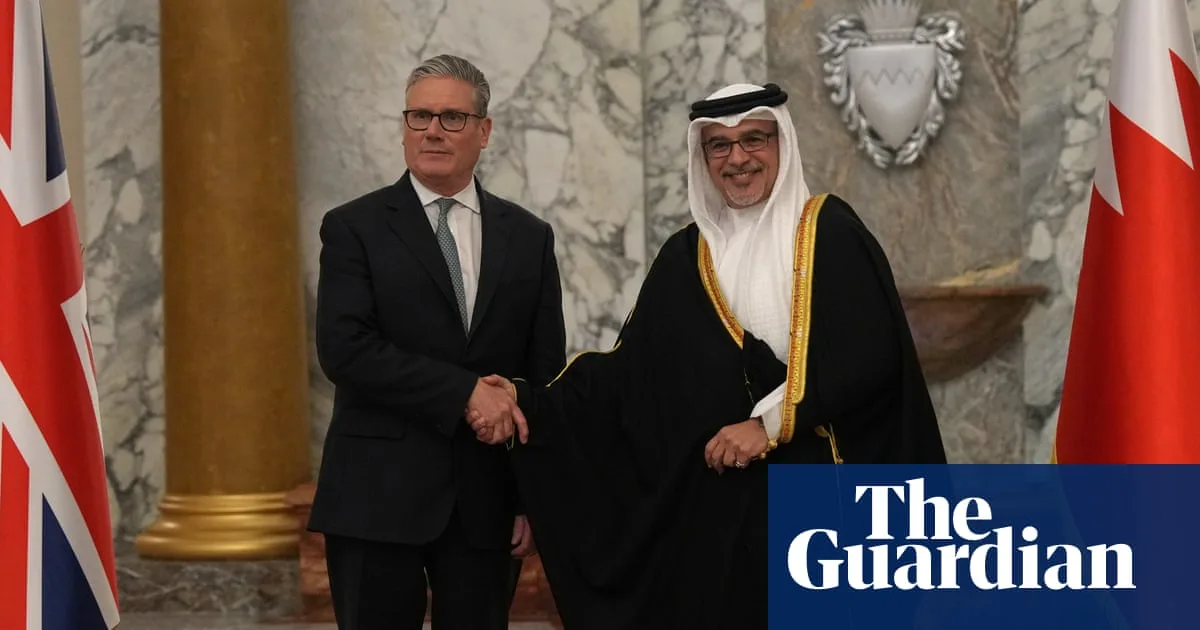
Keir Starmer has struck a trade deal with six Gulf states worth £3.7 billion, double original estimates, in what he described as a 'huge win' for British businesses. The agreement, which ends four years of talks led by four different prime ministers, covers sectors including food, luxury cars, defence, aerospace, hospitality and other services.
The deal removes tariffs on 93% of British goods sold in the Gulf Cooperation Council (GCC) countries: Saudi Arabia, Kuwait, Oman, Qatar, the United Arab Emirates and Bahrain. Zero tariffs will apply to food, medical equipment, defence, aerospace and advanced manufacturing. Previously, exporters faced a blanket 5% tariff, with higher duties on some products such as cheddar cheese (6%) and chocolate (15%).
UK services, which account for 80% of the economy, will gain guaranteed access to the six states. Gulf nations have also agreed to allow UK firms to store data outside the region for the first time. The National Farmers' Union (NFU) called it the best agricultural deal since Brexit, after seeing off demands to lower poultry standards.
However, the deal faced immediate criticism for omitting a human rights chapter. Tom Wills of the Trade Justice Movement called the omission 'especially alarming given the severe human rights abuses across the Gulf region'. The government said it prefers to raise such issues through political channels. The Trades Union Congress expressed disappointment, and the Bahrain Institute for Rights and Democracy condemned the deal as legitimising repression.
Business secretary Peter Kyle said he was proud the UK was the first G7 country to secure such a deal. The British Chambers of Commerce said it would create new opportunities for firms in financial services, energy, construction and technology. This is Starmer's third trade deal, following pacts with India and South Korea.




