
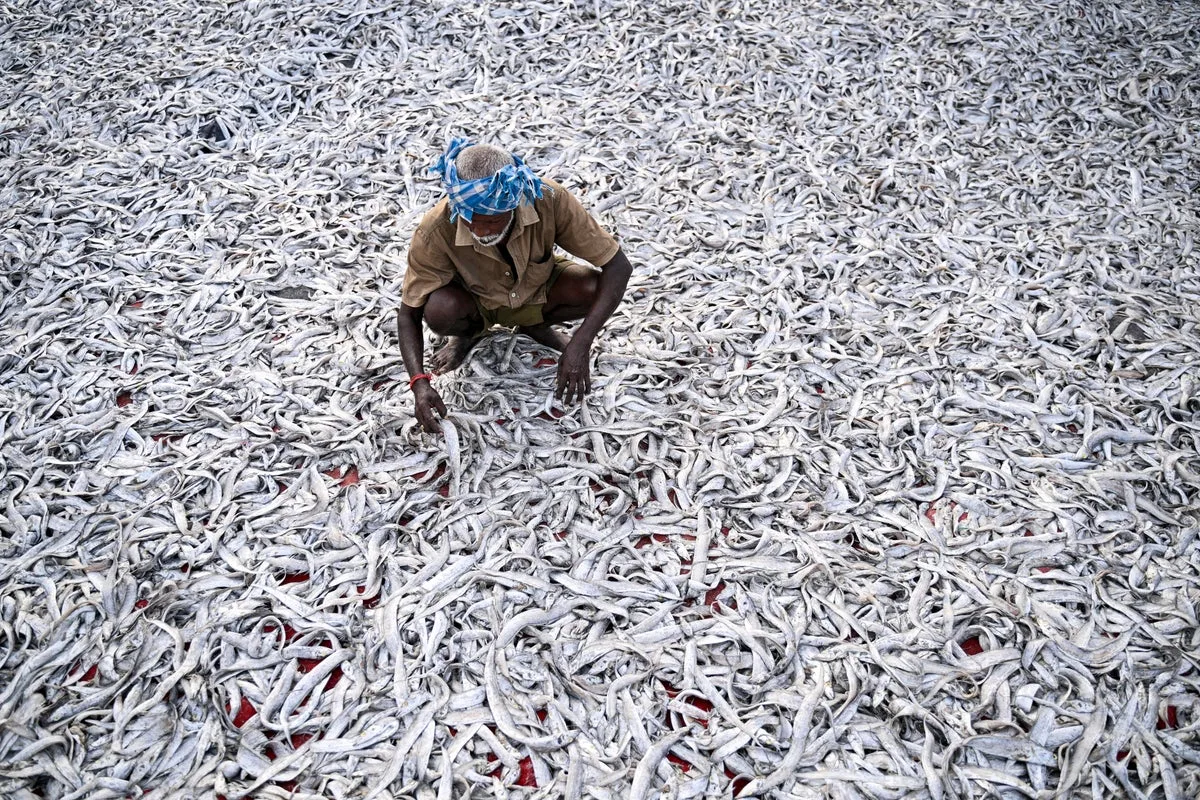
A new study has revealed that the global seafood trade is spreading per- and polyfluoroalkyl substances (PFAS), known as 'forever chemicals', from contaminated waters to consumers worldwide. Researchers analysed PFAS levels in over 200 marine fish species and found that international trade shifts exposure from highly polluted regions to countries with lower local contamination.
Europe emerged as a major hub in these exposure flows, despite not having the most contaminated fish stocks. Fish from parts of Asia and Oceania, including Saudi Arabia, Thailand, and Australia's eastern coast, showed the highest PFAS concentrations relative to the global average, while fish from Africa and North America had the lowest. Species higher up the food chain consistently contained more PFAS.
PFAS are a group of more than 4,700 synthetic chemicals used in products like non-stick cookware and firefighting foams. They are highly toxic and can act as endocrine disruptors, causing liver damage, thyroid disease, obesity, fertility problems, and cancer, according to Dr Julián Campo, a researcher at the Desertification Research Centre in Valencia.
The study combined global fisheries data, marine food-web models, and PFAS measurements from over 3,000 seawater sampling sites to predict concentrations in 212 edible marine fish species. Predictions were validated using real-world measurements from 150 fish samples across 14 countries. The analysis showed that consumption patterns and trade matter as much as where fish are caught, with European countries importing large volumes of fish and reshaping exposure pathways.
Dr Pablo Gago, senior scientist at Spain's Institute of Environmental Assessment and Water Research, noted that the study demonstrates how human exposure to PFAS depends not only on local contamination but also on global food trade dynamics. The study found that global exposure risk from two widely used PFAS compounds, PFOS and PFOA, has fallen sharply since they were restricted under the Stockholm Convention in 2009 and 2019, but unregulated long-chain PFAS continue to pose a high risk.
The authors caution that the study focuses on marine fish and does not include other dietary or environmental sources of PFAS, meaning total human exposure is likely underestimated. They argue the findings underline the need for stronger coordination on food safety standards and chemical regulation in a globalised food system.




