
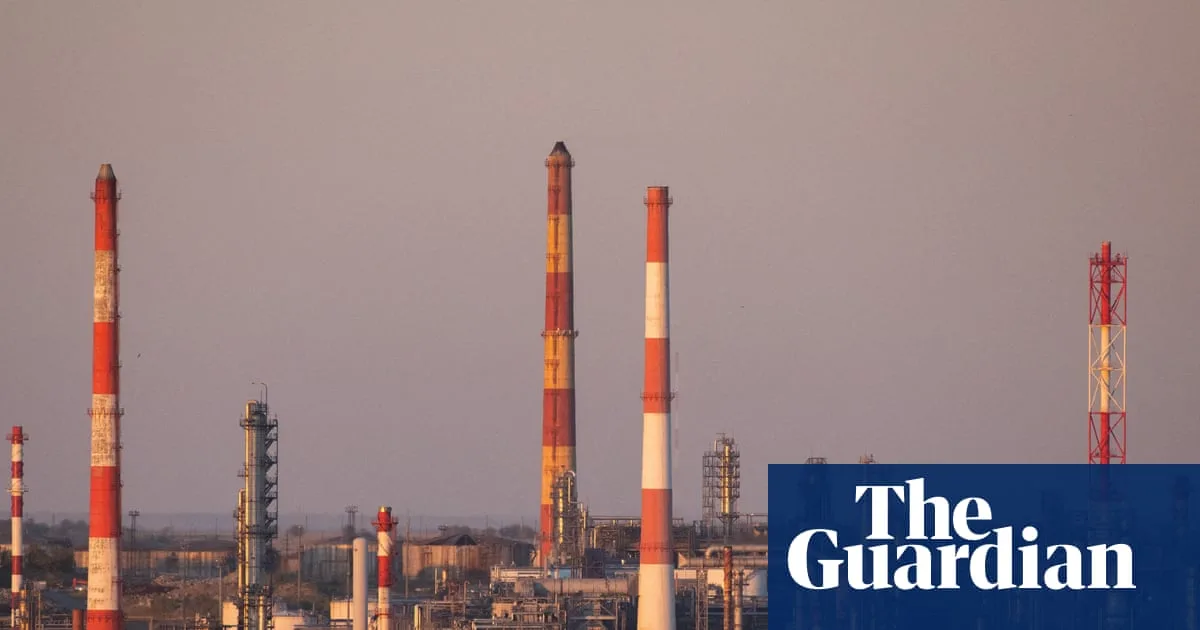
Russia has amassed an estimated €6bn (£5bn) from fossil fuel exports in the fortnight since the US-Israel war with Iran began, according to data from the Centre for Research on Energy and Clean Air (CREA). The figure includes an extra €672m in revenues during March alone, as combined average daily prices for oil, gas and coal surged by 14% from February.
The bulk of this increase – approximately €625m – came from oil trading, the thinktank found. The revenue boost follows a warning from the International Energy Agency (IEA) that the conflict has cut Gulf oil and gas production by at least 10 million barrels per day, creating what it described as “the largest supply disruption in the history of the global oil market”.
The data was released after US President Donald Trump indicated on Monday that he would ease sanctions on Russian oil in response to soaring global prices. The conflict began on 28 February with US and Israeli airstrikes that killed Iran’s supreme leader, Ali Khamenei.
Russia’s commodity revenues are a key source of funding for its military spending, including operations in Ukraine. Alexander Kirk, a sanctions campaigner at the NGO Urgewald, warned that easing sanctions would not stabilise markets but would instead allow Russia to sell its oil at higher prices. “US sanctions have forced Russian crude to trade at a steep discount,” he said. “A rollback closes that gap overnight and hands the Kremlin a revenue boost worth billions.”
CREA figures published before the conflict showed that Russia’s oil and gas export revenues had declined over the previous year, even as export volumes rose. The IEA also reported that Russian crude and product revenues fell in February to their lowest since the start of the Ukraine war in 2022, partly due to reduced exports to India and damage to a pipeline supplying Hungary and Slovakia.




