
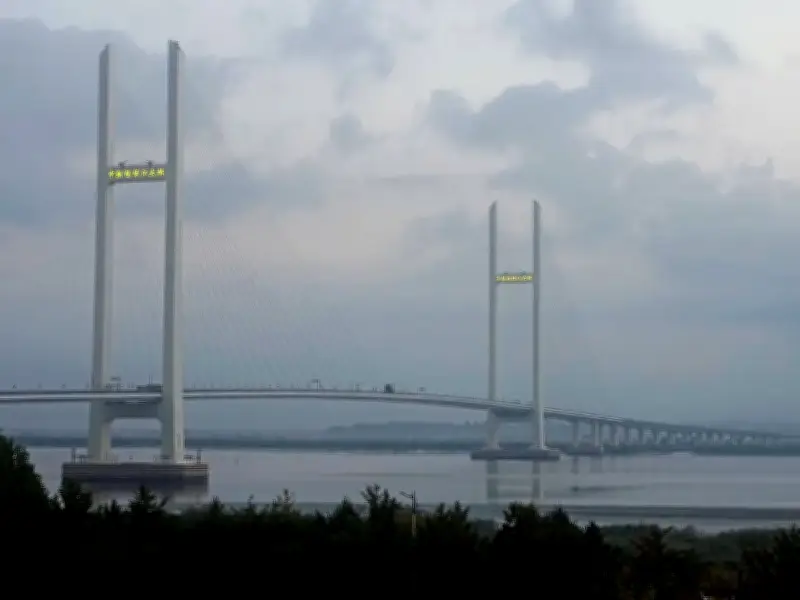
The New Yalu River Bridge connecting China and North Korea officially opened this morning, more than a decade behind schedule, marking a step toward stronger relations between the two nations and potentially the first move by Kim Jong-un to open the country to the world.
Opening ceremony and initial traffic
China's official Xinhua News Agency confirmed that a launch ceremony for the bridge took place in the morning. Footage from state media outlet China News Service showed lorries draped with both Chinese and North Korean national flags queuing on the bridge, which was also adorned with the countries' banners.
Beijing anticipated that the four-lane, 3-kilometre (1.8-mile) crossing, linking the northeastern Chinese city of Dandong to the North Korean city of Sinuiju, would boost economic, trade and "people-to-people" exchanges.
Delays and speculation
The bridge was originally scheduled to become operational in 2014, when China had seemingly finished construction on its side. However, the opening date passed without ceremony, and North Korea had failed to complete corresponding infrastructure on its side.
The lack of significant development in Sinuiju sparked speculation that Pyongyang was reluctant to increase its economic reliance on China or was unhappy with Beijing supporting United Nations resolutions strengthening international sanctions against the North over its nuclear programme. Some analysts suggested North Korea and China also disagreed over the bridge's positioning.
The delay sparked an unusually scathing article in the Global Times, a publication linked to the ruling Chinese Communist Party, which featured Dandong locals voicing disappointment over hold-ups in what they had anticipated would be a financial windfall for their frontier town.
Impact on trade and regional ties
Analysts suggested the new crossing would probably increase trade between the two nations and improve transport links over time. It is anticipated to reduce pressure on the current ageing bridge along the Dandong-Sinuiju corridor, which manages over 70% of legitimate commerce between both countries. The decades-old structure accommodates both railway services and motor vehicles, though vehicular movement can only proceed in a single direction at any given moment.
South Korea's administration reported last year that there were no fewer than 17 operational road and rail connections spanning the permeable North Korea-China frontier, which extends beyond 1,400 kilometres (870 miles).
The new crossing's inauguration occurred roughly a month following North Korea and Russia's unveiling of a road bridge as part of their push to strengthen ties. Specialists believe Chinese authorities probably felt uncomfortable about its launch.
Broader geopolitical context
China has remained North Korea's primary trade ally and economic lifeline for years. However, recently, North Korean leader Kim Jong Un has favoured Moscow, deploying thousands of soldiers and traditional weaponry to back Russian President Vladimir Putin's conflict in Ukraine, seemingly in return for military and financial support.
Kim has recently moved closer to China with the apparent aim of boosting his country's economy and forming a united front against the United States. China, on the other hand, is keen to re-establish its exclusive influence over North Korea. Last year, roughly 98% of North Korea's foreign trade was with China.




