
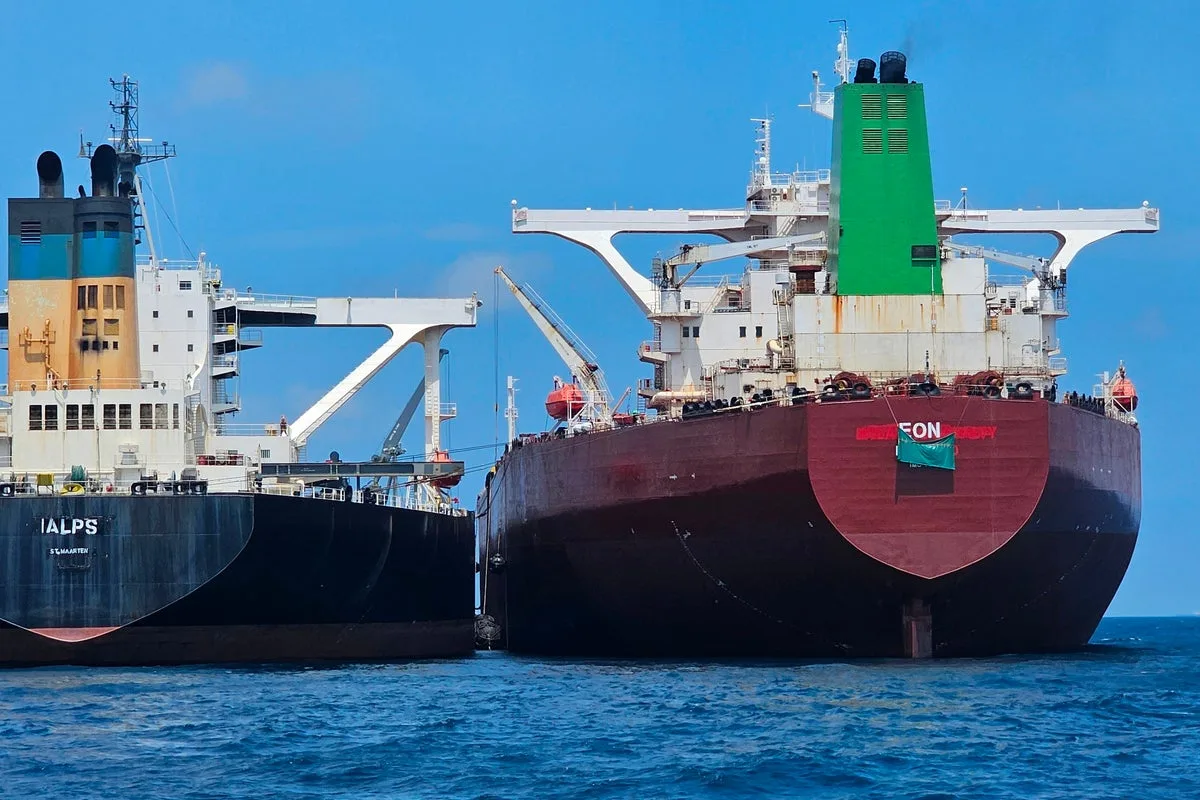
Malaysia's maritime agency has stated it has limited ability to stop Iranian-linked tankers from transferring oil to other ships off its coast, a practice that allows Iran to circumvent sanctions and has drawn growing criticism. The United Against Nuclear Iran (UANI), a US-based advocacy group, has identified 42 ship-to-ship transfers of Iranian oil conducted approximately 70 kilometres off Malaysia's southern Johor state since February 28, when the US and Israel attacked Iran.
The transfers occur in international waters, where Malaysia lacks jurisdiction, according to Malaysian Maritime Enforcement Agency (MMEA) Director-General Mohamad Rosli Abdullah. He noted that these vessels, part of a 'shadow fleet,' often evade detection by switching off tracking systems, using false identities, operating at night, and exploiting complex ownership structures. 'The issues raised do not align with the actual situation on the ground,' he told the Associated Press.
UANI senior adviser Charlie Brown criticised Malaysia's inaction, stating, 'Because of Malaysia's inaction, it is facilitating this business model by Iran and China and dark fleet actors.' He warned that Malaysia is becoming 'a facilitator rather than merely a transit point' for illicit activity. The area, known as the Eastern Outer Port Limits (EOPL) in the South China Sea, lies along a major maritime trade route between Iran and China, which buys about 90% of Iranian oil.
While not illegal, Malaysia discourages unsanctioned transfers outside designated areas due to environmental risks. Mohamad Rosli emphasised that enforcement is conducted strictly under Malaysian law and international conventions, and that authorities have 'never compromised nor provided any special treatment or privileges to any country.' The Indonesian Foreign Ministry is reviewing the situation, stating it does not permit its maritime zones to be used for unlawful activities.




