

Ireland Faces Further Motorway Closures as Fuel-Cost Talks Resume
The Irish Government is set to re-enter talks on Saturday, aiming to defuse ongoing protests that have involved blockades at key fuel distribution sites across the country. This comes after a crucial meeting on Friday failed to produce concrete proposals to end the crisis, which has now entered its fifth consecutive day.
Exceptional Police Measures and Defence Forces on Standby
An Garda Siochana, Ireland's police service, has internally declared an "exceptional event", allowing it to designate every available member for duty over the weekend. Meanwhile, ministers have confirmed that the Irish Defence Forces are "on standby" to assist gardai in removing blockades at critical infrastructure, highlighting the severity of the situation.
Widespread Disruption to Motorways and Transport Networks
Blockades have resulted in full closures of parts of the M50 ring road around Dublin, as well as the M4, M6, M7, M8, M9, and M20 motorways. Transport Infrastructure Ireland, responsible for motorways, reported "significant disruption" impacting counties Clare, Limerick, Tipperary, Laois, Offaly, Kildare, Galway, Cork, and Dublin. The agency is working closely with gardai to manage traffic distribution, but the protests have also caused disruptions to bus routes nationwide and within Dublin, where Luas Green Line tram services are affected.

Fuel Shortages and Emergency Concerns
There were fears that around a third of Ireland's 1,500 filling stations could run dry by morning, as protesters blockaded the country's only oil refinery in Whitegate, Co Cork, along with key depots in Galway and Foynes, Co Limerick. Concerns have been raised about fuel shortages potentially curtailing emergency services and the delivery of vital goods. The National Emergency Coordination Group has urged the public to only buy the fuel they need to mitigate the crisis.
Government Warnings and Protester Demands
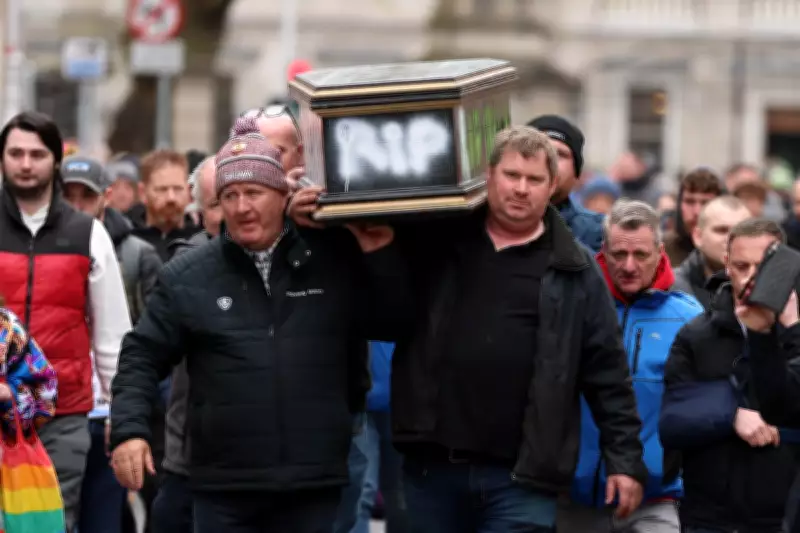
Taoiseach Micheal Martin warned that Ireland is on the "precipice of turning oil away from the country", describing the situation as "unconscionable", "illogical", and "difficult to comprehend". The protests, which began on Tuesday over soaring fuel costs, have included slow-moving convoys, outright stoppages on major motorways, and a blockade on Dublin city's main thoroughfare. Participants, such as professional drivers, farmers, hauliers, taxi operators, and bus operators, argue that the Government must take urgent action on fuel prices or they risk going out of business.
Talks and Ongoing Tensions
Many official representative groups recognised by the Government have expressed sympathy with the cause but stated they were not involved in organising the protests. Government ministers engaged with some of these groups on Friday, but a spokesman for the protesters expressed "devastation" at being excluded from the meeting. A commitment from the coalition on Friday night to deliver a "substantial" package of measures on fuel costs was insufficient to dissuade protesters from continuing blockades. Christopher Duffy, a spokesman for the grouping in Dublin city centre, emphasised that the protest would continue until there was a "serious reduction in our costs".
Talks between Government departments and representative bodies are scheduled to continue at lunchtime on Saturday, with the goal of finalising what deputy premier Simon Harris described as "substantial and significant" measures for affected industries. The outcome of these discussions will be critical in determining whether the widespread disruptions and motorway closures can be brought to an end.






