

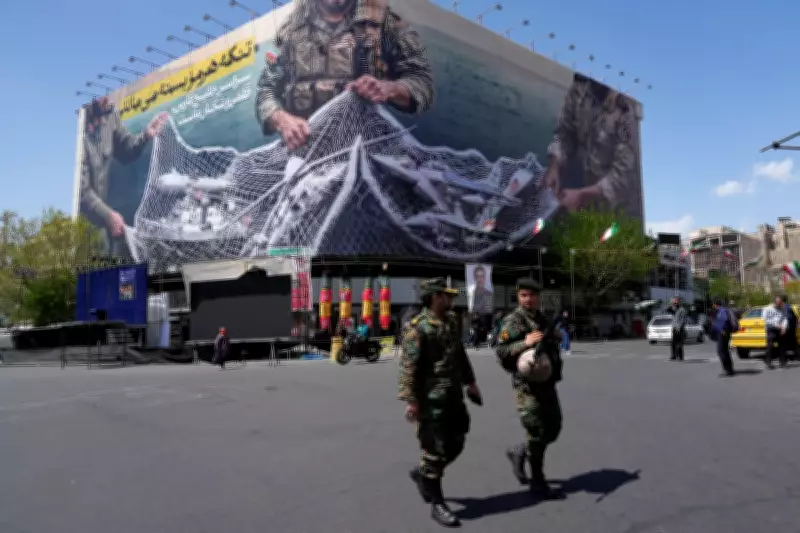
Iran's Controversial Toll Proposal for Strait of Hormuz
In a move that directly challenges established international trade norms, Iran has demanded the right to collect tolls in the strategically vital Strait of Hormuz as a precondition for reopening the waterway. This demand comes as part of negotiations to end the ongoing conflict with the United States and Israel, which began on February 28, 2026. The strait serves as a critical conduit for approximately 20% of the world's oil shipments, making this proposal particularly contentious within global energy markets.
Violation of Maritime Freedom Principles
The Iranian toll-collection scheme fundamentally violates the long-standing principle of freedom of peaceful navigation in international waters. This principle, which has governed maritime trade for centuries, was formally codified in the United Nations Convention on the Law of the Sea that took effect in 1994. According to Article 17 of this convention, ships engaged in peaceful passage through international straits enjoy a protected right of "innocent passage" without facing tolls or restrictions from coastal states.
Philippe Delebecque, a distinguished maritime law professor at Paris' Sorbonne University, emphasized the foundational nature of this principle. "Freedom of navigation has always been recognized, including specifically in straits," he stated. "The idea that the sea doesn't belong to anyone has been fundamental to international commerce for hundreds of years." Experts warn that allowing Iran to establish toll collection would create a dangerous precedent that could potentially extend to other crucial waterways like the Strait of Gibraltar or the Strait of Malacca.

Iran's "Tollbooth" Operations Already Underway
Evidence suggests Iran has already begun implementing informal toll collection through what shipping analysts have dubbed the "tollbooth" scheme. Following the outbreak of hostilities, Iran initially blocked the strait through attacks and threats against commercial vessels, creating unacceptable risks for safe passage. This disruption caused immediate energy shortages in Asian nations heavily dependent on Middle Eastern oil while simultaneously driving up gasoline prices across Europe and the United States.
Under this murky arrangement, vessels have been instructed to divert from established shipping lanes in Iranian and Omani territorial waters toward Iran's Larak Island. After providing detailed information about crew and cargo to intermediaries representing Iran's Islamic Revolutionary Guards Corps, some ships have reportedly been permitted to proceed. At least two vessels have allegedly paid approximately $2 million in Chinese yuan to secure passage through the contested waterway.
International Opposition and Legal Challenges
The proposal faces significant opposition from multiple international quarters. U.S. President Donald Trump has identified reopening the strait as a priority but has explicitly rejected the toll-collection demand. Gulf oil producers, including Saudi Arabia, have expressed similar reservations despite welcoming the ceasefire agreement. Saudi officials have called for keeping the Strait of Hormuz open "without any restrictions" to ensure unimpeded global energy flows.
Julien Raynaut, head of the French Association of Maritime Law, noted that Iran's non-ratification of the Law of the Sea Treaty does not grant unlimited authority. "It remains subject to international law and notably this customary right of passage," he explained. Constantinos Yiallourides, a senior research fellow at the British Institute of International and Comparative Law, emphasized that free passage "is in the interest of everyone. We all want to get the best products at the best prices."

Economic Implications and Geopolitical Concerns
From a purely economic perspective, analysts suggest the direct cost impact of toll collection might be relatively modest. A $2 million toll on a tanker carrying 2 million barrels of oil translates to just $1 per barrel. However, the Brussels-based Bruegel think tank notes that the burden would fall disproportionately on Gulf states rather than global consumers. More significantly, reopening the strait would immediately return 20% of global oil supplies to markets, potentially lowering prices substantially from current elevated levels.
The international benchmark Brent crude price has experienced dramatic volatility throughout the conflict, soaring from approximately $72 per barrel before hostilities to $118 on March 31, before declining to $94.55 following news of the two-week ceasefire. Reopening the strait would also reduce the geopolitical windfall currently benefiting Russia, whose oil has seen increased demand despite international sanctions.
Western nations express particular concern that toll revenues would likely benefit the Islamic Revolutionary Guard Corps, which oversees Iran's ballistic missile program, suppresses domestic opposition, and is designated as a terrorist organization by both the United States and European Union. Gulf producers face production losses exceeding 12 million barrels daily due to the strait's closure, with existing bypass pipelines insufficient to compensate for this disruption and new infrastructure requiring years to construct.
As negotiations continue, the international community faces a complex dilemma: accept Iran's toll demands to restore vital oil flows or uphold maritime principles at the cost of prolonged economic disruption. The outcome will establish significant precedents for global trade governance and strategic waterway management in an increasingly contested geopolitical landscape.





