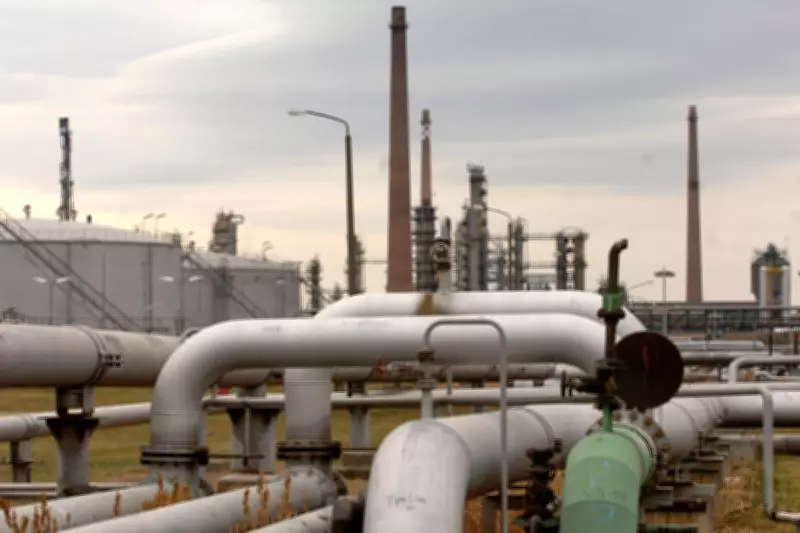
Croatia Proposes Oil Supply to Hungary and Slovakia Via Adria Pipeline
Croatia has stepped forward with a plan to bolster the energy security of Hungary and Slovakia by supplying oil through its Adria pipeline, following significant disruptions to the critical Druzhba pipeline. Prime Minister Andrej Plenkovic confirmed that discussions are actively underway with both nations and the European Commission regarding this strategic initiative.
Druzhba Pipeline Halts Trigger Energy Crisis
The Druzhba pipeline, which serves as the sole source of Russian oil for Hungary and Slovakia, was halted on 27 January after sustaining damage that Ukraine attributed to a Russian drone strike. This disruption has created an urgent energy shortfall for the two landlocked EU countries, which still rely on Russian oil imports under specific exemptions from EU sanctions.
The European Commission stated on Wednesday that Croatia is currently evaluating the legal implications of importing seaborne Russian crude oil for onward supply through the Adria route. Any Russian crude ordered for delivery to Croatia could face significant difficulty skirting US sanctions, which target Russia's top oil exporters, adding a layer of complexity to the proposal.

Capacity and Commitments Under Scrutiny
Pipeline operator Janaf reported that a cargo of non-Russian crude is already being unloaded for Hungarian refiner MOL Group, with seven further deliveries anticipated by April. Mr Plenkovic emphasised Croatia's commitment, stating: "Croatia is here as a neighbour, partner and friend to ensure the energy security and smooth functioning of the economies of both Hungary and Slovakia."
He added that the Adria pipeline possesses the capacity to transport up to 15 million tonnes of oil annually, which is sufficient to fully meet the requirements of both countries. This capacity assessment is crucial as the EU moves towards a full ban on Russian oil imports by 2027, with legislation planned for mid-April.
Political Fallout and Accusations Escalate
Hungary's Prime Minister Viktor Orban said on Friday that he agreed with Slovakia's Prime Minister Robert Fico to establish a joint Hungarian-Slovak committee to ascertain the state of the Druzhba pipeline. In a video on his Facebook page, Orban called on Ukraine's President Volodimir Zelensky to grant access to Hungarian and Slovak inspectors and to restart the Druzhba pipeline.
Slovakia and Hungary have accused Ukraine of stalling repairs to the Druzhba pipeline for political reasons. In retaliation, Hungary vetoed new EU sanctions on Russia this week and blocked a new EU loan for Kyiv, straining Europe's pro-Ukrainian consensus on the eve of the Ukraine war's fourth anniversary.
Election Dynamics and Alternative Routes
Hungary's Prime Minister Viktor Orban is facing the biggest challenge to his hold on power in 16 years in a parliamentary election on 12 April. He has cast the election as a choice between "war or peace", saying his opponents would drag the country into the war in Ukraine, a narrative that intertwines with the energy crisis.
Ukraine, meanwhile, says it is trying to repair the Druzhba pipeline and offered to arrange alternative routes to transport oil to EU countries via its Odesa-Brody pipeline, in a letter Ukraine's mission to the EU sent to the European Commission, dated February 20. The European Commission spokesperson said the Commission understands Ukraine is ready to accelerate those repairs and that the EU is assessing the Odesa-Brody option as a potential solution.
This situation highlights the intricate balance between energy security, EU sanctions enforcement, and geopolitical tensions, with Croatia's proposal serving as a pivotal point in ongoing negotiations.