

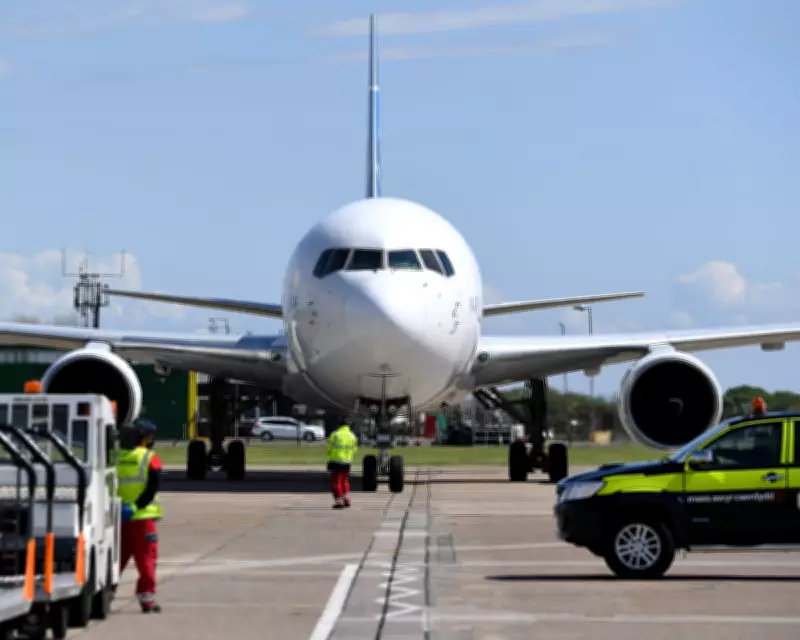
Cardiff Airport Secures Victory in Subsidy Dispute with Bristol Rival
The Welsh government has successfully defended its substantial financial support for Cardiff Airport against a legal challenge mounted by its cross-border competitor, Bristol Airport. In a unanimous ruling delivered on Tuesday, the Competition Appeal Tribunal dismissed Bristol's claim that a £205 million subsidy package unfairly distorted the market and violated the Subsidy Control Act.
A Decade-Long Feud Culminates in Tribunal Decision
The rivalry between the two airports has been simmering since 2013, when the Welsh administration made the unconventional decision to purchase Cardiff Airport for £52 million. This intervention occurred as passenger numbers plummeted following the withdrawal of the budget carrier Bmibaby, with the purchase price notably exceeding the market valuation at the time.
This move was unusual within the United Kingdom, where the vast majority of airports remain under private ownership. Despite approximately £200 million in bailout funds since its nationalisation, Cardiff Airport has yet to record a profit. Passenger traffic has also struggled to rebound from the Covid-19 pandemic, with only 963,000 customers recorded in 2025—a stark contrast to its peak of 2 million passengers in 2007.

The Contentious Subsidy Package
In April of last year, the Welsh government unveiled a new, decade-long subsidy plan worth £205 million for Cardiff Airport. Approximately half of this funding is designated for the development of new flight routes, while the remainder is allocated for critical infrastructure improvements, including maintenance facilities, hangar upgrades, and enhanced cargo capacity. To date, £20 million of this support has already been disbursed.
A Welsh government spokesperson welcomed the tribunal's verdict, stating: "We very much hope to see both Cardiff airport and Bristol airport continue to thrive and grow."
Bristol Airport's Disappointment and Future Plans
Bristol Airport, which facilitated nearly 11 million passengers last year according to Civil Aviation Authority data, expressed its disappointment with the outcome. A spokesperson commented: "We're disappointed that the tribunal feels that despite the burden being put on the taxpayer, the flexibility given by the Subsidy Control Act introduced after Brexit means that the subsidy can proceed. We'll now take some time to study the decision in detail before deciding on our next steps."
The airport had filed its appeal just three months after the subsidy announcement, arguing that the scale of the financial support was unprecedented in the UK aviation sector and constituted a breach of competition regulations.
Concurrently, Bristol Airport is pursuing its own expansion ambitions. Last month, it submitted plans to accommodate an additional 3 million passengers annually, which includes extending its runway to facilitate long-haul flights. This follows a 2022 permission grant allowing expansion from 10 million to 12 million passengers per year—a decision that faced significant opposition from local residents' groups.
Broader Context and Infrastructure Challenges
The legal dispute unfolds against a backdrop of historical proposals and ongoing infrastructure challenges for both airports. A UK government white paper from 2003 once suggested closing both facilities and constructing an artificial island hub in the Severn estuary to serve their combined catchment areas.
Furthermore, both airports have been criticised for their transport links. In a recent ranking of the UK's larger airports, Bristol and Cardiff scored poorly due to their lack of direct train connections. Bristol was placed 27th, while Cardiff ranked last at 30th.
The tribunal's decision now allows the Welsh government's subsidy plan to proceed, marking a significant moment in the ongoing competition between these two regional aviation hubs.






