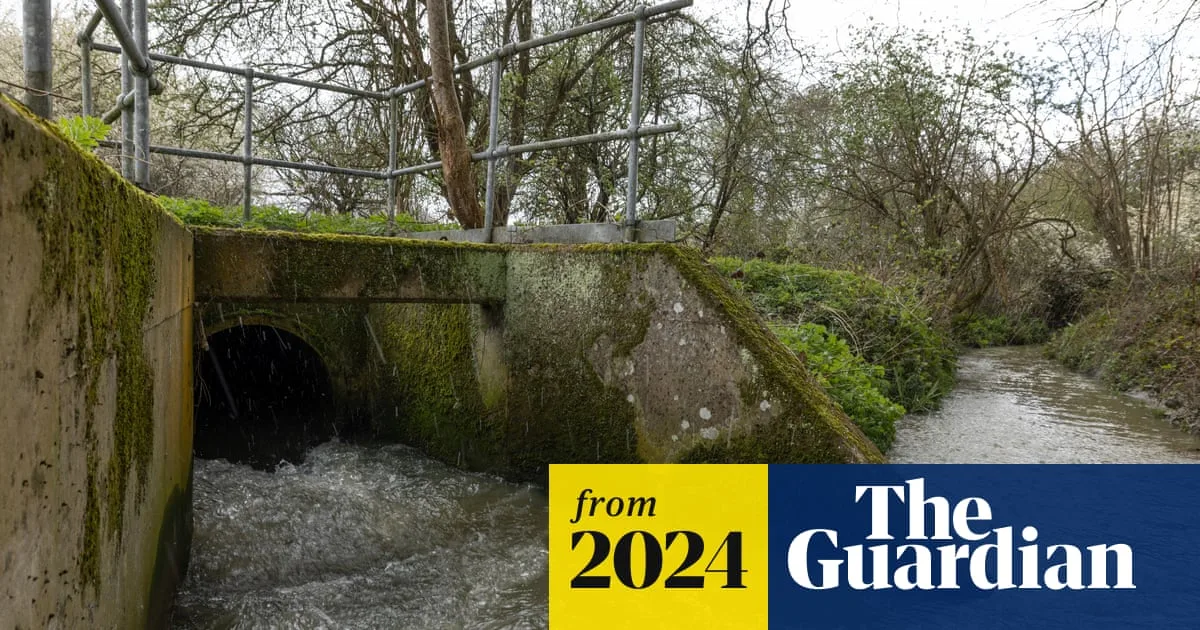
Water companies in England are facing widespread condemnation after data revealed raw sewage was discharged for more than 3.6 million hours into rivers and seas in 2023, a 105% increase on the previous year. The figures, submitted to the Environment Agency, show total discharges from storm overflows rose by 54% to 464,056, making 2023 the worst year for storm water pollution.
Liberal Democrat leader Ed Davey called for the scandal to be declared a national environmental emergency, urging the government to convene an urgent meeting of the Scientific Advisory Group for Emergencies (Sage) to assess the impact on public health. Senior industry figures blamed heavy autumn and winter rainfall, but critics argue that storm overflows should only be used in exceptional circumstances, and that climate change has long been predicted to bring higher rainfall.
The data reveals significant regional variations. South West Water saw 40% of its outflows discharge raw sewage more than 40 times, while nearly a third of United Utilities' outflows and 23% of Yorkshire Water's outflows discharged 60 times or more. Any outflow with more than 60 discharges a year should trigger an Environment Agency investigation. Some companies saw huge increases in discharge hours: Anglian Water rose 205%, Wessex Water 186%, Thames Water 163%, and Northumbrian Water 160%.
The River Irwell and its tributary the Croal, flowing through Salford and Manchester, had the highest levels of sewage spills, with nearly 12,000 spills in 2023, equivalent to 95 spills per mile. The River Darwen near Blackburn and Preston was second worst with 83 spills per mile, while the River Avon through Bath and Bristol had 74 spills per mile, making it the third most polluted in England.
The government's plan to tackle raw sewage pollution gives water companies a deadline of 2035 to reduce sewage flowing into bathing waters and ecologically important areas, but discharges could continue into other waterways until 2050. Critics argue this is too slow given the increasing rainfall intensity and frequency driven by climate change.