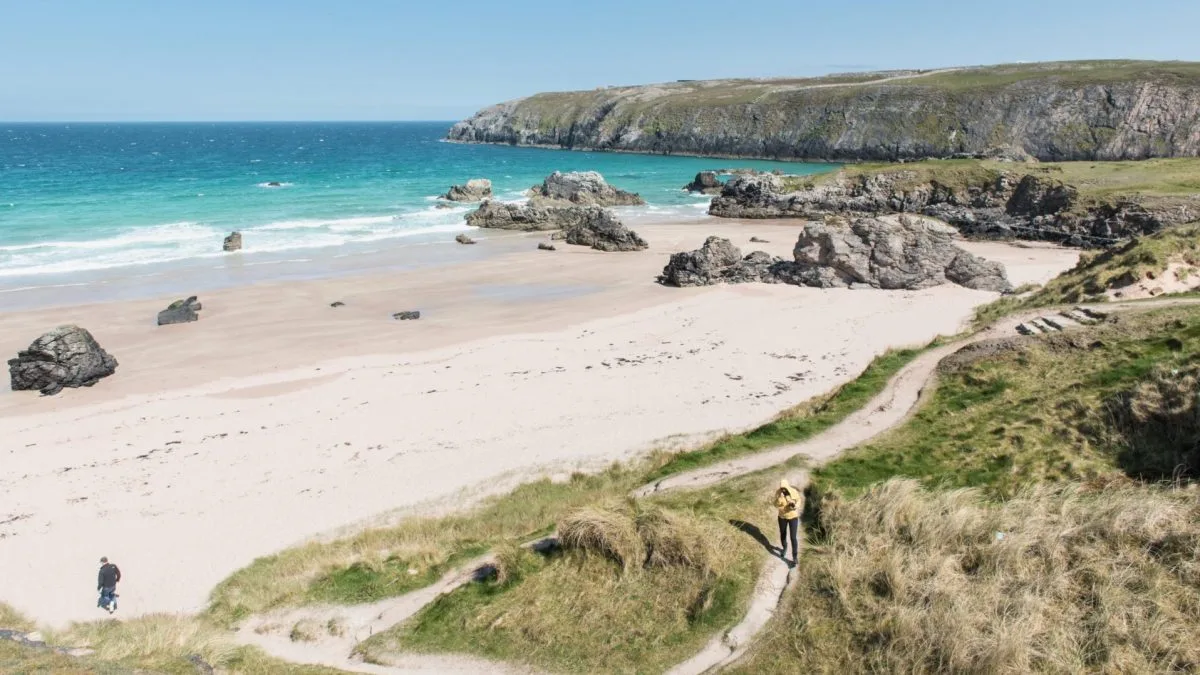
The North Coast 500 has transformed tourism in the Scottish Highlands, generating nearly £100 million in economic benefit last year. But its popularity has brought local challenges, from increased traffic to a rise in one-night stays and littering. Richard McKendrick, owner of the Inchnadamph Hotel in Sutherland, told us that many visitors simply drive through, swapping TV screens for windscreens.
For a quieter, more mindful experience, a small group of walkers joined HF Holidays' Cape Wrath Classic, a week of guided day-hikes around the trackless hills of Sutherland and Assynt. The 11 participants, ranging in age from mid-40s to late-70s, were led by a guide named John. Over the course of the week, they encountered no other people on their walks.
The routes included the remains of Ceannabeinne, a coastal township cleared in 1841, and the modest peak of Beinn Ceannabeinne, where walkers crossed ancient Lewisian gneiss, some of the oldest rocks on Earth. Further walks took in the windswept summit of Ben Stack and a route from Achfary forest to Kylesku, with a detour to Ben Dreavie revealing views across an immense emptiness.
The highlight was Cape Wrath itself, an isolated headland cut off by the Kyle of Durness, sea cliffs, and a lack of roads. Reaching it required a bus to Keoldale jetty, a ferry crossing, and a bone-rattling minibus ride of 11 miles that took a full hour. After visiting the Stevenson-built lighthouse from 1828, the group struck south on foot, leaving the day-trippers behind.
For those willing to trade the windscreen for well-worn boots, Scotland's far north reveals itself in a different light. The region's hardest hike, the Cape Wrath Trail, remains a daunting proposition, but a guided walking week offers a way to appreciate the landscape without contributing to the congestion of the NC500.