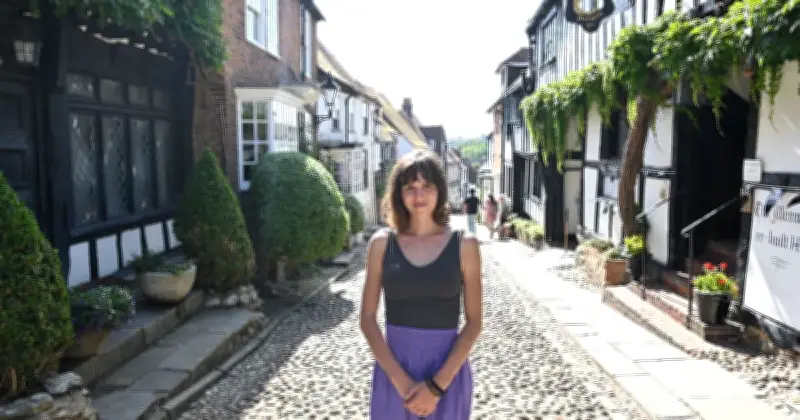
A trip to Rye, named England's 'most naturally beautiful town' in a 2025 Which? survey, delivered medieval history, around 300 independent businesses, fresh seafood, local wine and a sandy beach nearby.
After countless trips to seaside towns in the south of England, I decided to switch things up. Looking for somewhere not too far from London, I picked Rye, a picturesque inland market town in East Sussex, best known for its medieval charm. Sitting between the countryside and the English Channel, which once reached the town itself, Rye has everything needed for a weekend getaway - history, independent shops, tasty food, local wine and lots of character.
First impressions and crowds
Upon arrival, my friends and I saw a crowd of tourists walking from the station. They clearly had the same idea as us - arrive from London for a sunny day out. Locals interviewed by the Express last year said that Rye wasn't a victim of overtourism, so it initially came to my surprise to see so many people. However, everyone quickly dispersed through the maze of streets, and the town never felt overwhelmingly busy.

We first wandered up the cobbled streets towards the Parish Church of St Mary, which offers a view of the town and a 16th-century pendulum still swinging inside. Right next to it, we entered one of the most unusual venues - Kino Rye, an independent cinema inside a converted Victorian church. Certainly not your average multiplex.
Independent shops and history
From there, we walked around without much of a plan, which is incredibly rewarding in Rye. There seemed to be a lovely independent shop every few metres - we didn't spot a single chain. Retrospectively, that was not surprising, as Rye is home to around 300 independent businesses.
We also didn't miss the Rye Castle, which adds defiant history to the town's already independent character. In the Middle Ages, the town occupied a vulnerable position on England's southern coast and was repeatedly attacked by the French. In 1377, much of the town was burned and looted, and even St Mary's church bells were stolen before men from Rye crossed the Channel and took them back the following year.
Seafood, pubs and a beach finale
We then headed towards the old harbour around Strand Quay. Rye was once an important medieval port, although changes to the coastline eventually left the town further from the sea. Our reward was the Rye Fish Market and Seafood Bar, where we sat outside in the sunshine and worked our way through a table of fresh seafood accompanied by tasty local wine.
For a pint, we couldn't miss the Mermaid Inn, which houses England's second-largest log fireplace in the UK. With its whimsical, old-looking rooms, red leather sofas and a cosy vibe, it was everything we needed from a traditional afternoon pub stop. We drank our pints outside the pub, soaking up the sun on Mermaid Street, arguably Rye's most beautiful one.
A visit to Rye Chocolates resulted in what I would call the best ice cream in town (although I didn't try the others) and the discovery of a rather brilliant handmade chocolate lobster. The Winery Rye was my favourite stop of the day. Its industrial interior was filled with old barrels and racks of wine, contrasted by a stunning chandelier and a bright room flooded with sunlight through a huge window.
There was just one final obligatory thing to do: visiting Camber Sands, Rye's famous beach, just a short bus ride away. Climbing over the huge dunes to find an enormous stretch of golden sand on the other side was the sweetest (and windiest) end to the evening. For such a small town, Rye packs an extraordinary amount into one day - medieval history, independent shops, seafood, pubs, wine and a spectacular sandy beach all within a few miles. I expected Rye to be beautiful. I didn't expect to leave already wanting to come back.