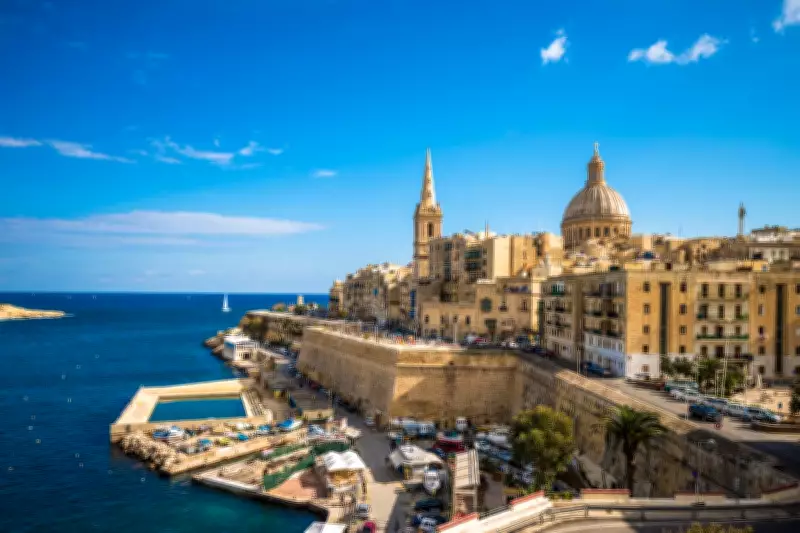
Malta stands as one of Europe's most remarkable open-air history museums, offering visitors an unparalleled journey through millennia of human civilization. This Mediterranean archipelago boasts historical layers that span hundreds and even thousands of years, with temples that predate the Egyptian Pyramids, lavishly decorated cathedrals, and hushed walled cities that transport you back in time.
Valletta: The Baroque Capital Built by Knights
Valletta, Malta's capital city, represents a complete Unesco World Heritage Site packed into just 60 hectares—approximately one-fifth the size of New York's Central Park. Founded in 1566 by the Knights of St John, who ruled Malta from 1530 to 1798, this honey-colored city contains around 320 monuments within its compact boundaries.
Architectural Marvels and Military History
St John's Co-Cathedral, constructed in the 1570s, presents a surprisingly plain exterior that belies its opulent interior. Inside, visitors encounter carved stone walls, marble tomb-covered floors, and a beautifully painted vaulted ceiling. The cathedral also houses Caravaggio's masterpiece, The Beheading of Saint John the Baptist, adding to its artistic significance.

The Grand Master's Palace, located in Valletta's heart, served as the Knights' former nerve center and now displays one of the world's most impressive collections of arms and armor, alongside rare French tapestries. For panoramic views, the 16th-century Upper Barrakka Gardens—originally created as a relaxation space for Italian Knights—offers spectacular vantage points across the city's historic skyline.
Mdina: The Ancient 'Silent City'
Mdina, Malta's former capital, provides a tranquil counterpoint to Valletta's bustle. This car-free walled city, with a population of just a few hundred residents, has earned the nickname "Silent City" for its remarkable quietude. Its history stretches back to the Bronze Age, with successive rule by Phoenicians, Romans, Arabs, Normans, and eventually the Knights of St John.
Historical Landmarks and Cinematic Connections
Visitors to Mdina can explore St Paul's Cathedral with its elegant dome dominating the skyline and stunning painted ceilings. The city gate, built in 1724 with intricate carvings, gained fame as the entrance to King's Landing in HBO's Game of Thrones. Walking the perimeter walls reveals impressive views of both the maze-like city interior and the surrounding Mediterranean landscape.
Vittoriosa (Birgu): Where Malta Held the Line
Vittoriosa, also known as Birgu, forms part of Malta's "Three Cities" alongside Senglea and Cospicua. This compact settlement served as the Knights' headquarters before Valletta's construction and played a crucial role in the Great Siege of 1565 against Ottoman forces.
Fortifications and Historical Insights
Fort St Angelo, which bore the brunt of the Ottoman onslaught, opened to the public in 2015 and now features interactive exhibits detailing the siege's history. Visitors can explore the former residence of the fort commander and see the Guva—a 16th-century oubliette where Caravaggio was imprisoned in 1608. The Inquisitor's Palace, serving both as a residence for Holy Roman inquisitors and a prison for accused heretics from the 16th to 18th centuries, offers further historical depth.
Malta's Deepest History: Structures Predating Civilizations
Malta's historical significance extends to prehistoric times, with seven Unesco-listed megalithic temples and an underground cemetery representing some of the oldest human-built structures on Earth. These monuments predate both the Pyramids and Stonehenge, revealing an advanced prehistoric society capable of remarkable engineering feats with limited resources.
Prehistoric Engineering Marvels
The Ggantija temple complex on Gozo, dating from 3600-3200BC, was constructed from massive limestone blocks on a striking scale. On Malta's southern coast, the Hagar Qim and Mnajdra temples demonstrate sophisticated astronomical understanding, with key areas illuminated during equinoxes and solstices.

The Hal Saflieni Hypogeum, a subterranean necropolis used between 4000 and 1500BC, represents an even more delicate historical treasure. Due to carbon dioxide damage concerns, only about ten visitors at a time can explore its three-level complex of halls, chambers, and passages—requiring bookings up to two months in advance.
Gozo Citadel: Centuries of Defensive History
Gozo's walled Citadel, known locally as Il-Kastell, crowns the main town of Victoria (Rabat) on a site fortified since the Bronze Age. From the late Middle Ages until the early 17th century, rural families sought nightly shelter within its walls for protection against pirate and Ottoman raids.
Preserved Historical Environment
The citadel's ramparts offer views across almost the entire island, explaining its strategic defensive importance. Within its walls, visitors discover a maze of narrow lanes, tranquil squares, and small museums including the Gozo Museum of Archaeology, Folklore Museum, and Nature Museum. The early 18th-century Cathedral of the Assumption features a hypnotic ceiling painting that creates the illusion of a dome through artistic mastery.
Malta's historical landscape offers unparalleled opportunities to explore civilizations spanning from prehistoric temple builders to medieval knights and Baroque architects. With three complete Unesco World Heritage Sites and numerous individual protected monuments, this Mediterranean archipelago truly represents Europe's greatest open-air history museum, where every street and cliff-top reveals another layer of human history waiting to be discovered.