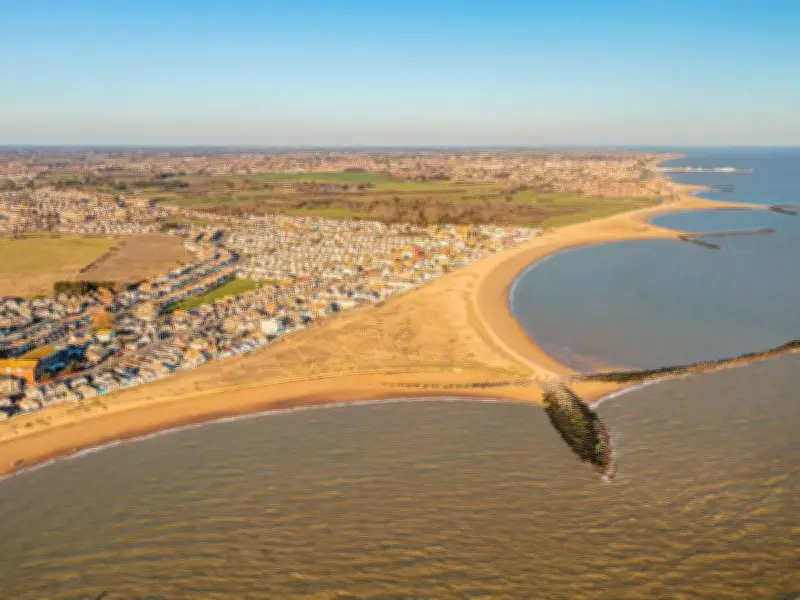
Jaywick, the Essex seaside town officially ranked as England's most deprived neighbourhood four times running, offers a golden beach and a feeling of being in a foreign country, according to travel writer Christopher Moss.
Moss, who has spent decades exploring overlooked parts of the UK, visited Jaywick for his newly published book Where Tourists Seldom Tread, which features two dozen towns.
A town plagued by deprivation and threats
Jaywick has been ranked as England's most deprived neighbourhood in 2010, 2015, 2019 and again in 2025 by the Ministry of Housing, Communities and Local Government. Crime rates, long-term unemployment and poor health outcomes have long affected the town, which is also under threat from rising sea levels.

The town has attracted YouTube "dark tourists" and was even used by a US Republican congressional candidate in an election ad warning about economic decline, using a photo of neglected housing and potholed roads.
Golden beach and a sense of being abroad
"I was taken by how beautiful it is to be on the waterside there," Moss told the Mirror. "It has this golden beach and this feeling of being in a foreign country. It was very calm and warm. Sedate even."
The chalets that make up most of Jaywick's housing add to the sense of being somewhere other than England. The town was founded about 100 years ago when property developer Frank Stedman bought 24 acres of flood-prone marshland near Clacton and sold it in small parcels to Londoners seeking weekend escapes. They were encouraged to build their own homes from kits, with suggested models costing £52, though these were made of "rough cast asbestos" bricks.
History, community and the Martello Tower
The promised lake and sports centre never materialised, but a housing estate shaped like a car radiator grille did, with roads named after old vehicle manufacturers. After the destruction of East London during WW2, many moved into their Jaywick homes full-time.
"Eighty years later, materials and decor and fixtures have changed, but they are still weekend-sized and vulnerable to floods, time and family budgets," writes Moss. While some homes are "stoved in", others are well looked after.
Jaywick's Martello Tower, built in the early 19th century as a defensive base against a potential Napoleonic invasion, remains intact and now hosts an arts, heritage and community centre. It was saved earlier this year after an Essex County Council plan to cut £90,000 of funding prompted a local backlash.
Part of the tower is given over to residents' poems. One by Anna Mae reads: "Sirens blazing, blue lights flashing, drunkards fighting, eau de weed pervading, boom boxes blaring, foxes screaming way into the night. Seagulls screeching their morning calling, school kids running, mums beckoning, voices straining, muted threatening, coaches arriving, mobility scooters racing, cars parking, buckets and spades unloading, excited cries, tired of eye spying, children clamouring eager to see the sea, new land dredged from marshes keep on sinking, sea will continue claiming what is hers."
"Put-downs can spread the shame, but not here; people defend the right to be proud of their homes," Moss concludes. "All I'm saying to readers is it's okay to accept the headlines, but go and see and say hello. Most of these places are not as bad as the press presents."
Where Tourists Seldom Tread is available in hardback for £19 and ebook for £12.99 on bookshop.org.